On this page · 6 sections
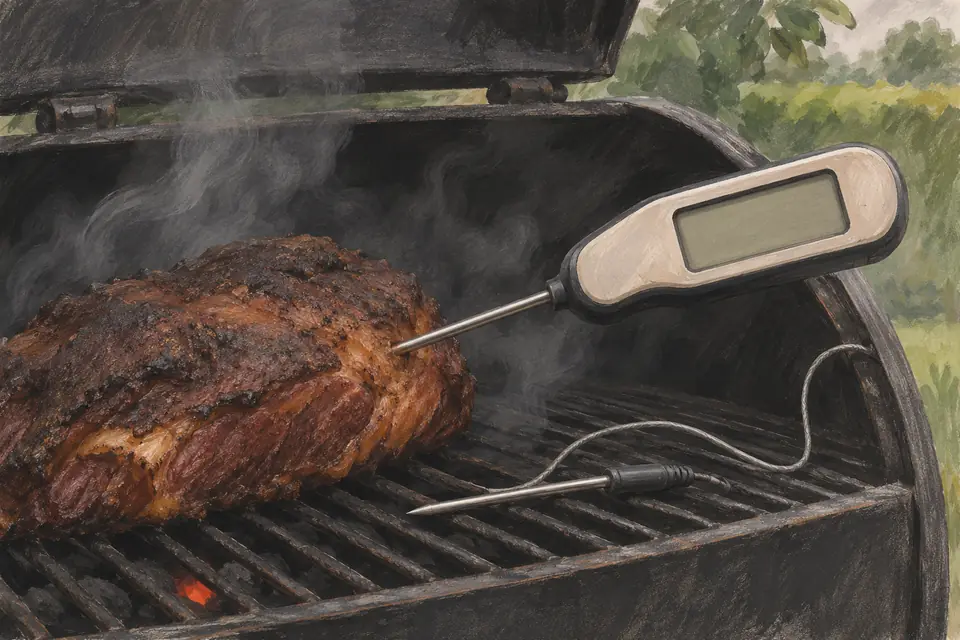
A decent probe thermometer will do more for your barbecue than a new smoker. The lid gauge on most smokers reads the air at the top of the dome, not the grate, and it says nothing at all about the meat. Every cook on this site leans on a probe, from the first pork shoulder to the Christmas turkey. So it's worth knowing which kind you need.
Instant-read vs leave-in vs wireless
There are three main types, and most people end up wanting two of them.
| Type | How it works | Good for | Weak spot |
|---|---|---|---|
| Instant-read | Handheld probe you push in for a reading | Spot checks, chicken, sausages, checking several places | You have to open the lid |
| Leave-in (wired) | Probe stays in the meat, cable runs out to a base unit | Long cooks with an alarm | Cables can be damaged by heat and lids |
| Wireless (in-meat) | Probe with a built-in transmitter sits fully in the meat | No cables through the lid | Signal through metal, battery life |
Instant-read
A thin probe on a handheld body. You push it into the meat, wait a moment and read the number. Faster ones use a thermocouple sensor; cheaper ones usually use a thermistor and take a little longer to settle. Either way, an instant-read is what you use to check a chicken thigh in several places, test a sausage, or confirm a brisket is tender all over. It can't watch a cook for you.
Leave-in
One or more probes on heat-resistant cables, plugged into a base unit that sits outside the smoker. You push the probe into the thickest part of the joint, close the lid over the cable and set an alarm. Many have a second probe to clip to the grate, which tells you the temperature where the food actually is. That's far more useful than the lid gauge. Many base units now send readings to a phone, which means you can monitor an overnight cook from bed and pretend you're relaxed.
Wireless in-meat probes
The whole probe, transmitter included, goes inside the meat, with no cable at all. Lovely on a rotisserie or a kamado with a tight gasket. The catch is signal: a thick steel or ceramic lid can block it, and the range quoted on the box is usually measured in the open air, not through a closed smoker. Battery life and charging also matter on a long cook.
Specs that matter
We compare thermometers on what makers publish, and we don't name models until those specs are checked against the maker's UK page.
- Published accuracy. Usually stated as plus or minus a number of degrees over a given range. Check the range the figure applies to: some probes are tighter around cooking temperatures than at the extremes.
- Temperature range. Needs to cover gentle smoking temperatures at the low end and grill heat for an ambient probe.
- Probe count. One for the meat and one for the grate is the practical minimum on a leave-in. More probes help if you cook two joints.
- Cable heat rating. Wired probes have a maximum temperature for the cable and the joint where it meets the probe. Direct flame or a hot kamado can exceed it.
- Response time. Matters for instant-reads, less for leave-ins.
- Water resistance. Many probes aren't waterproof where the cable meets the metal. This matters in the British rain and at the sink.
- Display and alarms. A backlit screen and an alarm you can hear from indoors are worth more than a feature list.
Things to ignore: claims about "smart" cooking presets, and range figures for wireless probes without any mention of how they were measured.
Calibrating and caring for probes
Check your probe now and then with an ice bath. Fill a glass with crushed ice, top up with cold water, stir and wait a minute, then put the probe in the middle without touching the glass. It should read 0°C, or very close. If it's off and the thermometer has a calibration setting, adjust it; if not, note the difference and allow for it. A boiling-water check is less reliable, because the boiling point falls with altitude.
Keep a spare battery in the bag with your thermometer. It will always die in the stall, never on a quiet Tuesday.
Looking after probes is mostly common sense:
- Don't let wired cables touch flames or rest on hot metal, and don't trap them in a door seal so tightly they kink.
- Wipe probes clean with a damp cloth; don't submerge them or put them in the dishwasher unless the maker says it's safe.
- Coil cables loosely rather than wrapping them round the base unit.
- Store everything somewhere dry, not in a damp shed with the charcoal.
Using a probe properly
Push the tip into the thickest part of the meat, away from bone and fat pockets, which read differently. For big cuts like brisket and pork shoulder, the number tells you when to start checking; tenderness tells you when it's done. For shoulder that tends to be somewhere in the low to mid 90s °C internal, but a probe sliding in like soft butter is the real test. For poultry and anything that isn't cooked long and slow, check the safe temperatures in the FSA guidance. Our first cook guide covers where probing fits in the day, and temperature control explains why a grate-level probe matters.
Where to buy
Kitchen shops, BBQ specialists and online sellers all stock probe thermometers. Buy from a seller with a straightforward UK returns policy, check the listing for a UK charger or standard batteries, and make sure replacement probes are sold separately: probes wear out long before base units do. We'll add specific models once their specs have been checked. If you're putting together a full kit, our smoker kit list covers the rest.
FAQs
Do I need an instant-read and a leave-in?
Most people get on best with both: the leave-in watches the cook and raises the alarm, and the instant-read confirms it in several places before you take the meat off.
Why does my lid thermometer disagree with my probe?
The lid gauge sits high in the dome and reads the air there, which can be quite different from the temperature at the grate. Trust a probe at grate level.
Can I leave a probe in during a hot sear?
Check the maker's maximum for the probe and cable. Many wired probes aren't designed for direct flame or very high grill temperatures.
How often should I check calibration?
Check it before a big cook and after the thermometer has been dropped. An ice bath takes a couple of minutes.
Keep going
 TechniqueCornerstone
How to use a smoker
Everything that happens in a first smoke, in order: lighting, holding temperature, adding wood, the stall, wrapping, resting and knowing when it's done.
Read the guide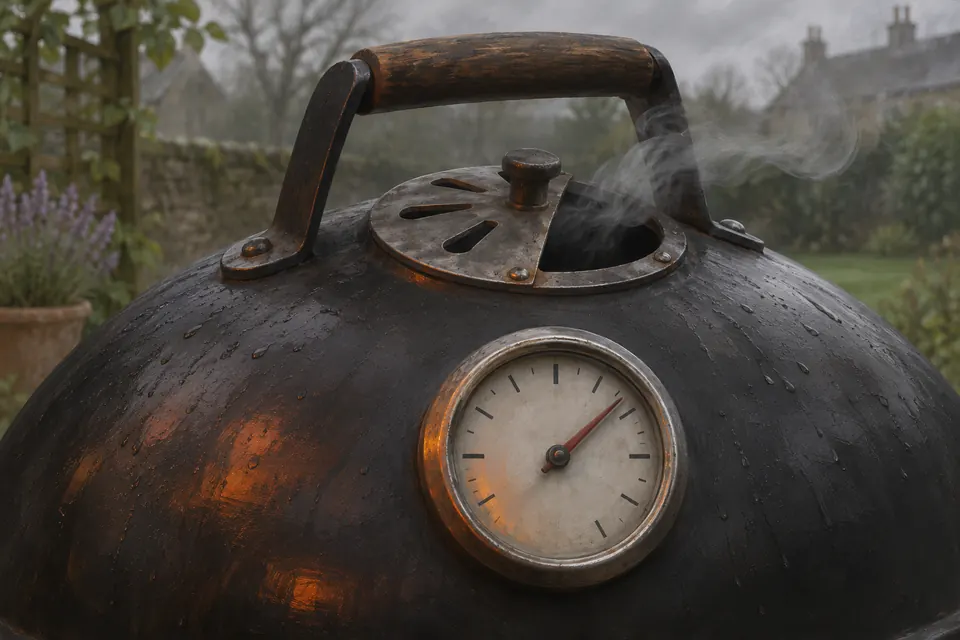 TechniqueCornerstone
Smoker temperature control
How to hold a steady smoker temperature with vents, fuel and placement, why the lid gauge lies, and what to do when the temperature drifts.
Read the guide Weather and kit
Smoker kit list
The smoking kit that matters, the extras that make life easier and the gadgets you can skip, for anyone getting started with a smoker in the UK.
Read the guide