On this page · 10 sections
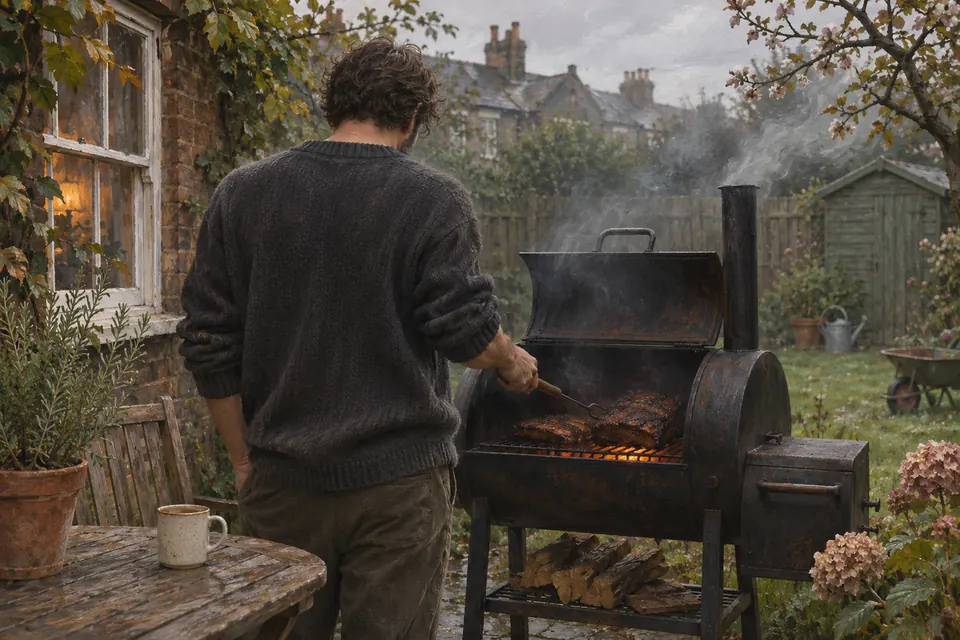
Most first cooks go wrong before the meat is anywhere near the smoker. The fire gets lit late, the temperature is still climbing when the food goes on, and by 8pm everyone is eating crisps and asking how long now. So this guide starts the night before.
Pick a forgiving first cook
Start with pork shoulder. It's cheap at any UK butcher, it's fatty enough to survive a temperature wobble, and pulled pork hides a lot of sins. Chicken thighs and drumsticks are the quick alternative if you want results by lunchtime.
Save brisket for your third or fourth cook. It's the cut everyone wants to master and the one most likely to come out dry the first time. Ribs sit in the middle.
The night before
- Season the meat. A simple rub of salt, black pepper and a bit of brown sugar is plenty. Rub it on, wrap it and put it back in the fridge. Our rub ratios guide has a starting mix.
- Check your fuel. Have more charcoal or pellets than you think you need. Running out at 3pm, with the DIY store shut on a Sunday, is a classic.
- Charge the thermometer. You need a probe thermometer. The lid gauge on most smokers reads the air at the top of the dome, not the grate, and it can be a long way off.
- Plan back from dinner. Put your serving time, the weight and a cook-rate range into the smoking time planner. Then add an hour. You're aiming to finish early and hold, never to finish late.
Light the fire and let it settle
Light the charcoal in a chimney starter, not with lighter fluid. When the top coals are grey at the edges, tip them in. For a kettle or bullet, use the snake or minion method so a few lit coals slowly light the rest.
Then wait. Close the lid, set the vents roughly half open and give the smoker 30 to 45 minutes to settle. You're looking for a temperature that holds still for ten minutes, somewhere in the low-and-slow band (around 110–135°C at grate level is where most recipes live). Pellet and electric smokers do this part for you; you just set the dial and wait for it to get there.
Chase the temperature down, never up. It's far easier to open a vent a touch than to cool a kamado that's gone to 180°C.
Add wood, but less than you think
Two or three fist-sized chunks of oak, beech, apple or cherry on the coals is enough for a first cook. Add them just before the meat goes on. You want thin, faint, bluish smoke. Thick white smoke pouring out of the lid means the fire is choked or the wood is wet, and it will make the food taste bitter. Our smoking wood guide covers which British woods suit which meat.
Food on, lid shut
Put the meat on the grate away from direct heat, insert the leave-in probe into the thickest part (not touching bone) and close the lid. Then leave it alone. Every time you lift the lid you dump heat and smoke and add time to the cook.
Check the fire every 45 minutes to an hour. Small vent changes only, and wait 15 minutes to see what they do before touching them again. Temperature control is mostly patience.
The stall will happen
A few hours in, the internal temperature of a big joint will stop rising, sometimes for hours. That's the stall: moisture evaporating from the surface cools the meat as fast as the smoker heats it. Nothing is wrong. You can wait it out, or wrap the meat in foil or butcher paper to push through faster. Wrapping softens the bark a little; that's the trade.
Know when it's done
Pulled pork and brisket are done when they're tender, not when they hit a number. A probe should slide in like it's going into soft butter, all over the joint. For shoulder, that tends to be somewhere in the low to mid 90s °C internal, but use feel to make the final call. Poultry and anything that isn't cooked long and slow should reach a safe temperature from the FSA guidance linked above.
Rest it
Wrap the meat (if it isn't already), wrap that in an old towel and put it in a dry cool box. A shoulder or brisket will happily sit for one to three hours and stay hot enough to serve. Resting makes pulling and slicing easier and it's your buffer if the cook ran fast. More in our guide to resting smoked meat.
After the cook
Close every vent on a charcoal smoker to starve the fire. Leftover charcoal can be reused next time. Once it's cold, scrape the grate and empty the ash: ash holds moisture and rots steel bowls faster than rain does. Put the cover on when everything is completely cold.
FAQs
How long does it take to smoke meat?
Longer than you'd guess. Small cuts like chicken thighs take an hour or two; a pork shoulder or brisket is most of a day. Use the planner with your recipe's cook rate, then build in an hour's buffer.
Do I need to soak wood chips?
No. Soaked wood steams before it smokes, which mostly delays things. Use chunks on charcoal; chips are for electric smokers and smoke boxes.
Should I open the lid to check on the meat?
As little as you can. A leave-in probe tells you everything you need without opening up. Lift the lid only to wrap, spritz or take the food off.
Can I smoke on a gas BBQ?
You can get some smoke flavour with a smoker box of chips over one burner and the food over the unlit side. It works for chicken and sausages but struggles to hold a low temperature for long cooks, especially in wind.
What if it's raining?
Carry on. Rain mostly costs you fuel and time. Read smoking in the rain before you reach for the gazebo.
Keep going
 TechniqueCornerstone
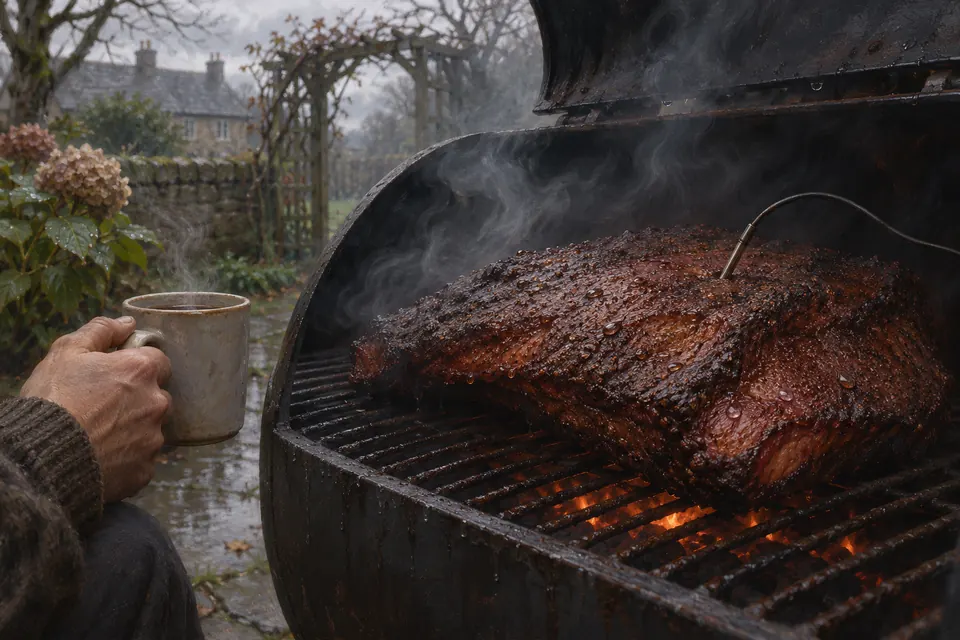
The stall explained
Why big cuts stop rising in temperature for hours mid-cook, the simple science behind it, and when to wait, wrap or turn the heat up.
Read the guide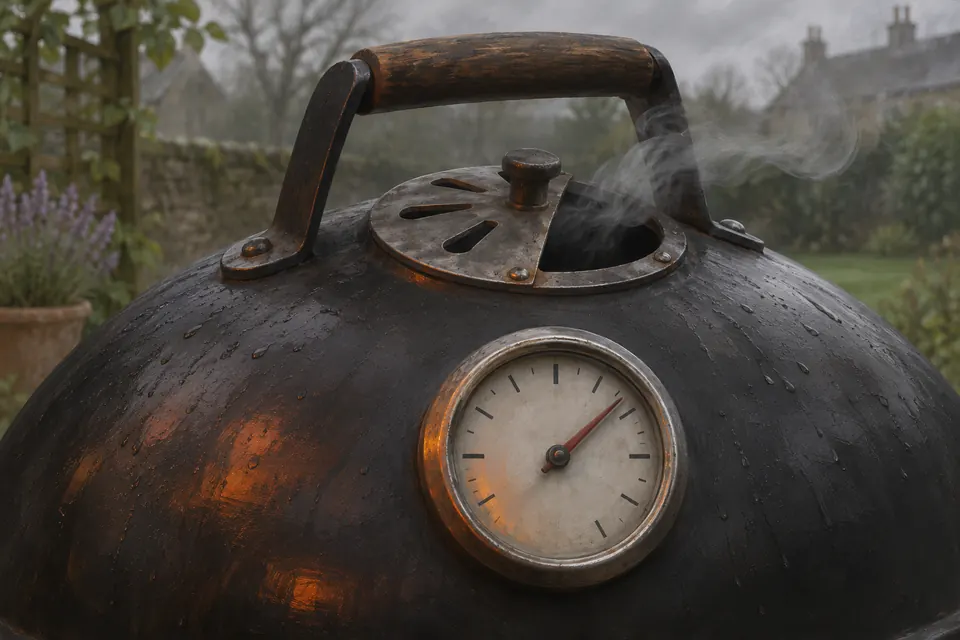 TechniqueCornerstone
Smoker temperature control
How to hold a steady smoker temperature with vents, fuel and placement, why the lid gauge lies, and what to do when the temperature drifts.
Read the guide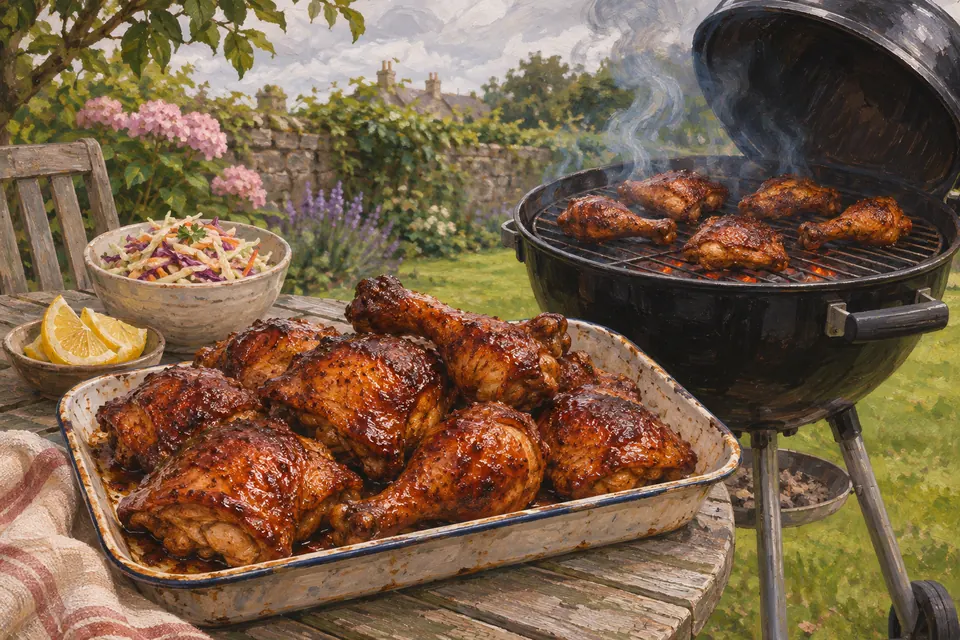 Cooks
Chicken thighs and drumsticks
How to smoke chicken thighs and drumsticks with crisp skin: why they're the most forgiving cook for beginners, dry brining, the right smoker temperature, timings and when they're done.
Read the guide