On this page · 5 sections
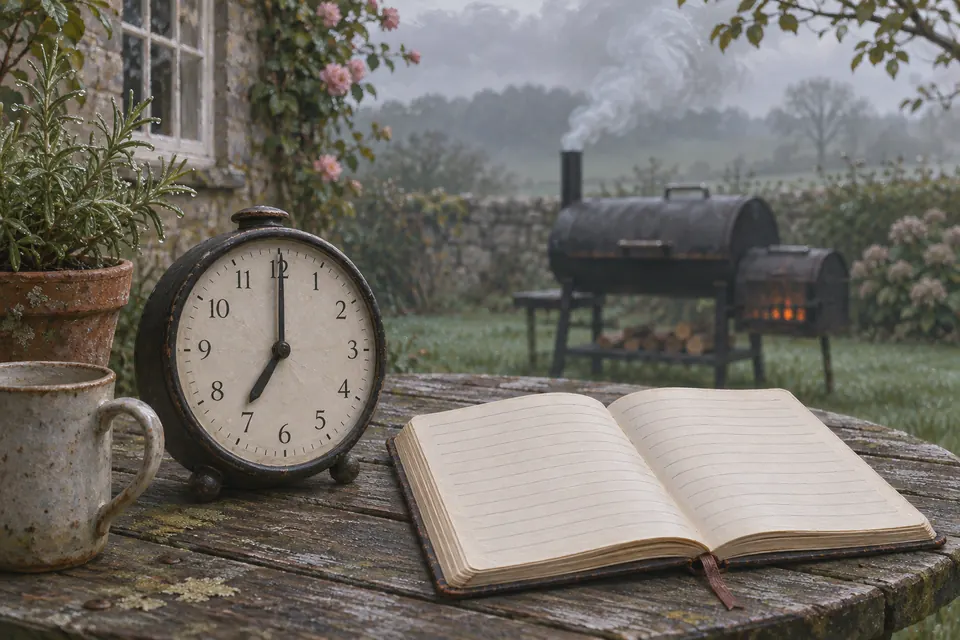
Guests are due at six, the brisket weighs a bit over 4 kg and nobody has worked out whether that means lighting the smoker at breakfast or before dawn. This planner does that sum for you. Pick what you're cooking, enter its weight and when you want to eat, and it gives you a window to light the smoker, not a single time, because meat never reads the recipe.
How the planner works
It multiplies the weight by your fastest and slowest cook rates to get a cook-time range, adds the rest, and counts back from serving time. You get three things:
- Earliest start: light up by then if the cook runs slow.
- Latest start: the last realistic moment, which only works if everything runs fast.
- Off the heat by: when the meat needs to come off to fit in the full rest.
Times are rounded to the nearest five minutes, and if your start lands before midnight it says "the day before", which is a useful moment to decide whether an overnight cook is really what you want.
As an illustration of the maths only: 4 kg at a range of 1.5 to 2 hours per kg is 6 to 8 hours on the smoker. Add a two-hour rest and, for a 6pm dinner, the window runs from 8am to 10am.
Where the cook rate comes from
Pick what you're cooking and the planner fills in the rule of thumb from that cook's guide, with a link to it. Big joints use hours per kg; ribs, sausages, salmon and other cooks where weight barely changes the time use a total-hours range instead. Those figures are common recipe guidance that our researcher is still checking, and the planner says so next to them. If your recipe or your own notes say something different, choose "Use my own figures" and type them in. Our guides to brisket and pulled pork explain why the range is wide.
Plan to the earlier start
A cook that finishes early can be wrapped, wrapped again in an old towel and held in a dry cool box for an hour or more. A brisket that's still in the stall at teatime can't be hurried without cost. The rest is your shock absorber, so don't trim it to make the numbers look nicer. More on that in resting smoked meat.
Write the earliest start on a sticky note on the back door. At 7am it's easier to obey a note than to redo maths.
What it doesn't do
It doesn't know your smoker, the weather or how thick the joint is. A flat, wide brisket cooks faster than a short, chunky one of the same weight, and a cold, windy day slows everything. It also can't tell you the meat is safe. Use a probe thermometer and the FSA guidance for that, and go by feel for tenderness on big cuts. Check you have enough fuel for the long end of the range with the fuel calculator.
FAQs
Why a window and not one start time?
Because the same cut can take hours longer one day than another. The window shows the spread your own cook rates allow; starting at the early end protects dinner.
Can I use it for an overnight cook?
Yes. If the start falls the day before, the result says so. Check you have the fuel and a thermometer alarm you'll actually hear.
Does the rest time count as cooking?
No. The planner puts it after the cook, between the meat coming off and serving. Set it to zero if you're cooking something that doesn't need a rest.
Keep going
 CooksCornerstone
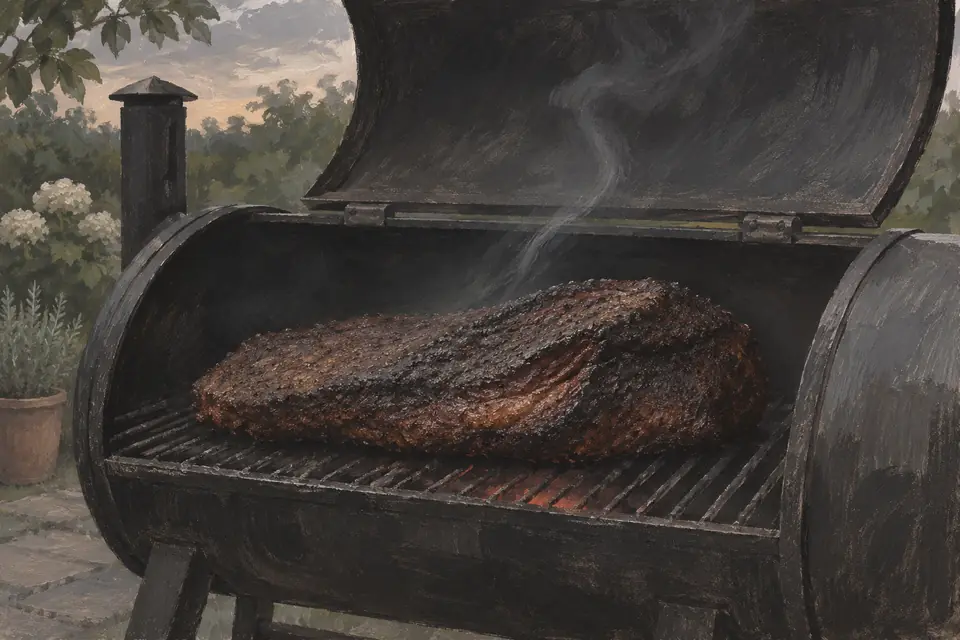
Brisket smoking time
How long brisket takes on a smoker, per kg, with the stall, wrapping and resting built in, so you can work back from dinner time.
Read the guide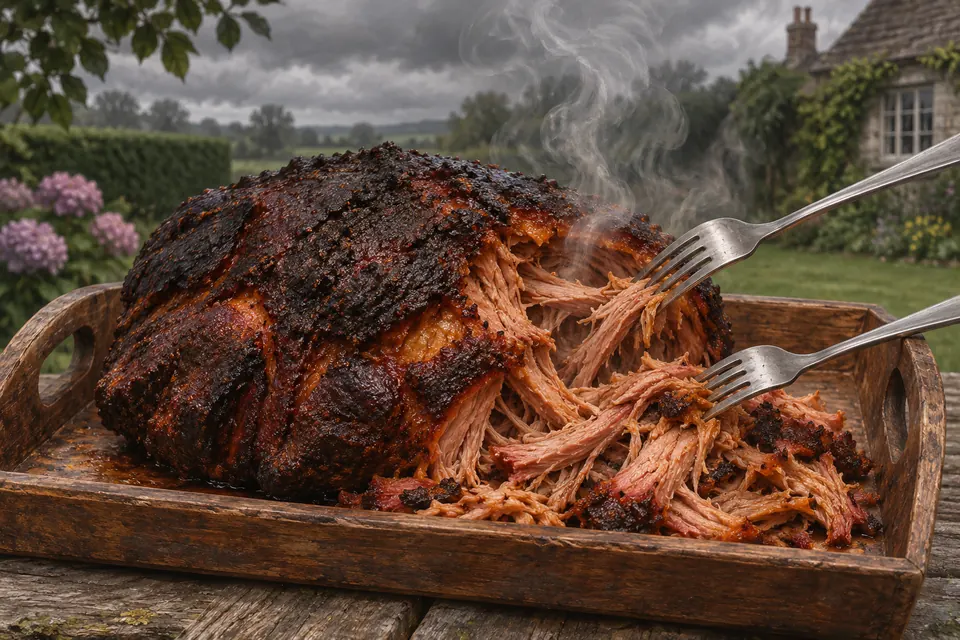 CooksCornerstone
Pulled pork smoking time
How long a UK pork shoulder takes on a smoker, per kg, with the stall, pulling temperature, holding and a plan that works back from dinner.
Read the guide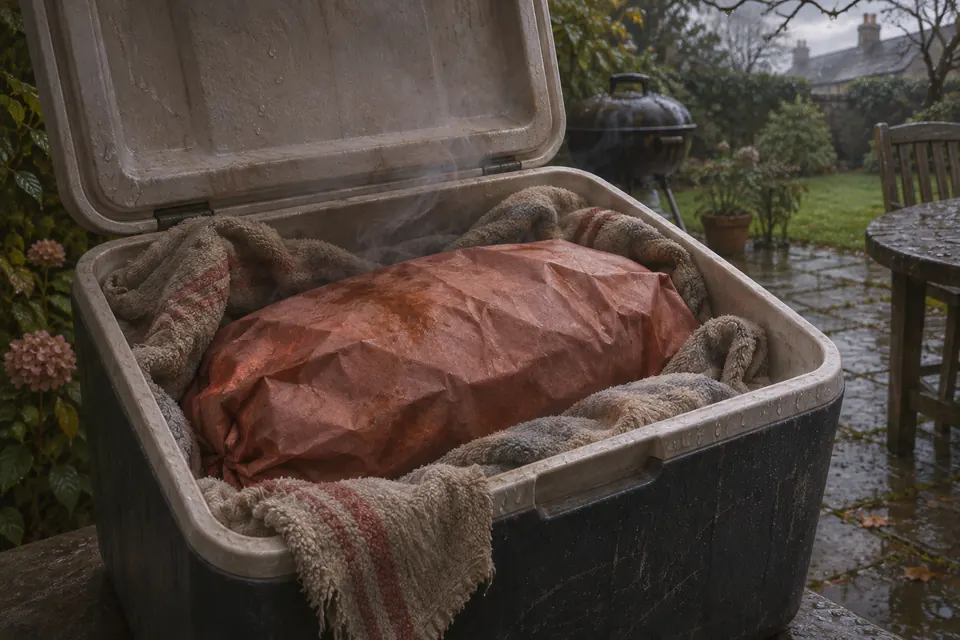 Technique
Resting smoked meat
How long to rest brisket, pork shoulder, ribs and chicken, how the cool box hold works, carryover cooking, and keeping hot food hot.
Read the guide