On this page · 5 sections
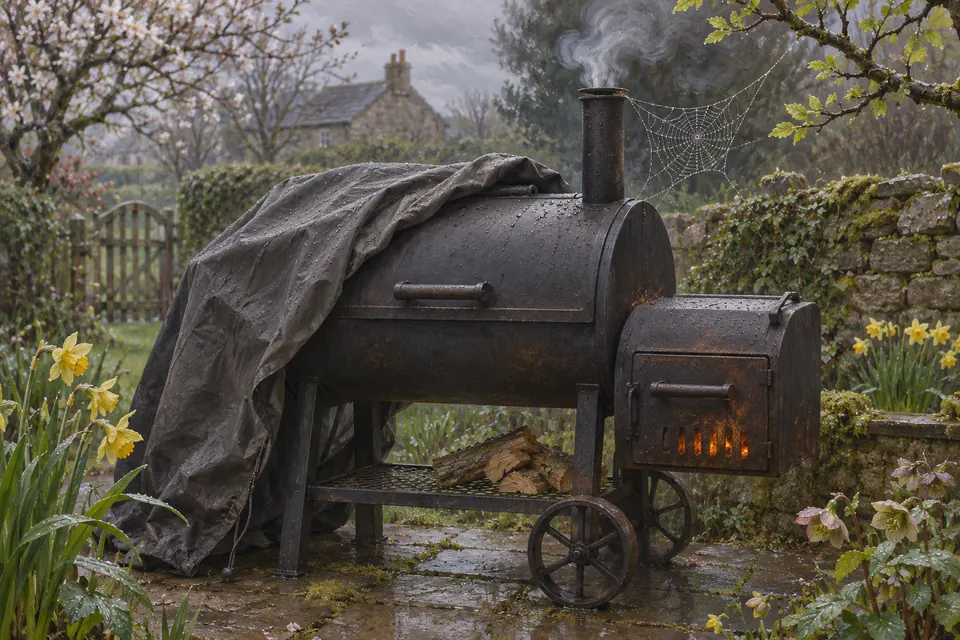
The first dry Saturday of spring, the cover comes off, and there's a spider's web across the chimney and something faintly green on the grate. Nobody wants to throw a pork shoulder into that. This note is here for that morning, and we're publishing it now so it's waiting for you when the weather turns.
Treat the first session as a warm-up for the smoker, not a feast. Spend half an hour on the checks below, do a burn-off, and keep the first real cook simple.
Inspect it before you light it
Take the grates out and have a good look inside. You're looking for anything that's moved in over the winter (nests, wasps, mice in pellet hoppers), rust that's gone beyond the surface, and loose or missing bolts on legs, handles and hinges. On a kamado, check the bands and the hinge spring, and look for cracks in the ceramic.
If the grates have rusted or grown mould, give them a firm scrub with a wire brush or a ball of foil. Our guide to cleaning and maintaining a smoker covers what to scrub, what to oil and what to leave alone.
Pellet grill owners: empty the hopper completely if pellets were left in over winter, and throw away any that have softened or crumbled. Damp pellets jam augers, and an auger jam on day one is a poor start to the year.
Do a burn-off
Light the smoker with no food in it and run it hotter than you'd normally cook, with the vents open, for a good while. On a kamado, keep it well short of flat out, because very high heat can ruin the gasket. This burns off old grease, mould spores and anything else that's taken up residence, and it shows you whether the fire behaves itself. Leave the lid shut and let it go until the smoke coming out looks clean rather than thick and grey.
When it's cooled, brush the grates again and wipe out the ash.
Check gaskets and vents
Run a hand around the lid while the smoker is warm. Smoke leaking out of the seams means the gasket needs attention. Make sure every vent opens and closes freely; a seized vent is the fastest route to a cook you can't control. A little high-temperature grease on sticky hinges helps.
Check the thermometer
Probe thermometers lose accuracy, batteries go flat over winter, and cables get chewed in the shed. Put new batteries in, check the cables, and do a quick accuracy check in a pan of boiling water. If the lid gauge disagrees with the probe, trust the probe.
Start with an easy cook
The first real cook of the year should be something forgiving. Chicken thighs, sausages or a pork shoulder are all good choices. They tolerate a temperature wobble and they remind you how your smoker likes to be run before you put an expensive brisket on it. If it's been a while, how to use a smoker is a useful refresher, and the smoking time calculator helps you plan back from when you want to eat.
It's also worth five minutes with common smoking mistakes before you start. Lifting the lid too often and putting the meat on before the temperature has settled are the classic first-cook-of-the-year slips, and both are easy to avoid when you're reminded.
Save this page, wait for a dry weekend with a light wind, and do the inspection and burn-off on the Saturday so the Sunday is free for the first proper cook.
Keep going
 Weather and kit
Cleaning your smoker
A realistic cleaning routine for charcoal, pellet, kamado and electric smokers: ash, grease, rust, covers, grease fires and getting through a wet British winter.
Read the guide TechniqueCornerstone
How to use a smoker
Everything that happens in a first smoke, in order: lighting, holding temperature, adding wood, the stall, wrapping, resting and knowing when it's done.
Read the guide TechniqueCornerstone
Common smoking mistakes
The twelve mistakes behind most dry, bitter or late smoked dinners, from dirty smoke and lid-lifting to slicing with the grain, and how to fix each one.
Read the guide