On this page · 8 sections
The most important part of reheating smoked meat happens the night before, while it's still warm. Most dry, disappointing leftovers weren't ruined in the microwave. They were left in a big lump on the side while everyone had another drink, then shoved in the fridge uncovered and without any of their juices. Sort the cooling and storing out, and reheating becomes the easy bit.
Cool it quickly
A whole brisket or pork shoulder holds its heat for hours. That's brilliant when you're resting smoked meat in a cool box before serving, but it works against you once dinner's over. A big, dense joint cools slowly from the outside in, and the middle can stay warm for a long time.
So break it up. Once everyone's eaten:
- Split big pieces. Cut brisket into chunks of a few slices, or slice it all. Pull the rest of the pork shoulder rather than leaving it as a joint.
- Spread it out. Use shallow containers or trays so the meat sits in a thin layer. More surface area means faster cooling.
- Don't leave it hanging about. Get it chilled within the time the FSA guidance recommends, which is shorter than many people assume after a long afternoon in the garden.
Don't put a steaming hot tray straight into a packed fridge, as it'll warm everything else up. Let it lose the worst of its heat first, then chill it. If the fridge is rammed with cans, the cans can live in a cool box for the night.
Keep the juices
Smoked meat dries out when it's stored and reheated without liquid. Save every drop from the wrap, the resting tray and the chopping board. Strain off the fat once it sets in the fridge if you like, but keep the jelly underneath. It's mostly gelatine and flavour.
Store sliced brisket with a spoonful of those juices over it. Mix pulled pork with its juices before bagging it. If you've run out, a splash of stock (beef for brisket, chicken for pork) or apple juice for pork does the job.
Fridge or freezer?
| Fridge | Freezer | |
|---|---|---|
| Use when | You'll eat it in the next few days | You won't, or you've cooked far too much |
| How to store | Airtight container or sealed bag, with juices | Flat in freezer bags or vacuum bags, with juices, labelled and dated |
| How long | See the FSA guidance on cooked meat | See the FSA guidance on frozen food |
| To reheat | Straight from the fridge | Thaw in the fridge first |
Smoked meat freezes very well, especially pulled pork and pulled beef. Freeze in meal-sized portions, flat in the bag so they stack and thaw quickly. A marker pen with the date and what's inside saves a lot of guessing six weeks later, when every bag in the freezer looks like the same brown mystery.
Thaw frozen portions in the fridge overnight rather than on the worktop.
Reheat until steaming hot
Whatever method you choose, the target is the same: meat that's steaming hot all the way through, not just warm on the outside. A probe thermometer is handy here too. Check the FSA guidance on reheating, including its advice on not reheating leftovers more than once. Only take out what you'll eat; reheat the portion, not the whole bag.
The water bath method
This is the gentlest way to bring back brisket or pulled pork, and the one that comes closest to fresh.
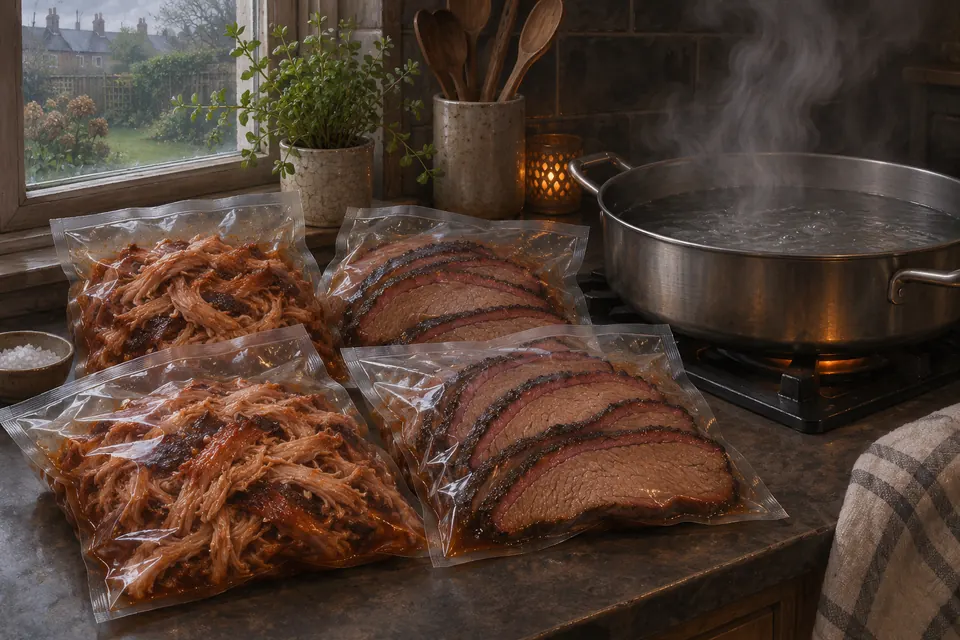
Put portions in a vacuum bag or a strong zip-lock freezer bag with some of their juices. Squeeze out as much air as you can. Lower the bag into a pan of water that's just below a simmer, with small bubbles but not a rolling boil, and leave it until the meat is steaming hot right through. Thin, flat bags heat much faster than thick lumps.
Because the meat sits in its own juices in a sealed bag, it can't dry out. If you've got a sous vide stick you can use that, but a pan on the hob works perfectly well. It's also the easiest method straight from the freezer if you've vacuum-packed portions, though they'll take a good deal longer.
Vacuum-pack leftovers in flat, meal-sized bags the night after a big cook. Weeks later, a bag goes from freezer to pan to plate with almost no effort, and it tastes nearly as good as the day it came off.
Other reheating methods
Oven. Put the meat in a dish with a splash of juices or stock, cover it tightly with foil and reheat in a low-to-moderate oven until it's steaming hot through. Good for larger amounts, and the best option for ribs: wrap them in foil with a little liquid, then unwrap them for the last few minutes to firm up the bark.
Pan. Pulled pork and pulled beef reheat well in a covered frying pan with a splash of liquid, stirring now and then. Quick and handy for a single portion.
Microwave. It works if you're in a hurry, but it heats unevenly and dries meat out. Cover the dish, add some liquid, heat in short bursts and stir between each one. Check that every part is steaming hot, as microwaves leave cold spots.
Back in the smoker. Wrapped in foil with some juices, it's fine, but firing up a smoker to reheat leftovers is rarely worth the fuel unless you're cooking something else anyway.
Making leftovers worth eating
Leftover smoked meat is often better in something else than reheated on its own. Pulled pork goes into tacos, toasties and fried rice. Brisket makes cracking hash, chilli and sandwiches. Smoked chicken makes very good soup. That's a decent excuse to cook a bigger joint than you need next time, and the BBQ meat calculator can help you build them into the plan.
Before your next big cook, find some shallow containers and freezer bags and put them where you can reach them, so the leftovers go away cold and fast instead of sitting on the side.
FAQs
Can I reheat smoked meat more than once?
The FSA guidance advises against reheating leftovers more than once. Reheat only the portion you're going to eat and leave the rest in the fridge or freezer.
How do I reheat brisket without drying it out?
Keep it in larger pieces rather than thin slices, store it with its juices, and reheat it gently in a sealed bag in hot water or covered in a low oven. Slice it once it's hot.
Can I freeze pulled pork?
Yes, it's one of the best meats for freezing. Mix it with its juices, freeze flat in portion-sized bags, and thaw in the fridge before reheating. Our pulled pork guide covers the cook itself.
Does reheated smoked meat lose its smoke flavour?
A little, but less than you'd think. The smoke ring and bark survive gentle reheating well. Fierce heat and microwaving dull the flavour more than a water bath or covered oven.
Keep going
 Technique
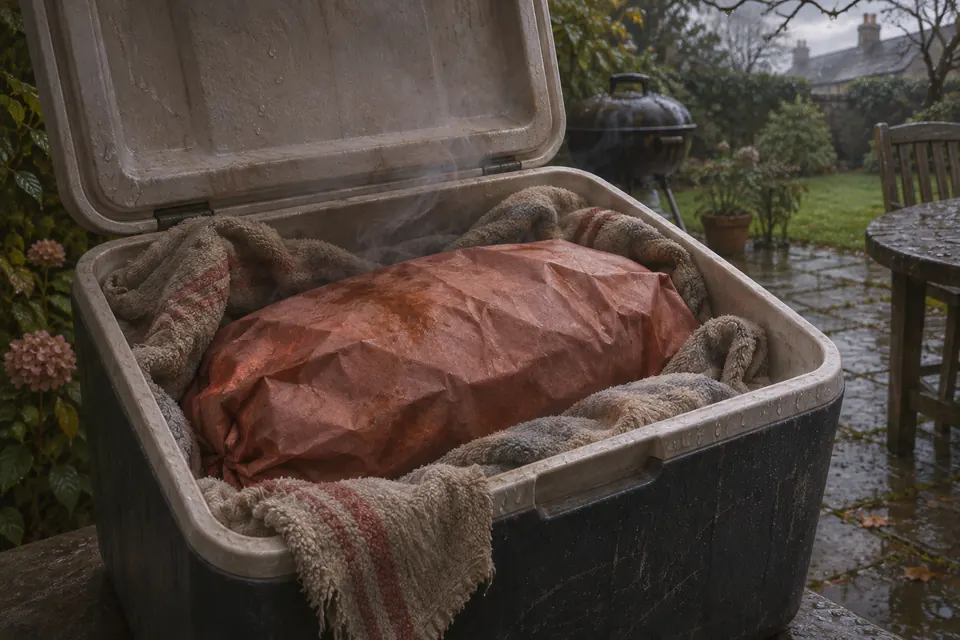
Resting smoked meat
How long to rest brisket, pork shoulder, ribs and chicken, how the cool box hold works, carryover cooking, and keeping hot food hot.
Read the guide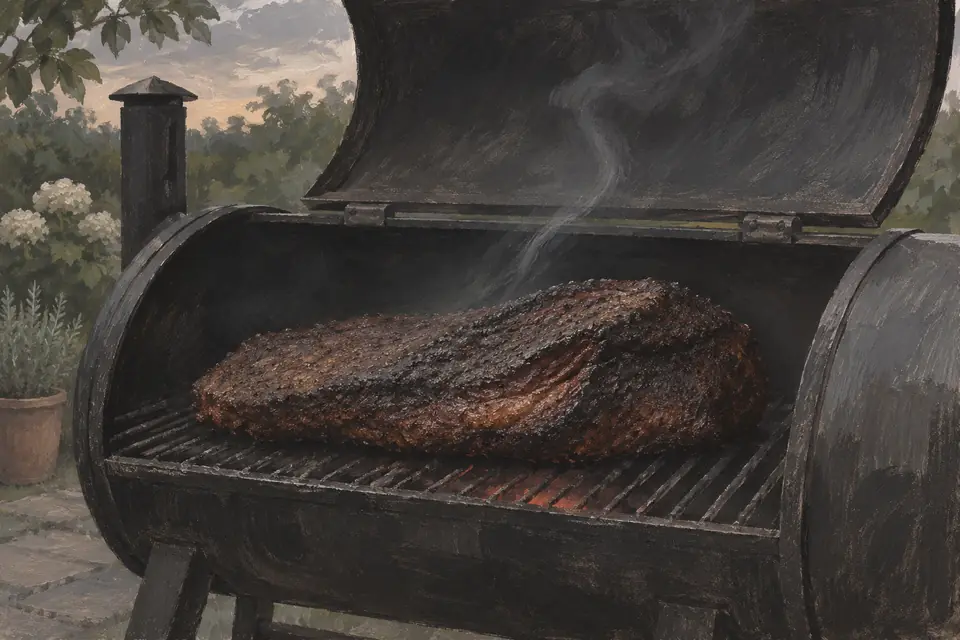 CooksCornerstone
Brisket smoking time
How long brisket takes on a smoker, per kg, with the stall, wrapping and resting built in, so you can work back from dinner time.
Read the guide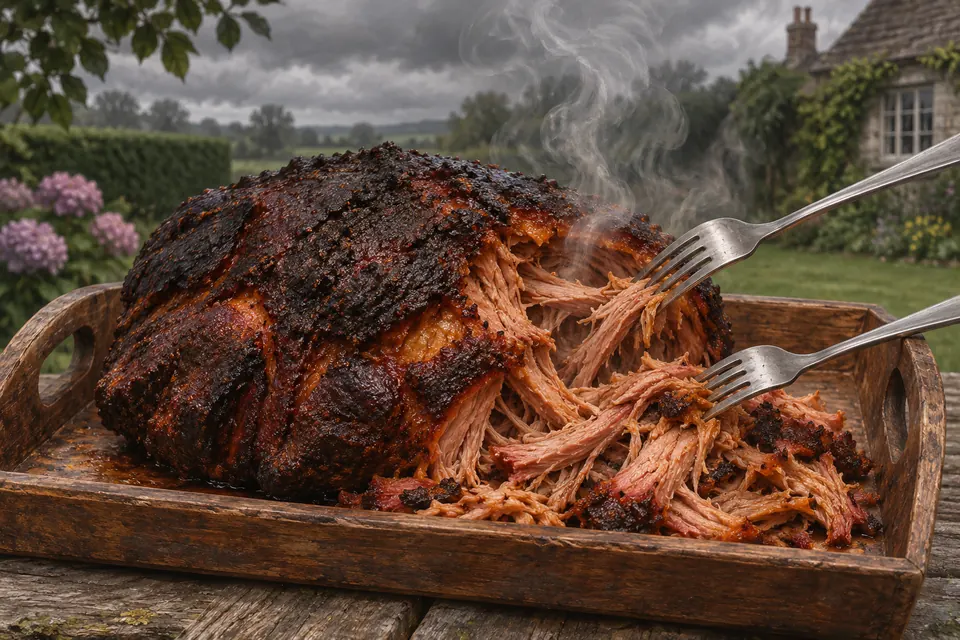 CooksCornerstone
Pulled pork smoking time
How long a UK pork shoulder takes on a smoker, per kg, with the stall, pulling temperature, holding and a plan that works back from dinner.
Read the guide