On this page · 8 sections
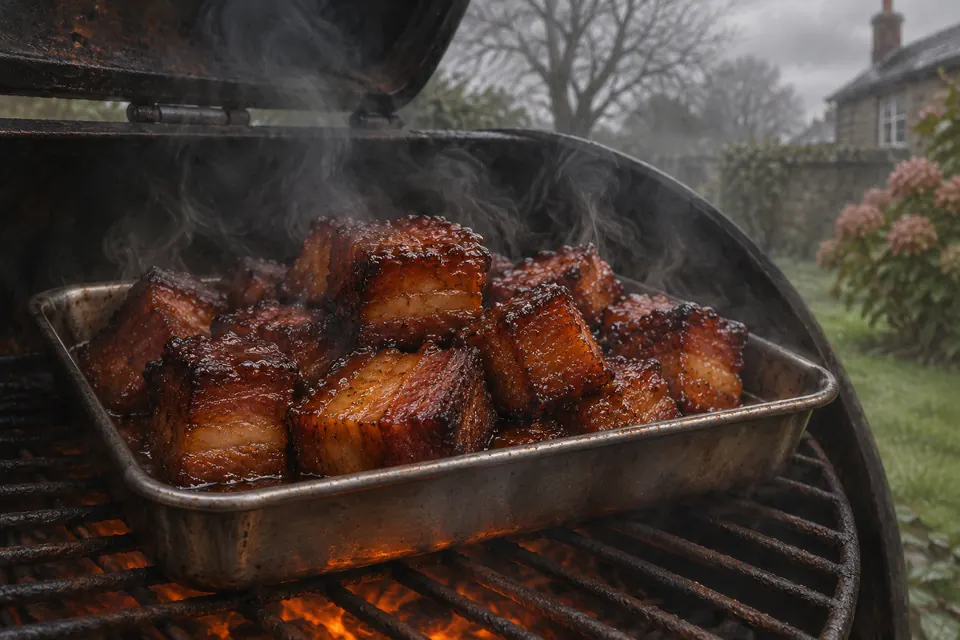
At a glance
- Ask for
- Thick, boneless, rindless pork belly
- Smoker
- Around 120–135°C
- Time
- Usually 4–5 h in total
- Wood
- Apple or cherry, or oak for stronger smoke
- Done when
- Probe slides in easily, around 90–95°C
A reader asks why anyone bothers with pork belly burnt ends when brisket is the classic. Fair question, and the answer is mostly practical. A brisket point is the fatty half of a big, pricey joint that takes twelve hours or more, and plenty of UK butchers won't sell you the point on its own. A slab of pork belly is in every butcher's window, it's cheap, and it turns into something just as rich in an afternoon. Purists can argue about the name. Everyone else will be too busy eating.
What to ask the butcher for
You want a thick, even piece of pork belly, boneless. The thicker end, nearer the shoulder, gives you chunkier cubes with a better ratio of meat to fat. Thin, tapering tail ends cook unevenly and can turn into crisps.
Ask the butcher to take the bones out, and ask about the rind while you're there. Most butchers will do both without fuss, and they'll do it faster and neater than you will with a kitchen knife. If you're buying from a supermarket counter, look for a slab that's at least a few centimetres deep and has visible layers of lean running through it, not a solid white block.
How much? As a starter or one of several meats, a rough guide is 150–200 g of raw boneless belly per person. Pork belly loses a fair bit of fat during the cook, so don't be stingy. The BBQ meat calculator will do the sums for a crowd.
Rind on or off?
Off, for burnt ends. At smoker temperatures the rind doesn't crackle. It goes tough and leathery, like a wet welly, and it stops the smoke and rub getting into the fat underneath.
Don't throw it away, though. Ask the butcher to leave the rind in the bag, score it, salt it and roast it hot in the oven while the burnt ends finish. You get crackling on the side and nobody has to chew through a rubber band. If you'd rather leave a thin layer of fat on top of the meat, that's fine and it renders down nicely.
| Rind on | Rind off | |
|---|---|---|
| Texture after smoking | Chewy, leathery | Soft, rendered fat under the bark |
| Smoke and rub | Sits on the rind | Gets into the fat and meat |
| Crackling | Not at low temperatures | Roast the rind separately in the oven |
| Verdict | Skip it | The usual choice |
Cut and season
Cut the belly into cubes of around 4–5 cm. Smaller than that and they dry out before the fat renders; bigger and the middle stays chewy. Try to keep them roughly the same size so they finish together.
Toss the cubes in a light coat of oil or mustard (you won't taste the mustard, it just helps the rub stick), then season. A pork rub with salt, pepper, paprika, garlic and some brown sugar works well. Pork belly is already rich, so go easy on the sugar here because you'll add more later. Our rub ratios guide has a starting mix.
Stage one: smoke
Get the smoker steady somewhere around 120–135°C. Lay the cubes on a rack with a little gap between each so the smoke can reach every side. A cooling rack on a baking tray makes moving them easier.
Add your wood. Apple and cherry suit pork nicely, and oak works if you prefer something stronger. Two or three chunks on charcoal is plenty; the cubes have a lot of surface area and take on smoke fast. Look for thin, faint smoke rather than thick white clouds, which will make them bitter. The smoking wood guide covers which British woods go with what.
Leave them for around two and a half to three hours, until they've taken on a deep mahogany colour and the rub has set into a crust. They won't be tender yet. That's the next stage's job.
Stage two: braise
Tip the cubes into a foil tray or a metal roasting tin. Add a few knobs of butter, a handful of brown sugar and a few spoonfuls of your BBQ sauce, plus a splash of apple juice if you like. Toss everything so the cubes are coated, cover the tray tightly with foil and put it back in the smoker.
This is where the fat renders and the meat goes soft. Give it around an hour to an hour and a half, then check. A probe should slide into a cube with almost no resistance, usually somewhere around 90–95°C internal. Go by feel. A cube that's at temperature but still bouncy needs longer.
Shake the tray every half hour or so during the braise. Cubes sitting on the bottom in all that butter can stew while the ones on top stay dry.
Stage three: glaze
Take the foil off, give everything a stir and leave the tray uncovered in the smoker for around 10–20 minutes. The liquid reduces and turns into a sticky glaze. If there's a lot of rendered fat pooling in the tray, spoon some off first or the glaze won't set.
Serve them straight away with cocktail sticks and plenty of napkins. They'll hold for a short while in a warm oven, but they're at their best within half an hour of coming off.
Timing the cook
The whole thing usually takes four to five hours, which makes pork belly burnt ends one of the friendlier cooks for a summer afternoon. Put your serving time and a rough cook-rate into the smoking time planner and leave yourself a buffer. If they're ready early, keep them covered in a low oven and glaze at the last minute.
Pork belly is forgiving, far more so than a pork shoulder that has to survive the stall, but it is still pork. Make sure it's cooked through and check it with a probe thermometer; the FSA guidance in the safety box covers the rules.
Your next step is a phone call. Ring the butcher a day or two ahead and ask for a thick, boneless piece of belly with the rind off and bagged separately, so it's ready when you get there.
FAQs
Can I make burnt ends from supermarket pork belly slices?
You can, but slices are usually too thin. They dry out before the fat renders and end up more like crispy bacon. A whole piece you cube yourself works far better.
Do I need to wrap pork belly burnt ends?
Covering the tray with foil during the braise does the same job as wrapping. It traps moisture so the fat renders and the cubes go tender instead of drying out.
Can I make them the day before?
Do the smoke stage the day before, cool the cubes quickly and keep them in the fridge. Braise and glaze on the day. They'll taste a little less smoky than fresh but still very good.
What wood is good for pork belly?
Apple and cherry are the usual picks for a milder, sweeter smoke, and oak or beech if you like it stronger. Avoid piling on lots of wood: small cubes take on smoke quickly.
Keep going
 CooksCornerstone
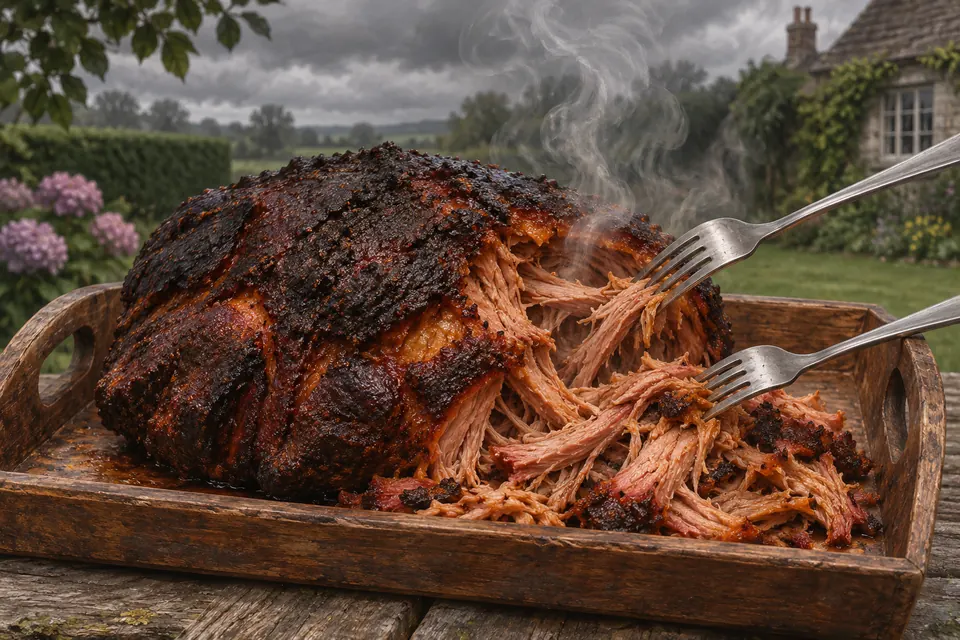
Pulled pork smoking time
How long a UK pork shoulder takes on a smoker, per kg, with the stall, pulling temperature, holding and a plan that works back from dinner.
Read the guide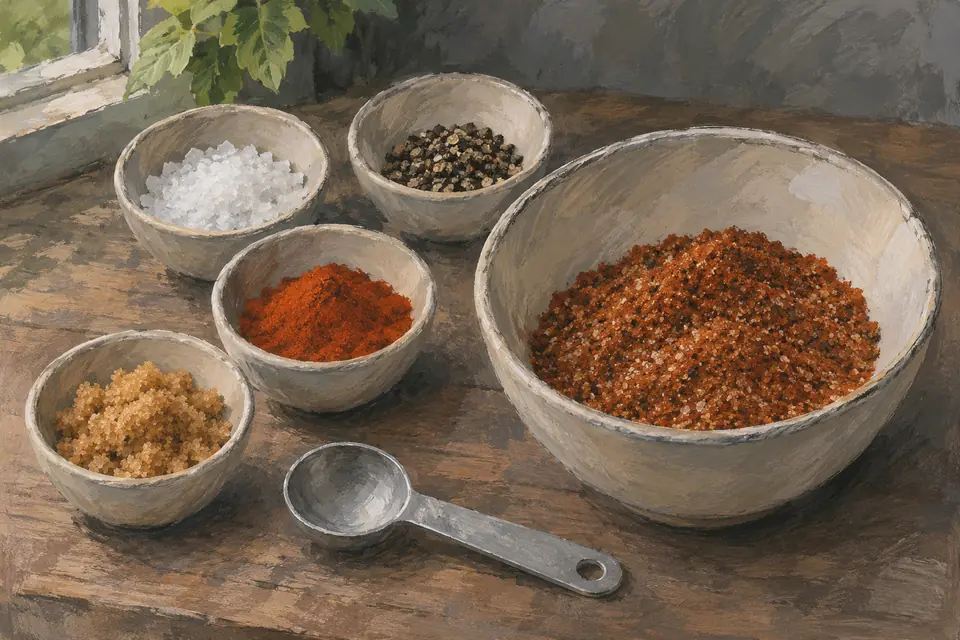 Technique
BBQ rub ratios
A simple base BBQ rub written as parts, why salt should be worked out first, how to scale it for any cut, and easy variations for beef, pork, chicken and lamb.
Read the guide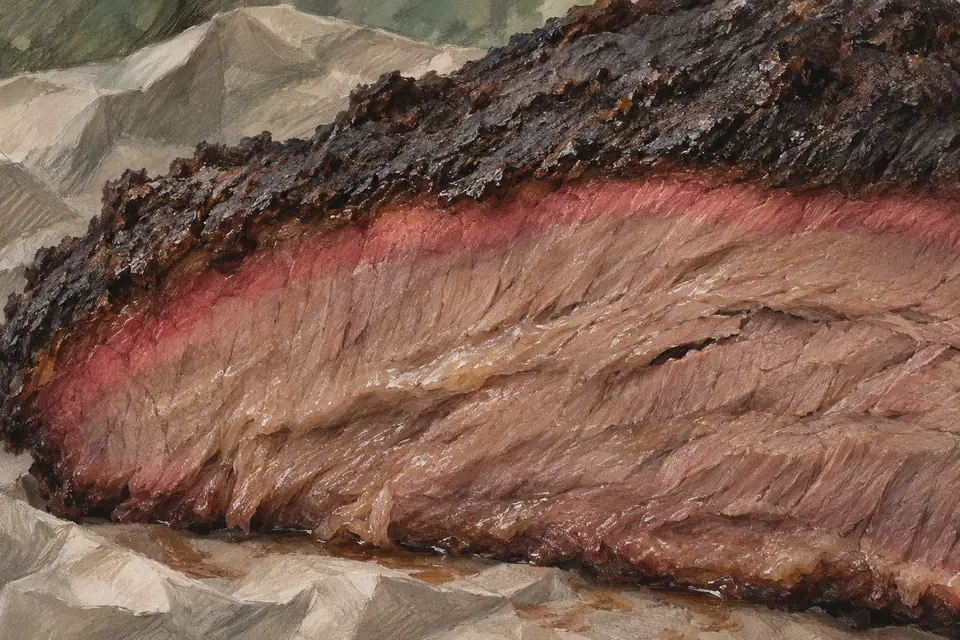 Technique
Bark and smoke ring
What makes a dark, crunchy bark on smoked meat, what the pink smoke ring actually is, and why you can stop worrying about the ring.
Read the guide