On this page · 7 sections
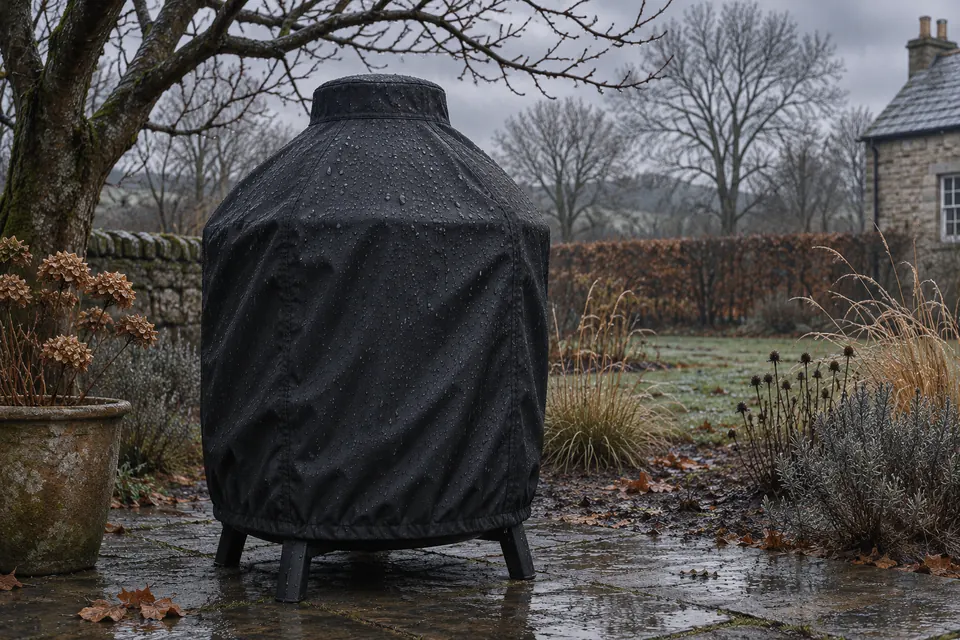
The rust you find on a smoker in April usually started in November, under a cover that went on over a bowl of damp ash. Winter is hard on smokers, less because of the cold than because of the wet, and most of the damage happens quietly while the thing sits in a corner of the garden.
This checklist is for the next few weekends, before January sets in. It works whether you're putting the smoker away until spring or keeping it going for the odd Sunday shoulder.
1. Get every bit of ash out
Ash and rain make a paste that holds water against the steel for weeks. It's the single biggest cause of rotted-through charcoal bowls and fireboxes. Once the smoker is completely cold, empty the ash pan, the bowl and the firebox, and brush out the corners. If you're still cooking through winter, make this an after-every-cook job, not a monthly one.
2. Deal with rust while it's small
Look at the bowl, the firebox, the grates and around any welds or bolts. Surface rust on the outside can usually be rubbed back with a wire brush, wiped clean and given a thin coat of cooking oil. On a painted outer surface, use a high-temperature paint made for barbecues and stoves, and only on the outside. Flaking rust on the cooking grates is a sign they need a good scrub or replacing. Our guide to cleaning and maintaining a smoker covers each type in more detail.
Ceramic kamados don't rust in the same way, but their metal bands, hinges and vents do.
3. Choose the cover carefully
A cover keeps rain off, but it also traps whatever moisture is already there. Put it on only when the smoker is cold and dry, ideally on a dry day. A breathable, well-fitting cover beats a cheap tarpaulin that flaps in the wind and holds condensation against the lid. Lift it every few weeks to air the smoker out and check for any surprises.
4. Check gaskets and seals
Felt or mesh gaskets around lids and doors compress, tear and go hard over time. Run a hand round the lid edge and look for gaps or loose strips. If smoke was leaking out of the seams on your last cook, it's time for a new gasket. Replacing one is an easy indoor-ish job for a quiet weekend, though the glue usually wants a warmer day to cure. Gaskets and spares are on our smoker kit list.
5. Bring the pellets indoors
Pellets and damp do not mix. Moist pellets swell, crumble back into sawdust and can jam the auger, which is a miserable thing to discover on the morning of a cook. Empty the hopper if you won't be cooking for a while, and store open bags in a sealed tub in a dry shed or utility room, off a cold concrete floor. More on keeping them dry in our wood pellets guide.
The same goes for charcoal and wood chunks. A damp bag of charcoal lights badly and smokes worse.
6. Give it a clean, not a deep clean
Scrape the grates, brush down the inside walls if loose flakes are building up, and wipe out any grease from drip trays. You don't need to scrub the inside back to bare metal: a thin, dry layer of seasoning helps protect it. Do get rid of thick grease, though, because it goes rancid and attracts the wildlife.
7. Check the thermometer and probes
Make sure the probe thermometer works, the batteries aren't flat, and the cables haven't been kinked or chewed. It's far easier to sort now than on Christmas Eve.
Pick a dry weekend, put an hour aside, and work through the list from the top. If something turns up that needs a replacement part, order it now, while there's no cook waiting on it.
Keep going
 Weather and kit
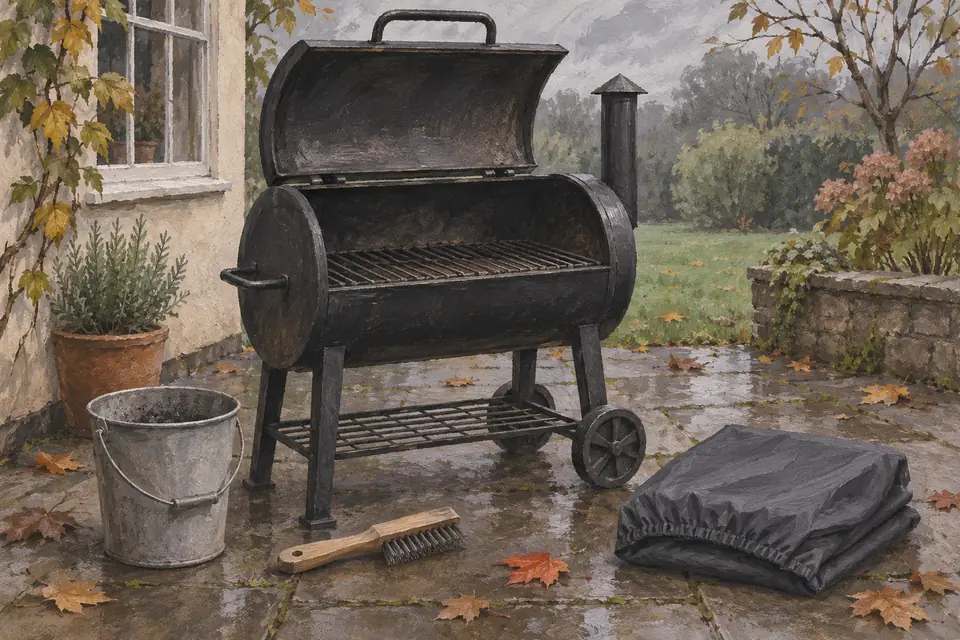
Cleaning your smoker
A realistic cleaning routine for charcoal, pellet, kamado and electric smokers: ash, grease, rust, covers, grease fires and getting through a wet British winter.
Read the guide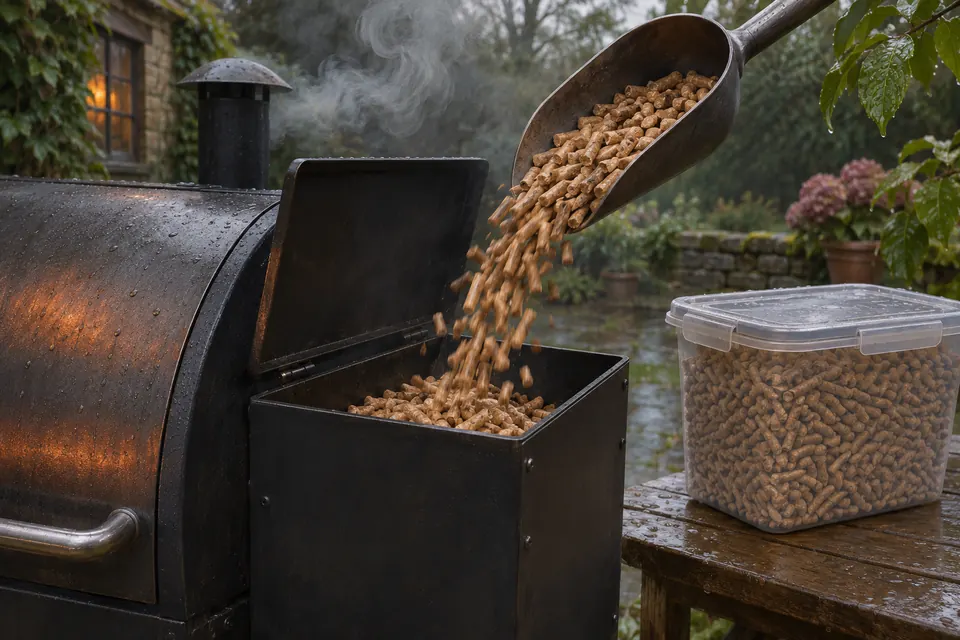 Fuel and wood
Wood pellets UK
Why heating pellets don't belong in a pellet grill, how to keep pellets dry in a damp British shed, and whether flavour blends or single-species pellets are worth it.
Read the guide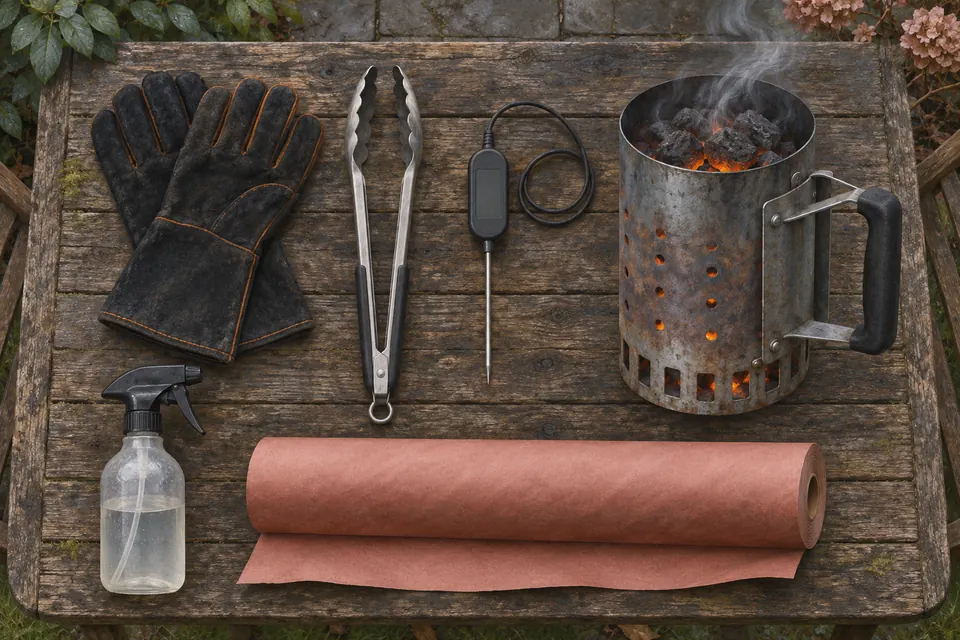 Weather and kit
Smoker kit list
The smoking kit that matters, the extras that make life easier and the gadgets you can skip, for anyone getting started with a smoker in the UK.
Read the guide