On this page · 6 sections
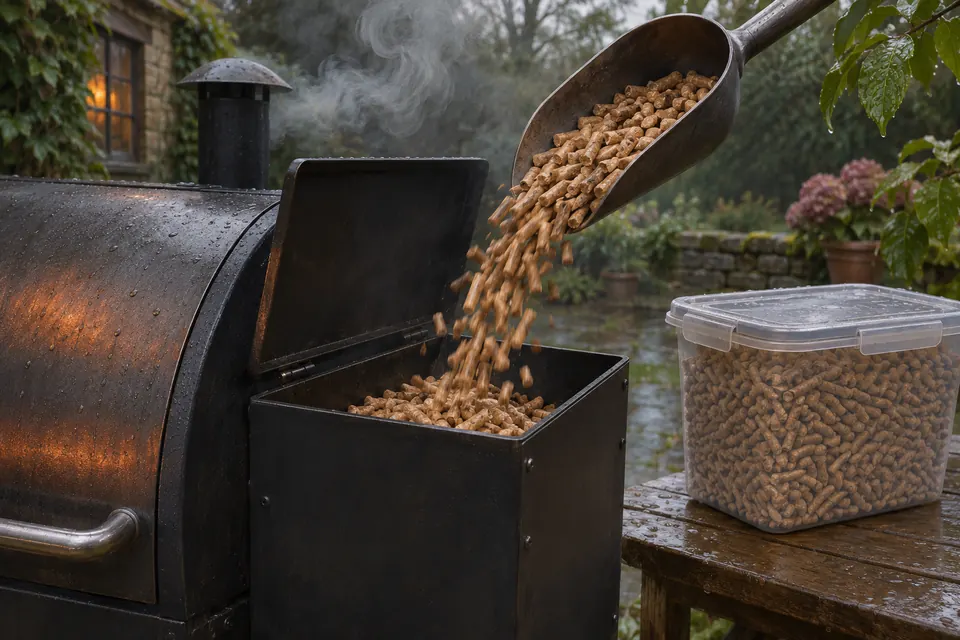
Two sacks of pellets can sit side by side in a garden centre, look almost identical, and only one of them belongs in your pellet grill. One is for cooking. The other is for a pellet stove or a biomass boiler. They're both compressed wood, they're both sold in the UK in much the same bags, and the heating ones are often cheaper. That's exactly why people end up with the wrong ones.
Food-grade vs heating pellets
| Cooking pellets | Heating pellets | |
|---|---|---|
| Made for | Pellet grills, smoke tubes, cooking | Stoves and boilers |
| Wood | Hardwoods chosen for flavour | Whatever burns efficiently, often softwood |
| Standards | Sold for food use | Made to heating standards, not food |
| Additives | Should be none, or clearly labelled | Not controlled for cooking |
| Smoke flavour | Clean, mild | Can be resinous, harsh or worse |
Heating pellets are made to burn hot and clean in a sealed appliance, not to flavour food. They often contain softwoods like pine and spruce, which produce resinous, bitter smoke. Depending on the source, they may contain other wood material that was never intended to come near your dinner.
The rule is simple: only burn pellets that are clearly labelled for cooking, BBQ or food use. If a bag doesn't say, assume it's for heating and leave it on the shelf. A cheaper sack isn't a bargain if it puts bitter smoke through a whole brisket.
Blends vs single species
Most flavoured pellets aren't 100% the wood on the front of the bag. A "cherry" or "hickory" pellet is very often a base hardwood, commonly oak or alder, with a proportion of the flavour wood added. The base wood burns consistently and keeps costs down. Some brands also use flavour oils; a good label will tell you what's in it.
Single-species pellets do exist and cost more. Are they worth it? For most cooks, not by much. Pellet grills burn very cleanly and produce quite mild smoke whatever's in the hopper, so the difference between a blend and a pure wood is subtle on the plate. Where single species makes sense:
- You want to know exactly what you're burning.
- You're cold smoking with a smoke tube, where flavour stands out more.
- You've found one you love and want it every time.
Otherwise, a decent blend on an oak base is a good everyday choice.
Which flavours suit what
UK wood species map onto pellets nicely:
- Oak: an all-rounder, and the classic for beef.
- Beech: mild, clean, good for fish and cheese.
- Apple and cherry: sweet and fruity, lovely on pork and poultry; cherry adds colour.
- Alder: delicate, traditional with salmon.
- Hickory and mesquite: strong American flavours, mostly imported here. Mesquite can be harsh on long cooks.
Our smoking wood guide goes into these in more detail, including chunks and chips.
Keeping pellets dry in a damp climate
This is the bit that matters most in Britain. Pellets are compressed sawdust, and moisture undoes the compression. Damp pellets swell, soften and crumble back into sawdust. In a pellet grill that causes:
- Auger jams, when swollen pellets wedge in the feed.
- Flameouts, when the firepot fills with sawdust that smothers instead of burns.
- Temperature swings and dirty smoke, from uneven feed.
A wet bag left on a garage floor over a British winter can turn into one solid lump. Storage habits that help:
- Use a sealed, lidded bin. A plastic storage box with a seal, or a metal bin, works. Tip the bag in rather than leaving it open.
- Keep it off the floor and away from walls that get damp.
- Store indoors if you can: a dry shed, garage or utility area.
- Empty the hopper after cooking if the grill won't be used again for a while, or if it's very wet out. Pellets left in the hopper can draw damp even under a cover. Our cleaning and maintenance guide covers the rest of the routine.
- Sieve out the dust before filling the hopper. A bag's last few scoops are often mostly fines.
The snap test: bend a pellet. A good one snaps cleanly with a little crack. If it bends, crumbles or feels soft, it's taken on moisture. Don't feed it to the grill.
How many pellets you'll use
Burn rate depends on the grill, the cooking temperature and, in the UK, the weather. Cold, wind and rain all push pellet use up, sometimes by a lot. Insulated covers and sheltered spots help. For a working estimate, the smoker fuel calculator gives kilograms from cook length and smoker type; buy a spare bag before any long winter cook.
Pellets outside a pellet grill
Pellets aren't only for pellet grills. A smoke tube, a perforated metal tube filled with pellets and lit at one end, adds smoke to a kettle, gas BBQ or even a cardboard box. They're very handy for cold smoking cheese and salmon, where you want smoke without heat. The same food-grade rule applies.
If you're still deciding whether a pellet grill suits you at all, pellet grills explained covers how they work and their trade-offs, and offset vs kamado vs pellet puts them side by side. If you already own one, the next step is to find a sealed bin for your pellets before the next wet spell.
FAQs
Can I use heating pellets in a pellet grill?
No. Heating pellets aren't made for food use and can contain softwoods or other material that gives harsh, resinous smoke. Use only pellets labelled for cooking.
Do wood pellets go off?
They don't spoil like food, but they absorb moisture over time, especially in an open bag. Kept sealed and dry, they last a long time. Once they fail the snap test, it's time for a fresh bag.
Are flavour blends worth buying?
Yes, for everyday cooking. Most are a base wood with flavour wood added, and in a pellet grill the difference from a single-species pellet is subtle.
Why does my pellet grill keep flaming out?
Damp pellets and a firepot full of ash or sawdust are the usual culprits. Check your pellets with the snap test, clear the firepot and sieve out fines before refilling.
Keep going
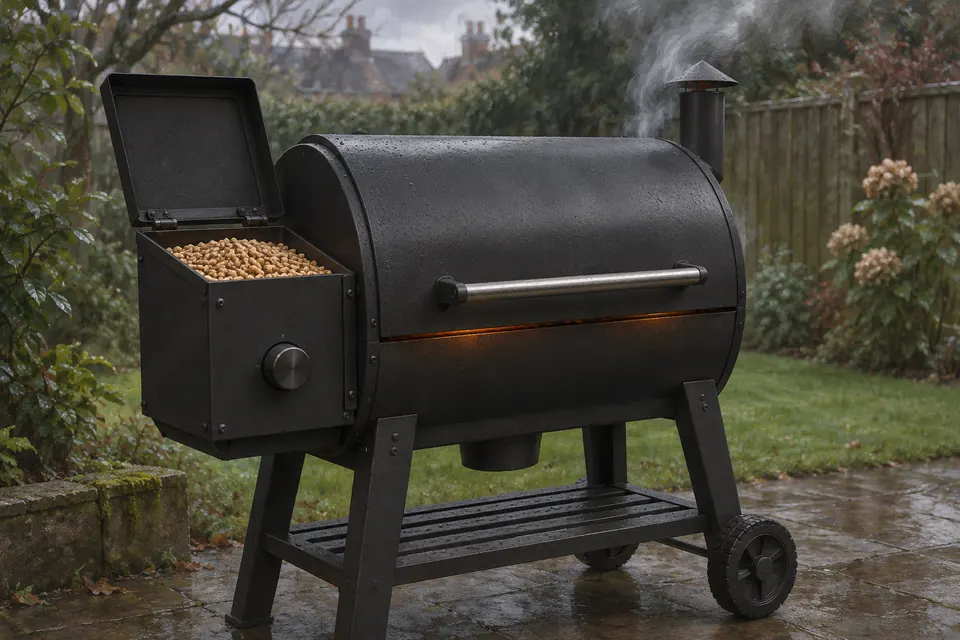 Choosing a smoker
Pellet grills explained
How pellet grills hold temperature, what happens in a power cut, how to shut one down safely and how to keep pellets dry in a damp British shed.
Read the guide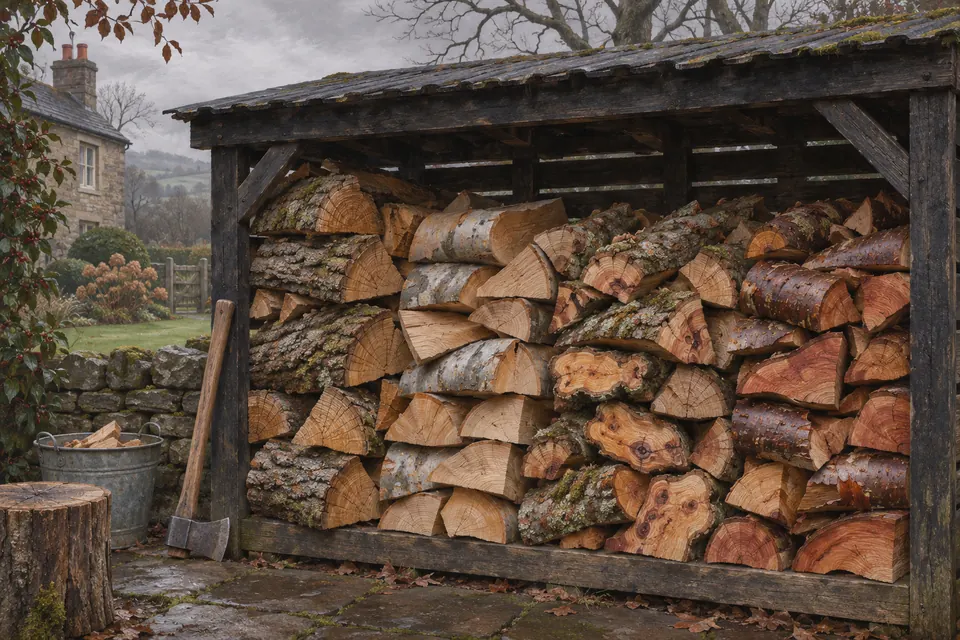 Fuel and woodCornerstone
Smoking wood in the UK
Which British woods suit which meats, chunks vs chips vs splits vs pellets, how dry the wood should be, what never to burn and how to store it.
Read the guide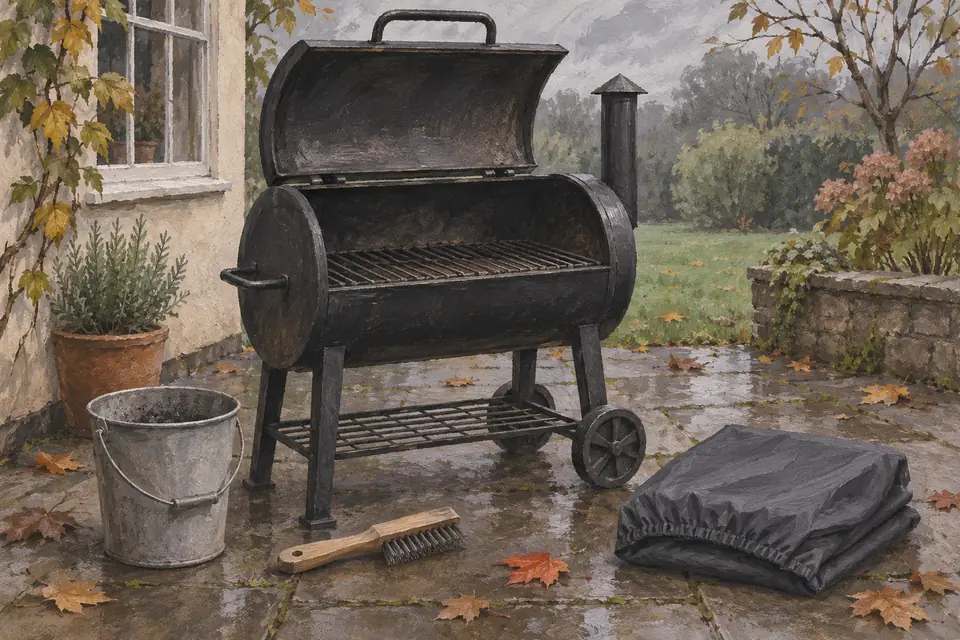 Weather and kit
Cleaning your smoker
A realistic cleaning routine for charcoal, pellet, kamado and electric smokers: ash, grease, rust, covers, grease fires and getting through a wet British winter.
Read the guide