On this page · 8 sections
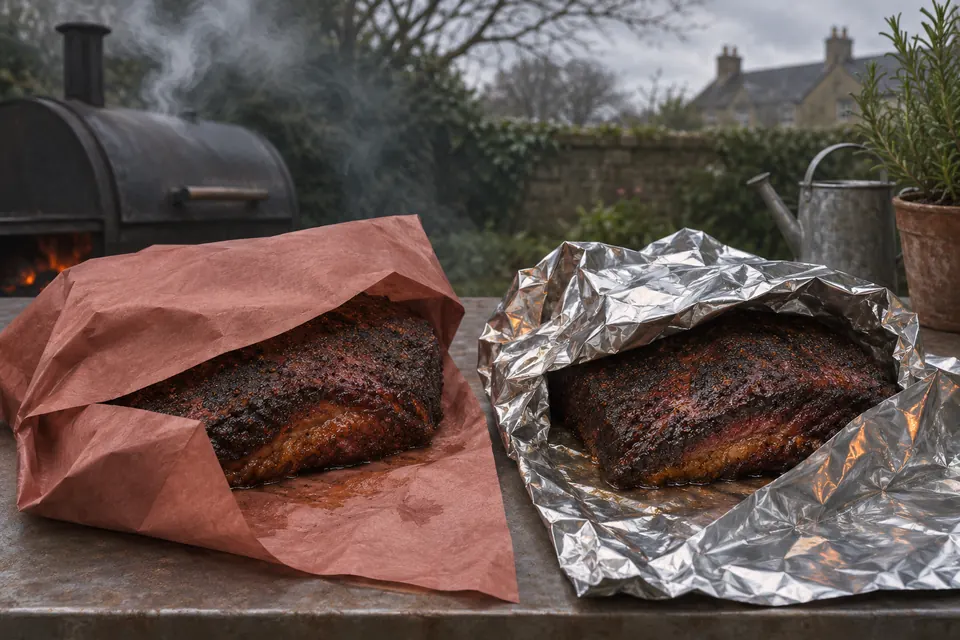
For brisket, use butcher paper. For pork shoulder and ribs, foil is fine and often better. And if you've got the time and care more about crust than schedule, don't wrap at all. That's most of the decision; the rest of this page is the reasoning, plus how to wrap without making a soggy parcel.
Why wrap at all
Big cuts hit the stall: a long stretch where the internal temperature stops climbing because moisture evaporating from the surface cools the meat as fast as the smoker heats it. Wrap the meat and that moisture can't escape so easily, evaporation slows, and the temperature starts rising again.
In American BBQ circles this is called the Texas crutch. The name suggests it's cheating. It isn't. Plenty of very good cooks wrap almost everything, and plenty don't. It's a trade between time, moisture and bark, and the right answer depends on the cut and how close dinner is.
Wrapping also protects the meat. Once it's wrapped, it stops taking on much more smoke, the bark stops darkening, and the thin edges of a brisket flat are less likely to dry out.
Foil, paper or naked: side by side
| Foil | Butcher paper | Naked | |
|---|---|---|---|
| Speed through the stall | Fastest | Fast | Slowest |
| Bark | Soft, can go mushy | Mostly holds, slightly softened | Firmest and darkest |
| Moisture | Very moist, sits in its juices | Moist, some steam escapes | Driest surface, relies on fat |
| Smoke flavour after wrapping | Almost none added | A little | Keeps building |
| Easiest to get hold of | Any supermarket | Online or from some butchers | Free |
| Suits | Pork shoulder, ribs, a cook running late | Brisket, beef short ribs | Early starters, bark fans |
Foil
Foil is the blunt instrument, and a useful one. Wrapped tightly, it seals everything in, so the meat braises gently in its own juices and fat. That's why foil-wrapped cooks push through the stall fastest and come out the juiciest.
The cost is bark. A crust you spent hours building will soften in foil, and on brisket it can turn soft enough to slide off when you slice. For pulled pork that matters much less, since you're shredding it anyway and the bark gets mixed through.
Use thick-gauge foil, or two layers of the thin stuff. Bones and sharp edges punch through cheap foil, and a leaking parcel drips fat onto the coals and into the drip tray.
Butcher paper
Butcher paper for smoking is unwaxed and uncoated, usually pink or peach in colour. Don't use freezer paper, which often has a plastic coating on one side, and don't use waxed paper, which will melt and smoke. Baking parchment will do in a pinch but tears easily and doesn't breathe in quite the same way.
Paper lets some steam out, so it's a little slower than foil but keeps much more of the bark intact. It also soaks up rendered fat and turns translucent, which is normal and actually helps it hold heat. This is why paper became the default for brisket: you get most of the speed with less of the mushy crust.
UK supermarkets don't usually stock it, but it's easy to find online, and some butchers will sell you a few metres if you ask nicely.
Going naked
Not wrapping is the slowest route and the one with the best bark. The surface dries fully and sets into a dark, firm crust. If you started early, have a cool box ready for a long rest and aren't watching the clock, cooking naked costs nothing but time.
The risk is drying, especially on lean cuts or a brisket flat with little fat cap. Spritzing now and then can help the edges. Our guide to bark and the smoke ring covers what makes a good crust in the first place.
When to wrap
Wrap when the bark is set, not just when the stall arrives. Look for a deep mahogany colour, and touch the surface: if rub comes off on your finger, it's not ready. Wrap too early and you're steaming a wet crust.
In practice that's often around the time the stall begins, somewhere in the 65–75°C range internal, but bark is the better signal than a number. The usual order is:
- Brisket: wrap in paper when the bark is dark and dry, then cook to tenderness. See brisket smoking time for timings.
- Pork shoulder: foil or paper once the colour is right, or not at all if you have the hours. More in pulled pork smoking time.
- Ribs: the popular 3-2-1 method for spare ribs is roughly three hours unwrapped, two in foil, one unwrapped to firm up. Many cooks find that a bit long and cut the foil stage down. See smoked ribs.
- Beef short ribs: paper, or often no wrap at all, since they're fatty enough to look after themselves.
How to wrap without making a mess
- Tear off two long overlapping sheets, about three or four times the length of the meat.
- Lay the meat near one end, fat side up for brisket.
- Add a splash of liquid or a knob of beef dripping if you like. Not much: a couple of tablespoons, not a bath.
- Fold the near edge over the meat, tuck in the sides tightly and roll it over, folding the sides in again as you go. Tight is the aim. Air gaps steam the bark.
- Put it back on the smoker seam side down, with the probe back in through the wrap.
Lay out the wrap before you take the meat off. Standing there holding a hot brisket while you fight a roll of paper in the wind is how briskets end up on the patio.
Once it's wrapped, keep the smoker steady and cook to feel. The wrap also comes in handy for resting the meat afterwards, so leave it on. Next step: pick your wrap for this weekend's cut and buy it now, because you will not find butcher paper at a petrol station at 1pm.
FAQs
Is wrapping the same as the Texas crutch?
Yes. The Texas crutch is the nickname for wrapping meat, usually in foil, to get through the stall faster. Butcher paper wrapping is a variation of the same idea.
Can I use baking parchment instead of butcher paper?
In a pinch, yes. It works, but it's narrower, tears more easily and lets out steam differently, so double it up and handle the parcel carefully.
Does wrapping stop smoke flavour?
Mostly. Foil stops it almost completely and paper lets a little through. By the time most cooks wrap, the meat has already taken on most of the smoke it's going to absorb.
Should I unwrap at the end?
Some cooks unwrap for the last half hour to firm the bark back up, especially after foil. It helps a bit. It won't fully restore a crust that's gone soft.
Keep going
 TechniqueCornerstone
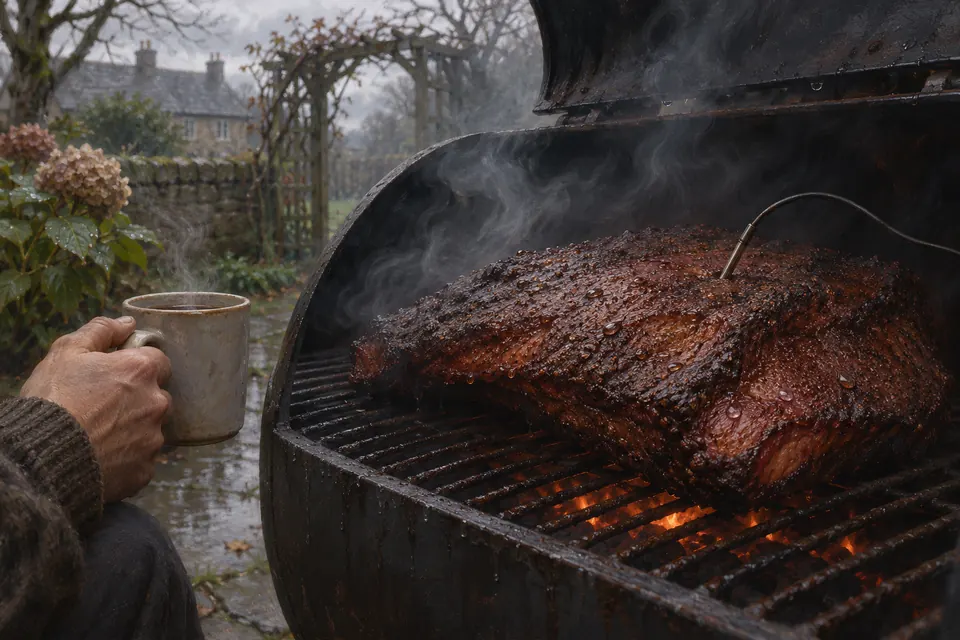
The stall explained
Why big cuts stop rising in temperature for hours mid-cook, the simple science behind it, and when to wait, wrap or turn the heat up.
Read the guide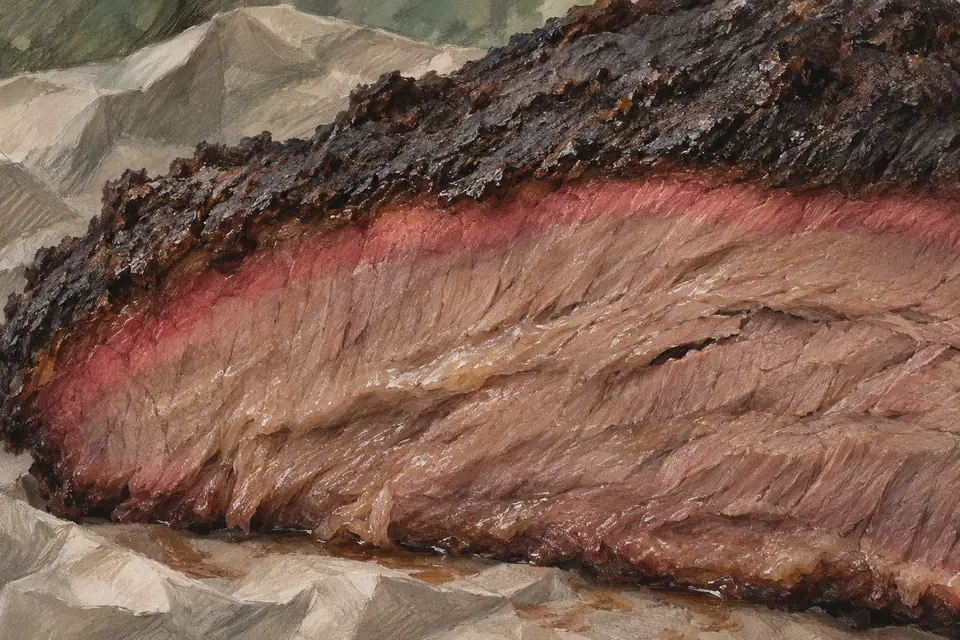 Technique
Bark and smoke ring
What makes a dark, crunchy bark on smoked meat, what the pink smoke ring actually is, and why you can stop worrying about the ring.
Read the guide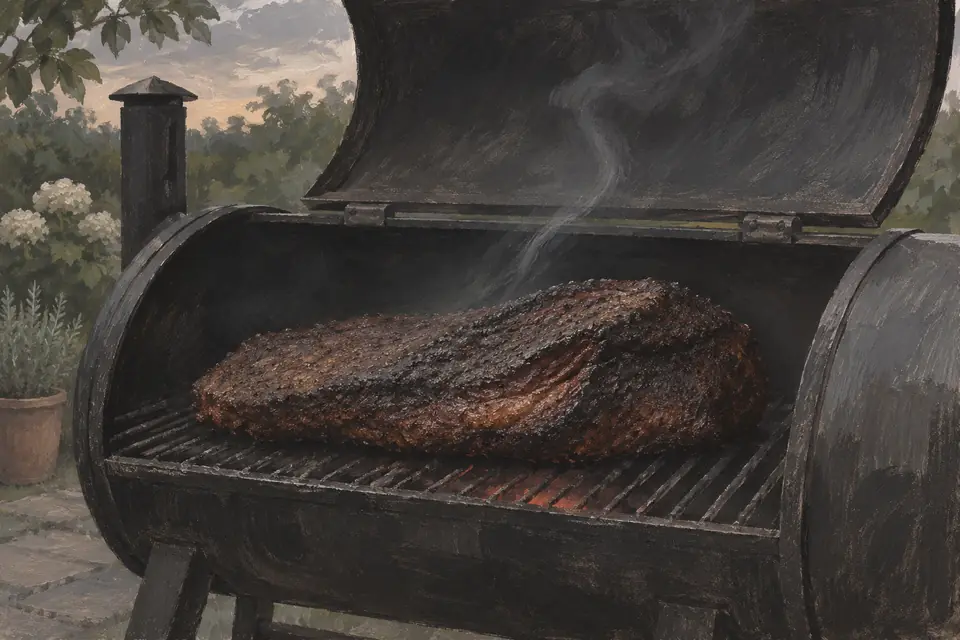 CooksCornerstone
Brisket smoking time
How long brisket takes on a smoker, per kg, with the stall, wrapping and resting built in, so you can work back from dinner time.
Read the guide