On this page · 8 sections
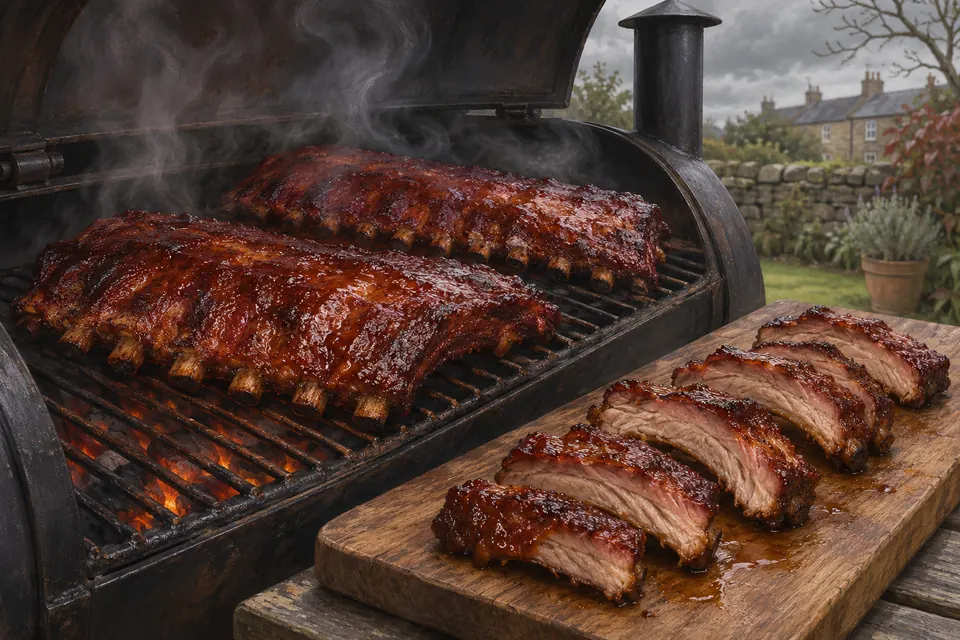
At a glance
- Ask for
- Whole racks of spare or loin ribs, membrane off
- Smoker
- Around 110–135°C
- Time
- Spares around 5–6 h; loin ribs around 4–5 h
- Wood
- Apple or cherry; beech or oak also work
- Done when
- Bend test: rack sags and the surface cracks
- Rest
- Around 10 minutes
The trickiest part of smoking ribs isn't the smoking. It's standing at the butcher's counter with an American recipe that says "baby backs, St Louis cut" while the person in the apron politely waits for you to say something they recognise. Sort that out and ribs are one of the most forgiving things you can put in a smoker.
Spare ribs vs loin ribs
British butchers sell two main kinds of pork rib, and they cook differently enough that it's worth knowing which you've got.
| Spare ribs | Loin ribs | |
|---|---|---|
| Where from | Belly side of the rib cage | Top of the rib cage, under the loin |
| US name | Spare ribs (St Louis when trimmed) | Baby back ribs |
| Shape | Longer, flatter, uneven at one end | Shorter, curved, more even |
| Meat | More fat, more connective tissue | Leaner, meat on top of the bones |
| Rough cook time | Around 5–6 hours | Around 4–5 hours |
| Suits | Long cooks, big flavour, feeding a crowd | Shorter days, people who like a cleaner bite |
Spare ribs are the cook most competition-style recipes are built around. They have more fat running through them, so they handle a temperature wobble better and come out juicier if you overshoot a little. Loin ribs are tidier and cook faster, but they dry out quicker if you forget about them. For a first rib cook, spares are the safer bet.
What to ask your butcher for
Most UK butchers will happily sort ribs out if you ask in their language. A few phrases that work:
- "A whole sheet of spare ribs, not cut into portions." Supermarket ribs often come as short, pre-cut pieces in a sticky sauce. Those are fine for the oven and pointless in a smoker.
- "Can you square them off and take the tips off?" That's the St Louis trim. You lose the knobbly strip of cartilage and end up with an even rectangle that cooks at the same rate end to end. Keep the trimmings; rib tips are a cook's snack.
- "Loin ribs, or back ribs, with a bit of meat left on top." Some butchers trim loin ribs very close to save the meat for chops. Ask for them not to be scraped bare.
- "Could you take the membrane off?" The thin silvery skin on the bone side goes leathery in the smoker. Many butchers will peel it for you.
Order a few days ahead if you need several racks, especially in summer. If the recipe mentions beef ribs, that's a different cook altogether; see our guide to smoked beef short ribs, and UK vs US BBQ cuts for the wider translation job.
Prep the night before
If the membrane is still on, slide a butter knife under it at one end, grip the edge with kitchen paper and pull. It usually comes off in one or two pieces, and it's oddly satisfying.
Season the racks on both sides. Pork ribs take a slightly sweeter rub than brisket: salt, pepper, brown sugar, paprika and garlic is a solid start, and our rub ratios page has proportions. Wrap and refrigerate overnight, or rub them an hour before the cook if you forgot. Nobody will be able to tell.
Smoker set-up
Aim for a steady temperature somewhere around 110–135°C at grate level. Lower in that range gives you more time for smoke and fat rendering; higher gets you to dinner. What matters most is that it holds steady, so give the smoker time to settle before the ribs go on. Our guide to smoker temperature control covers the vent work.
Fruit woods suit pork well. Apple and cherry give a mild, slightly sweet smoke, and cherry adds a nice dark colour. Beech and oak are good all-rounders if that's what you've got. Two or three chunks at the start is plenty. More on which British woods to use in our smoking wood guide.
Racks can sit flat, bone side down, or upright in a rib rack if space is tight. On a kettle, a couple of racks fit comfortably on the indirect side; see smoking on a kettle BBQ.
3-2-1 as a loose guide
The 3-2-1 method is the most famous rib timing on the internet, and it's useful as long as you treat it as a sketch rather than a recipe.
- 3 hours unwrapped. The ribs take on smoke and colour and the bark starts to set.
- 2 hours wrapped. Foil, with a splash of apple juice or a knob of butter and some brown sugar. This braises the meat and speeds things up.
- 1 hour unwrapped. Back on the grate to firm up the surface, and sauce if you're saucing.
For loin ribs, 2-2-1 is the usual adjustment because they're smaller.
The catch is that 3-2-1 was built around a particular temperature, a particular thickness of rib and a fondness for very soft meat. Follow it to the minute and spare ribs often come out falling off the bone, which sounds great until the rack collapses as you lift it and the meat has the texture of a stew. Plenty of cooks shorten the wrapped stage to an hour or skip the wrap entirely and just spritz. Our guide to wrapping in foil vs butcher paper explains what you gain and lose either way.
Use the clock to know roughly when to start checking. Use the ribs to know when to stop.
The bend test
A probe thermometer is less useful on ribs than on a shoulder, because there's not much depth of meat and you keep hitting bone. The bend test is the standard check instead.
Pick the rack up with tongs about a third of the way in from one end, and let the rest hang. A ready rack sags into a curve and the surface cracks across the top. If it stays stiff and straight, it needs longer. If it tears in half, it's overdone (still very edible; you've just made pulled ribs).
Two backup checks:
- The toothpick test. A cocktail stick should slide between the bones with almost no resistance.
- Bone show. The meat shrinks back from the ends of the bones by a few millimetres.
Ribs are cooked well beyond what's needed for pork to be safe by the time they pass the bend test, but if you're unsure about any meat, the FSA guidance is the reference.
Check the thickest rack first. The thin end of a spare rib sheet will always be ahead of the meaty end.
Sauce, slice, serve
Sauce goes on in the last 20 to 30 minutes, if at all. Sugary sauce applied early burns and turns bitter. A thin glaze, given time to set, beats a thick coat.
Rest the racks for ten minutes or so, then turn them bone side up so you can see where to cut, and slice between every bone with a sharp knife. Ribs don't need the long rest that brisket does, and they cool fast, so serve them while people are still circling.
Before you shop, run your guest list through the BBQ meat calculator to work out how many racks to order, then ring the butcher.
FAQs
How many ribs do I need per person?
Half a rack of spare ribs per adult is a common starting point if there are sides, more if ribs are the whole meal. The meat calculator linked above lets you adjust for appetites and other meats.
Should I boil ribs before smoking them?
No. Boiling washes out flavour and leaves you nothing to smoke. If you want softer ribs, wrap them for part of the cook instead.
Do I have to remove the membrane?
You don't have to, but it turns tough and chewy and it stops the rub reaching that side. It takes about a minute to peel off, or ask the butcher to do it.
Can I smoke ribs on a kettle BBQ?
Yes, and ribs are one of the easiest kettle cooks. Set the coals up for indirect heat, put the racks on the other side and keep the lid vent over the meat. Two racks fit comfortably; more needs a rib rack.
How long do ribs take to smoke?
At low-and-slow temperatures, spare ribs usually take around five to six hours and loin ribs around four to five. Start checking an hour before you expect them to be ready.
Keep going
 CooksCornerstone
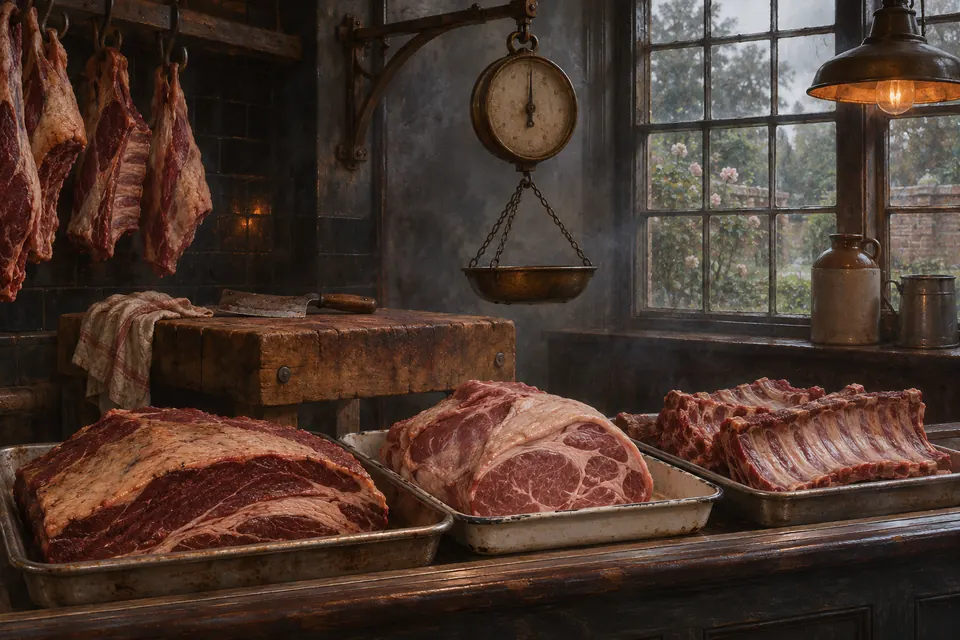
UK vs US BBQ cuts
Translate American BBQ recipes into British butcher cuts: packer brisket, Boston butt, baby backs, short ribs and more, with a UK to US cut table.
Read the guide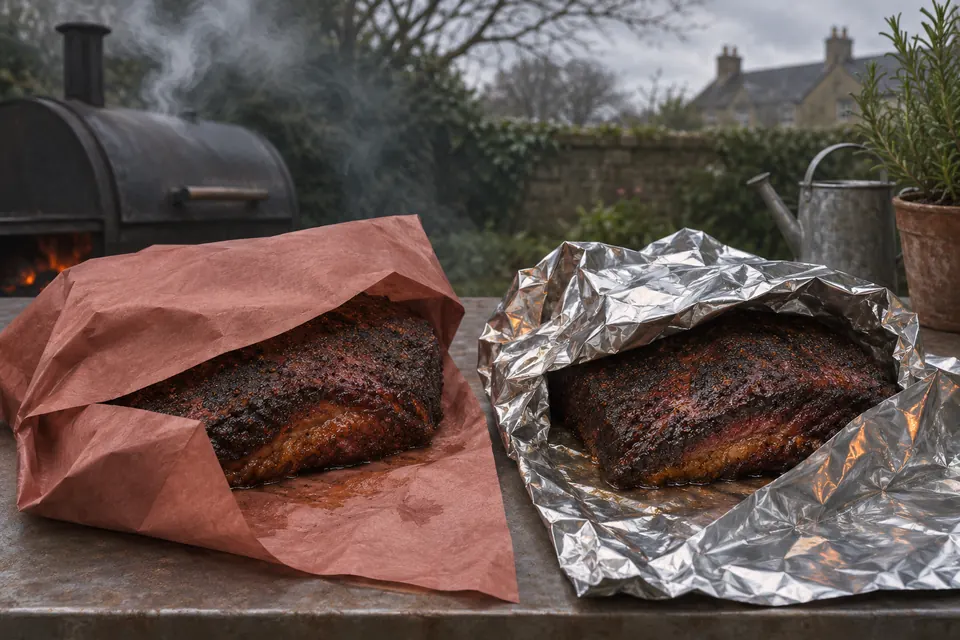 Technique
Foil vs butcher paper
When to wrap brisket, pork shoulder and ribs, how foil and butcher paper differ, and when it's better not to wrap at all.
Read the guide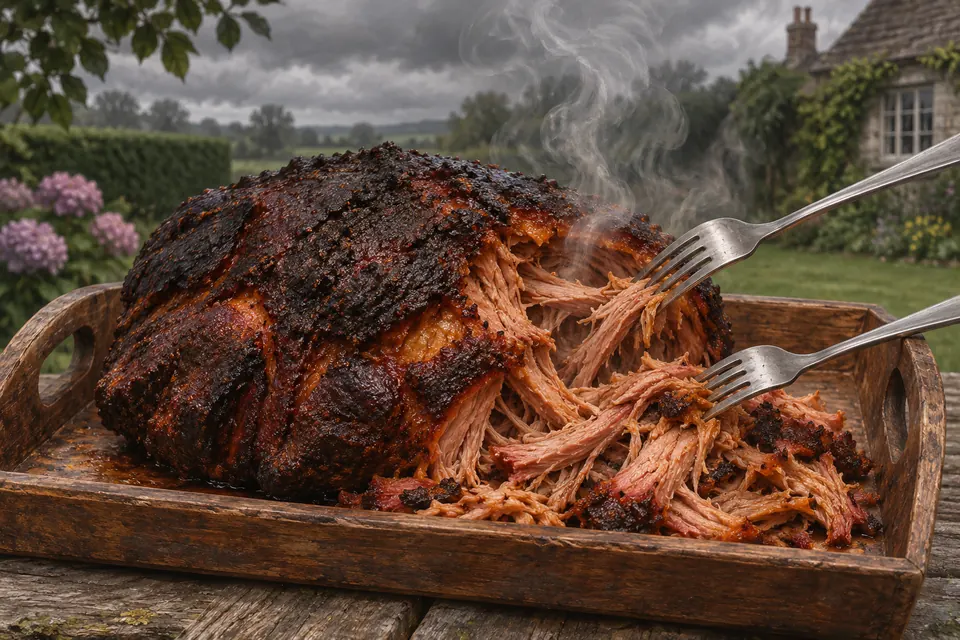 CooksCornerstone
Pulled pork smoking time
How long a UK pork shoulder takes on a smoker, per kg, with the stall, pulling temperature, holding and a plan that works back from dinner.
Read the guide