On this page · 5 sections
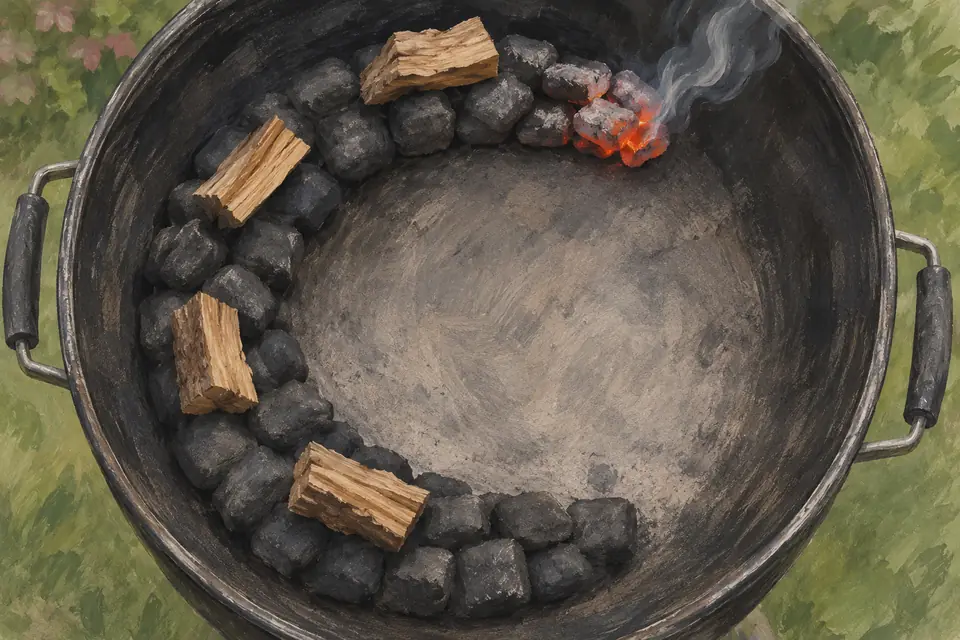
The classic mistake on a kettle is tipping a full chimney of lit charcoal into the bottom, putting the lid on and watching the thermometer sail past 200°C. That's perfect for burgers. It's useless for a pork shoulder that wants nine hours at around 120°C. The snake method fixes it by lighting the fuel a little at a time, so only a handful of briquettes are burning at any moment.
What you need
- A kettle BBQ with a lid and working vents. Any reasonably sized one will do. Smaller kettles give a shorter snake and a shorter cook.
- Briquettes. They burn more evenly and predictably than lumpwood, which is exactly what a snake needs. Most UK DIY stores and garden centres sell them. Lumpwood can work, but irregular pieces make an uneven snake that flares and fades. Our guide to charcoal for smoking covers the differences.
- A chimney starter and natural firelighters. Skip lighter fluid: it can taint the food, and you don't need it.
- Wood chunks. Three or four fist-sized pieces of oak, beech, apple or cherry. See smoking wood in the UK for pairings.
- A foil tray or water pan to sit in the middle of the charcoal grate.
- A probe thermometer, ideally two channels: one at grate level, one in the meat. The lid gauge reads the dome, not where the food sits.
- Heatproof gloves. Moving hot grates with a tea towel is how people discover the limits of a tea towel.
Laying the snake
Take the cooking grate off and look at the charcoal grate underneath. You're going to build a curved line of briquettes around the outside edge, like a letter C, leaving a gap between the two ends.
- Lay the base row. Two briquettes side by side, running around the edge of the kettle, touching each other and the wall.
- Add a second layer. Stack another row of two on top. This "2x2" layout is the usual starting point. For a cooler, shorter burn, use two on the bottom and one on top (2x1).
- Stop short. Leave a gap of a hand's width or so between the start and the end of the C, so the fire can't jump across and light the far end early.
- Place the wood. Rest the wood chunks on top of the snake, spaced out along the first third or half of its length. Smoke matters most early in the cook, while the meat surface is still cool and damp.
- Add the water pan. Sit a foil tray in the middle of the charcoal grate, inside the C, and fill it with water. It soaks up heat, steadies the temperature and catches drips.
Put the cooking grate back with the hinged section (if it has one) over the start of the snake, so you can add wood later. The meat goes over the water pan, not the coals.
How long will it run? That depends on the length of the snake, the layout, the kettle and the weather. A full snake on a full-size kettle can last many hours, but a cold, windy afternoon will eat through it noticeably faster. The smoker fuel calculator gives you an estimate of how much charcoal to have on hand.
Lighting and vents
Light a small number of briquettes in a chimney, roughly eight to twelve, and wait until they're grey at the edges. Tip them carefully onto the start of the snake. Use tongs to nudge them into a tidy cluster sitting on the first few unlit briquettes.
Then set the vents:
- Bottom vent (intake): start mostly closed, perhaps a quarter open. This is the one that controls how fast the fire burns.
- Top vent (exhaust): position it over the meat, on the opposite side to the lit end, so smoke is drawn across the food. Leave it mostly or fully open. A closed exhaust traps stale smoke, which tastes bitter.
Put the lid on and let it settle. You're aiming for somewhere in the low-and-slow band, around 110–135°C at grate level, and you want it to hold still for ten or fifteen minutes before the meat goes on. If it's climbing, close the bottom vent a little. If it's stuck too low, open it a little. Then wait at least 20 minutes before judging the change. Kettles respond slowly, and chasing the needle every five minutes ends with a fire swinging between too hot and nearly out. The principles are the same on every charcoal smoker; our guide to smoker temperature control goes into more detail.
Settle the temperature on the low side. A snake that creeps up as the day goes on is normal; one that starts hot rarely comes back down.
Topping up and troubleshooting
For most cooks you won't need to top up. If the cook is running long, add fresh briquettes to the far end of the snake, never onto the burning part. They'll light when the fire reaches them, with no sudden spike.
Common problems, and what usually fixes them:
| Problem | Likely cause | What to try |
|---|---|---|
| Temperature keeps climbing | Bottom vent too open, or too much lit at the start | Close the bottom vent a touch and wait 20 minutes |
| Temperature drops and won't recover | Wind, rain or a burnt-out gap in the snake | Check the snake for gaps, shelter the kettle from wind, open the bottom vent slightly |
| Fire jumped ahead | The two ends were too close, or briquettes fell inwards | Leave a bigger gap next time; keep the snake tight to the wall |
| Thick white smoke | Smothered fire, damp wood or a closed top vent | Open the top vent fully, use drier wood |
| Snake burnt out early | Cold, windy weather or a 2x1 layout | Use 2x2, add a third row on a cold day, or top up the far end |
Wind is the big one in Britain. A steady breeze pushes extra air through the vents and strips heat from the kettle's thin steel body, so the fire burns faster while the grate temperature wobbles. Park the kettle somewhere sheltered, with the bottom vent facing away from the wind, and never inside a garage, shed or under a closed gazebo. Our guide to smoking in the rain covers safe shelter.
Rain is less of a problem than people expect. The kettle will burn a little more fuel, and it's worth keeping spare briquettes dry in a sealed tub. Wet briquettes crumble and smoulder rather than burn.
Before your first snake cook, lay one out dry on the charcoal grate to see how far round the kettle it goes, then read smoking on a kettle BBQ to plan the rest of the setup.
FAQs
What's the difference between the snake and the minion method?
Both light a small amount of charcoal and let it spread into unlit fuel. The minion method puts lit coals on top of a pile of unlit ones, which works well in bullet smokers and baskets. The snake spreads the fuel out in a line, which suits the round shape of a kettle and tends to give a longer, gentler burn.
Can I use lumpwood charcoal for the snake method?
You can, but the burn is less even because lumpwood comes in irregular sizes. Briquettes are the easier choice for steady, low temperatures.
Do I need a water pan?
It isn't strictly necessary, but it helps. The water absorbs heat and steadies the temperature, and it catches drips that would otherwise burn and smoke.
How often should I add wood?
Usually not at all after the start. Two or three chunks placed along the first part of the snake give plenty of smoke for most cooks. More wood often just means more bitterness.
Keep going
 Technique
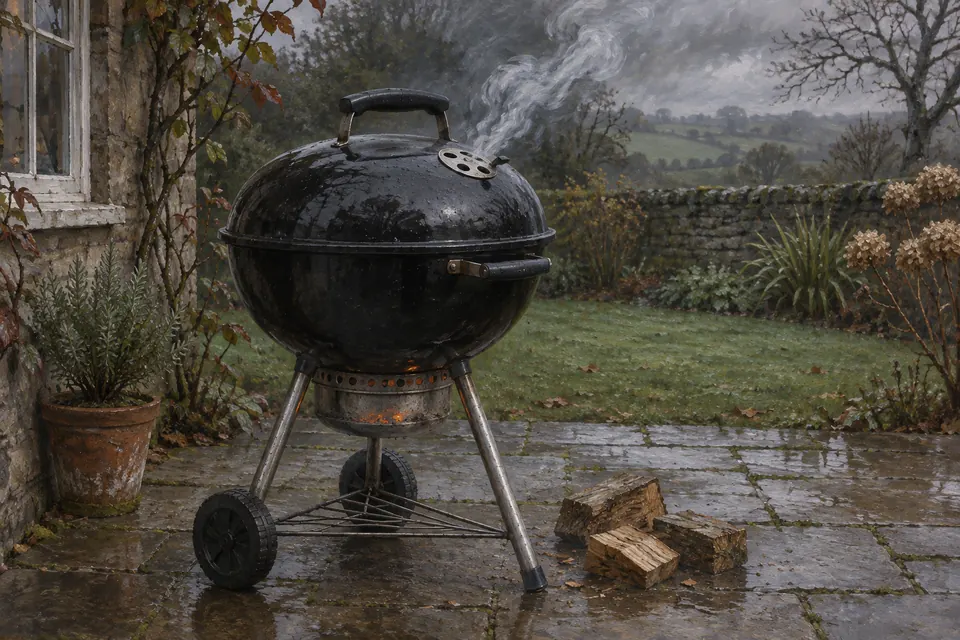
Smoking on a kettle BBQ
Turn the kettle BBQ you already own into a smoker with a two-zone or snake setup, water pan and wood chunks, and know when it's time to upgrade.
Read the guide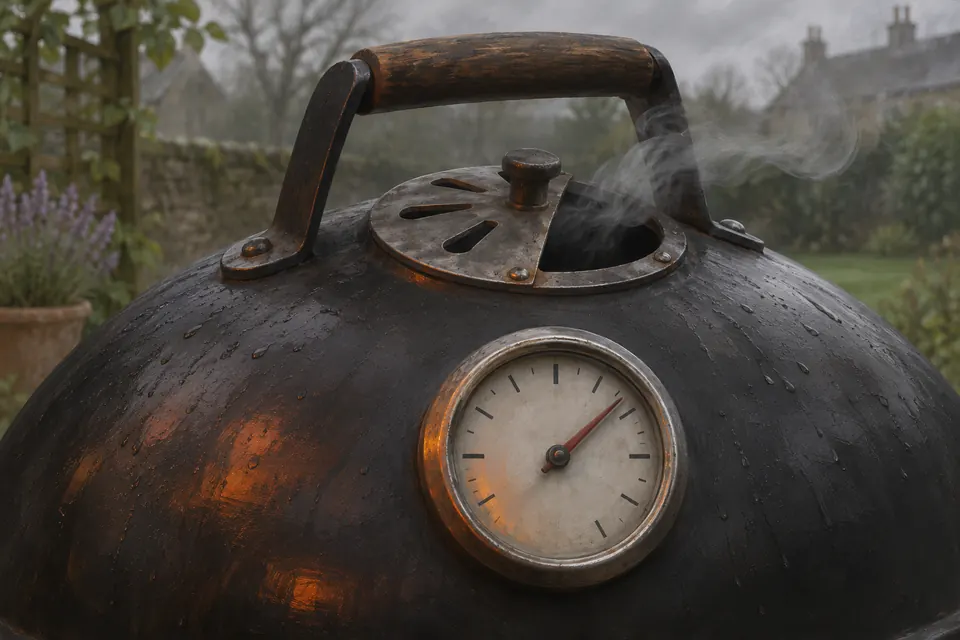 TechniqueCornerstone
Smoker temperature control
How to hold a steady smoker temperature with vents, fuel and placement, why the lid gauge lies, and what to do when the temperature drifts.
Read the guide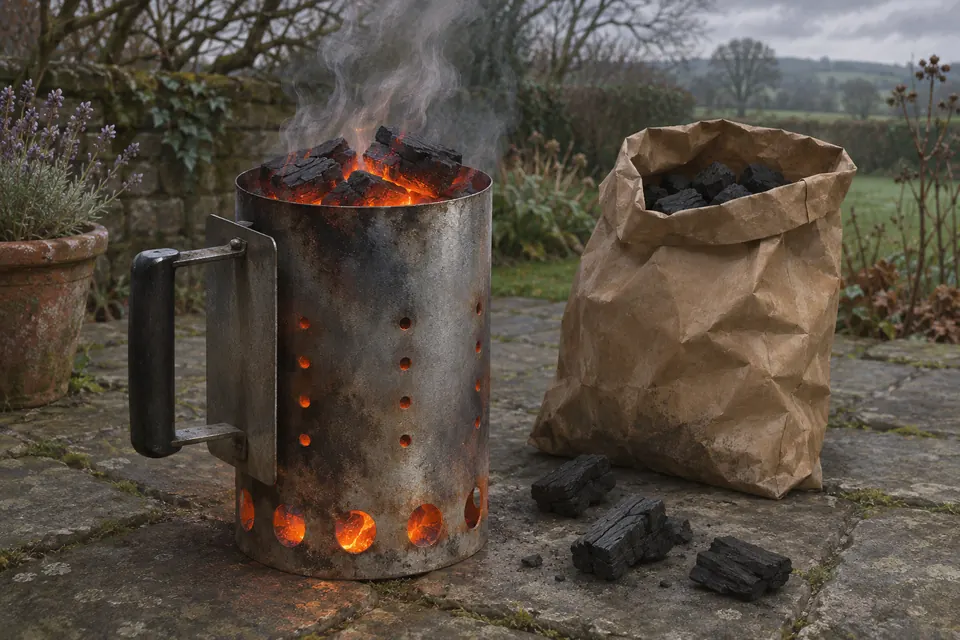 Fuel and wood
Charcoal for smoking
Lumpwood or briquettes for low-and-slow, what British-made charcoal offers, how to light it with a chimney starter, and why lighter fluid has no place in a smoker.
Read the guide