On this page · 5 sections
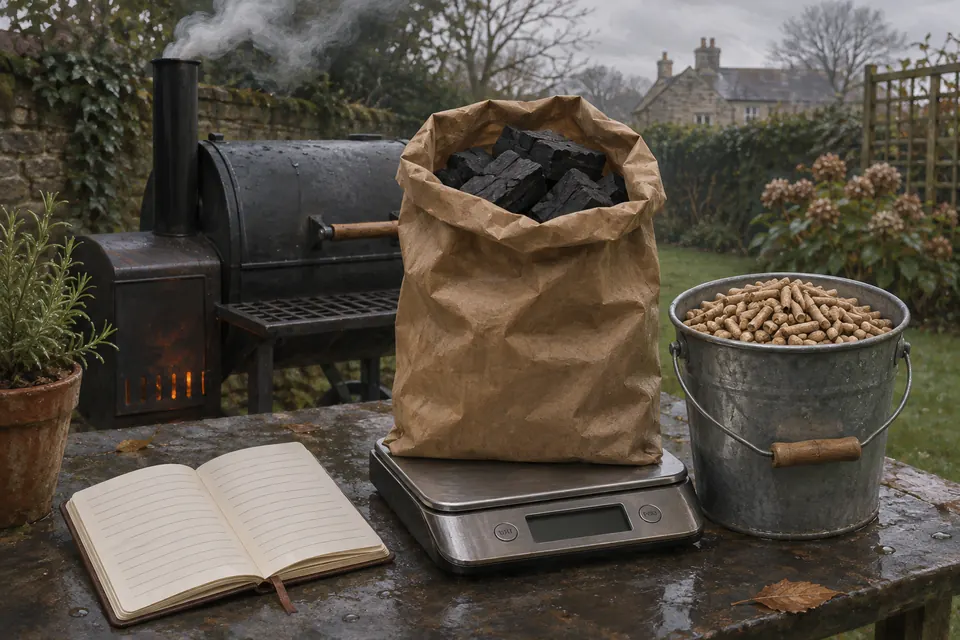
A smoker burns more fuel on a cold, blowy afternoon than on a still one, even when the thermometer reads exactly the same. It's why this calculator asks for a range. Enter how long the cook runs and the burn rate for your smoker, and you get a range in kg and a figure to have on hand.
How the sum works
It's simple multiplication, shown so you can check it:
- Low estimate: cook length × lowest burn rate.
- High estimate: cook length × highest burn rate.
- To have on hand: the high estimate plus your spare percentage on top.
Everything is rounded up to the nearest 0.1 kg. Cooks up to 48 hours are accepted, which should cover anything short of a medieval feast. The smoker type sets the unit (charcoal, pellets, or wood chips for an electric smoker) and will fill in the burn rates once we've published a checked figure for that type.
Where the burn rate comes from
Some makers publish a burn rate for their pellet grills, usually in the manual. For charcoal it depends on the smoker, the fuel and the weather, so your own notes from a previous cook beat any general figure. To make notes worth having, weigh the bag before and after a cook and divide by the hours. Do it on a mild day and a miserable one, and you have your low and high.
We haven't loaded checked burn rates for any smoker type yet. Until we do, the boxes start empty and the calculator tells you so, rather than guessing.
Getting a sensible range
A few things push you towards the top of the range:
- Wind across thin steel, which matters far more on an offset or kettle than on an insulated kamado.
- Cold and rain, which is to say much of the British year. See smoking in the rain.
- Lifting the lid a lot.
- Briquettes versus lump: they burn differently, so keep separate notes for each. Our charcoal guide covers the difference.
Keep a strip of masking tape on the lid of your fuel bin and jot the weight down after every long cook. Three cooks in, your range is better than any guess.
A spare margin of a quarter to a half on top isn't excessive for a long cook. Unused charcoal keeps fine if it stays dry, and pellets do too in a sealed bin; damp pellets crumble to sawdust, which the pellet guide explains.
What it doesn't do
It doesn't account for the charcoal you need to light the fire, and it can't tell a well-built snake from a heap tipped in a corner. It also says nothing about how long the cook will take; for that use the smoking time planner first, then bring the long end of its range here.
FAQs
How much charcoal does a long cook use?
It depends on the smoker and the weather far more than on the meat. Weigh your fuel before and after a cook to get a figure for your own setup.
Should I use the high or low figure?
Buy and store to the "have on hand" figure. Leftover fuel keeps; running out mid-cook means a dropping temperature and a long wait.
Does wood count towards the total?
Not unless you include it. If you burn splits in an offset, weigh them in your notes along with the charcoal.
Keep going
 Fuel and wood
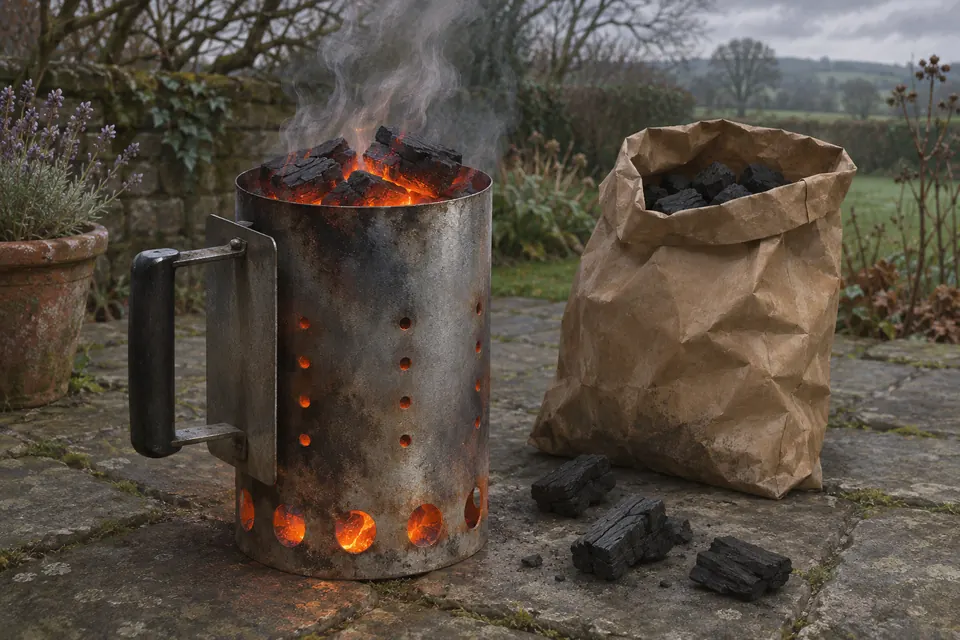
Charcoal for smoking
Lumpwood or briquettes for low-and-slow, what British-made charcoal offers, how to light it with a chimney starter, and why lighter fluid has no place in a smoker.
Read the guide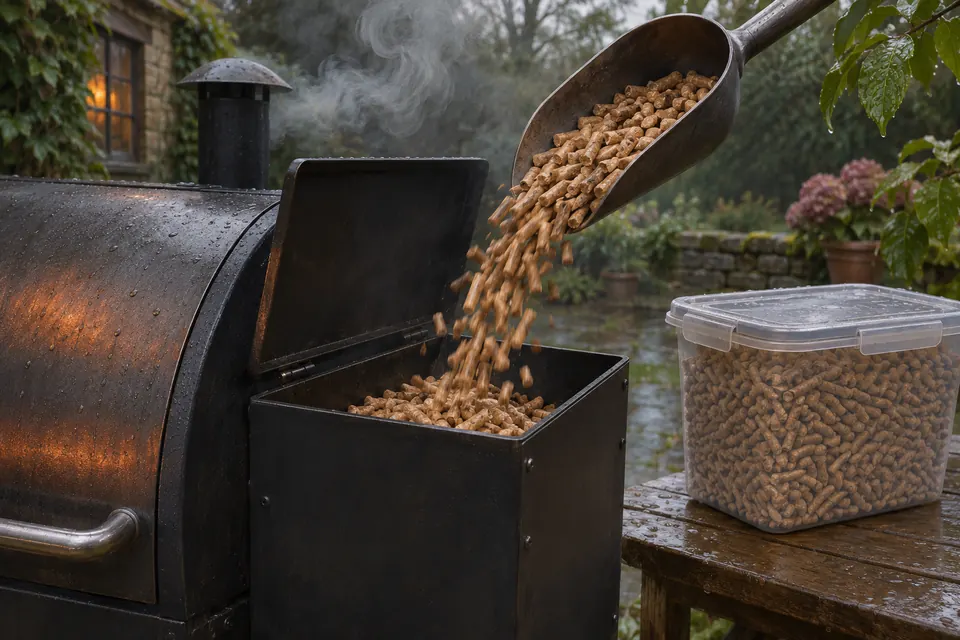 Fuel and wood
Wood pellets UK
Why heating pellets don't belong in a pellet grill, how to keep pellets dry in a damp British shed, and whether flavour blends or single-species pellets are worth it.
Read the guide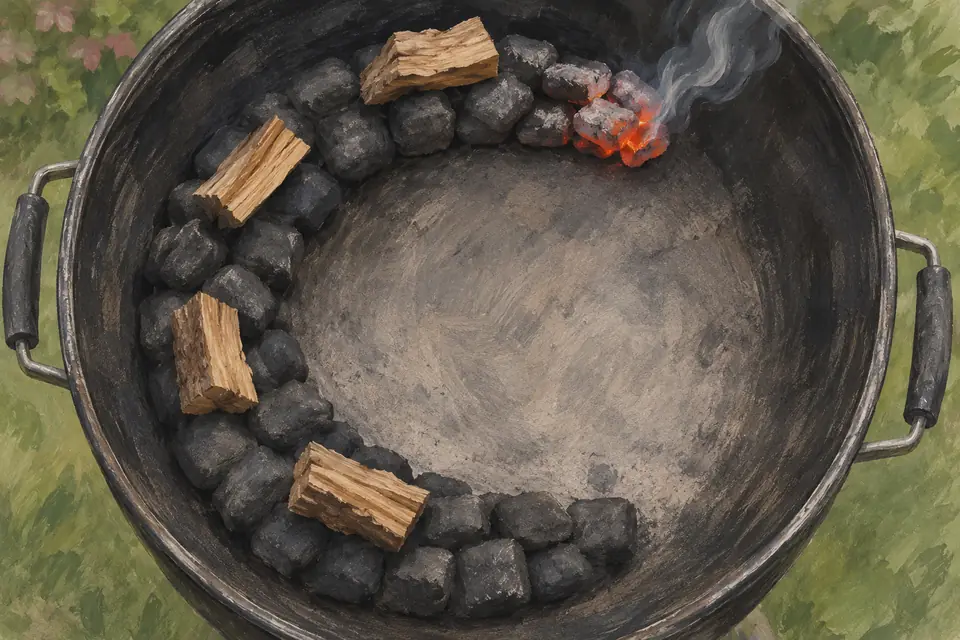 Technique
The charcoal snake method
Set up a charcoal snake for a low-and-slow cook on a kettle BBQ: briquette layout, where the wood goes, lighting, vents and topping up.
Read the guide