On this page · 6 sections
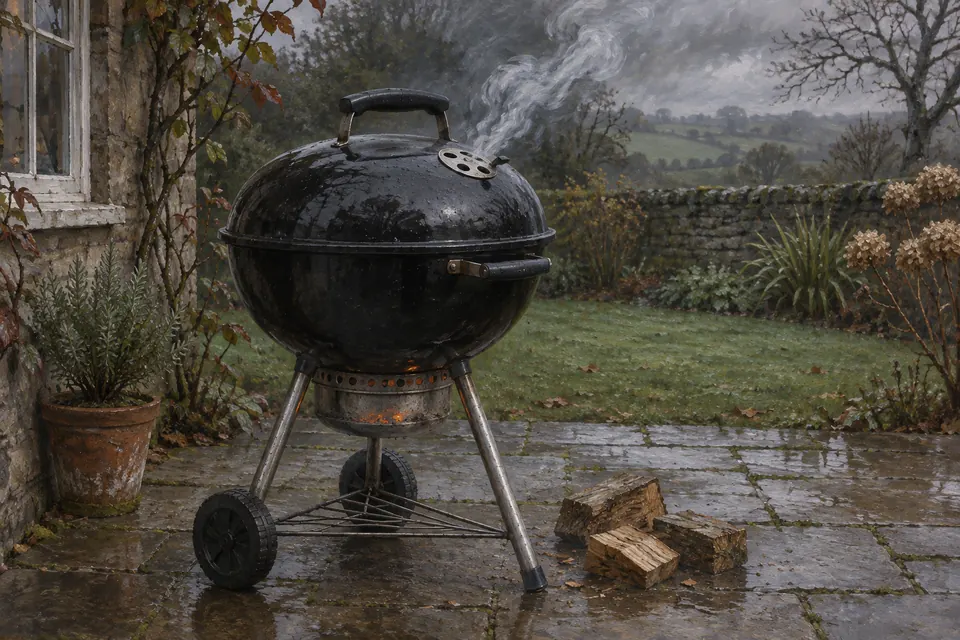
The kettle BBQ in your shed is already a smoker. It has a lid, a bottom vent and a top vent, which is all a smoker really is: a box that holds a small fire and lets you control the air. Most people only ever cook burgers on theirs, with the coals spread across the whole grate and the lid off. Change those two habits and the same kettle will happily turn out ribs, smoked chicken and a respectable pulled pork.
It's also the right place to start. A kettle tells you whether you like long cooks, tending a fire and planning around a joint for most of a day, before you spend money on kit that might live under a cover.
Two-zone setup
The basic idea is indirect heat. The fire goes on one side of the charcoal grate; the food sits on the other side, away from the flames, and cooks in the hot, smoky air circulating under the lid.
- Light a modest amount of charcoal in a chimney starter. Half a chimney or less for low-and-slow; more for a hotter roast.
- Pile it on one side of the charcoal grate. Charcoal baskets or a simple divider help keep it in place.
- Put a foil tray of water on the other side, underneath where the food will go.
- Set the vents. Bottom vent partly open on the fire side. Top vent fully open and positioned over the food, so the smoke is drawn across it on its way out.
- Let it settle with the lid on until the temperature at grate level holds steady, then add the food over the water pan.
Two-zone suits cooks of up to a few hours: chicken pieces, sausages, a whole chicken, a pork tenderloin, salmon. For hotter cooks around 150–180°C, chicken thighs come out in roughly an hour to an hour and a half, with crisp skin and a distinct smoky edge. Check poultry with a probe against the safe temperature in the FSA guidance. For low-and-slow, around 110–135°C, two-zone works but needs topping up with a few lit or unlit coals every hour or so, which gets tedious over a long cook.
Snake method
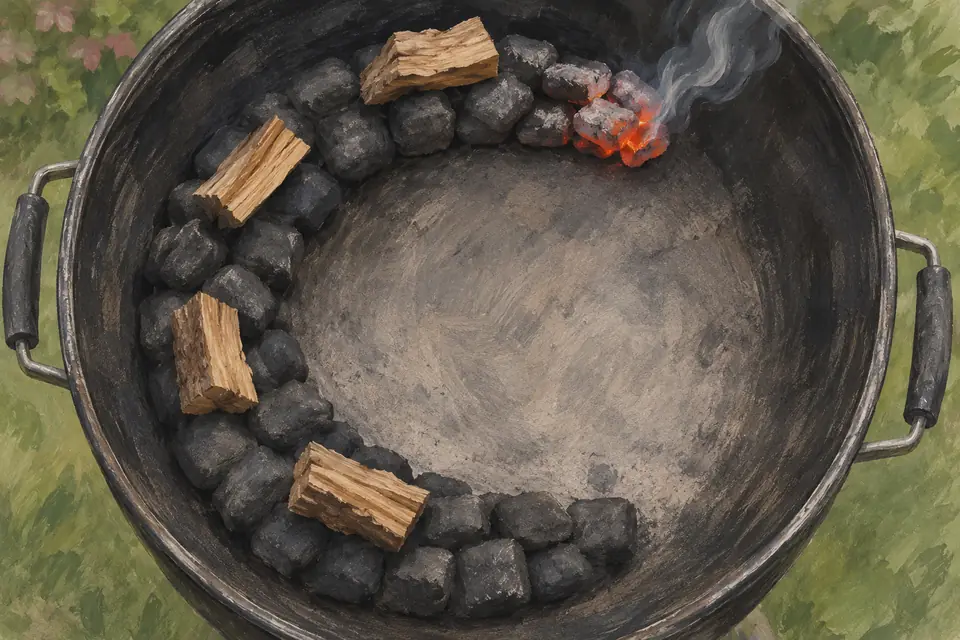
For anything that needs more than a few hours, use the snake. Briquettes go in a curved line around the edge of the kettle, two wide and two high, and you light just one end. The fire creeps along the line slowly, giving a steady low temperature for many hours without the constant topping up.
That's how a kettle copes with pork shoulder, spare ribs and even a small brisket flat. Our full guide to the charcoal snake method covers the layout, lighting and vents step by step, and the fuel calculator helps you work out how much charcoal to buy.
Water pan and wood chunks
The water pan does more than add moisture. A tray of water absorbs heat, which smooths out temperature swings and stops the fire-side of the food overcooking. It also catches fat that would otherwise drip onto the charcoal and flare. Use a disposable foil tray if you don't want to scrub one; top it up with hot water from the kettle (the other kettle) if it runs low.
For smoke, two or three fist-sized wood chunks are enough for most cooks. Put them on or next to the lit coals just before the food goes on. In the UK, oak and beech are reliable all-rounders, and apple and cherry give a milder, slightly sweet smoke that's lovely with pork and chicken. Our guide to smoking wood in the UK has pairings by meat and the woods to avoid.
Chips burn away quickly on charcoal and need replacing often, so chunks are the better buy for a kettle. There's no need to soak them.
On a kettle, rotate the food halfway through if one side is obviously browning faster. The side nearest the fire always runs hotter, and turning it round evens things out.
Kettle quirks to know about
A kettle is thin steel. That makes it quick to heat up and quick to lose heat, so it reacts more to wind and cold than a thick-walled offset or a ceramic kamado. Park it out of the wind, with the bottom vent facing away from the breeze, and expect it to use more charcoal on a raw March day. Never move it into a garage or shed to get out of the weather: a charcoal fire in an enclosed space produces carbon monoxide.
The lid thermometer, if there is one, reads the air at the top of the dome. A cheap probe clipped to the grate next to the food gives a much more useful reading. See our guide to smoker temperature control for how to read and react to it.
Limits: when a dedicated smoker makes sense
A kettle will take you a surprisingly long way, but it has limits.
| Limit | What it means in practice | Who it bothers |
|---|---|---|
| Space | Only half the grate is usable for indirect cooking | Anyone feeding more than a handful of people |
| Long cooks | A whole brisket can outlast a single snake | Brisket enthusiasts and overnight cooks |
| Weather | Thin steel loses heat fast in wind and cold | Anyone who smokes year-round in Britain |
| Attention | Needs more checking than a pellet or electric smoker | People who want to leave it and get on with the day |
If you keep running out of room, find yourself wanting overnight cooks, or get fed up of fighting the wind, it's time to look at a dedicated smoker. If you mostly cook ribs and chicken for four on summer afternoons, keep using the kettle. It's doing the job. Our guide on which smoker to buy asks the questions that sort out what suits you, and smokers for small gardens helps if space is tight.
For your first kettle smoke, buy a pack of chicken thighs, set up two-zone with a water pan and a couple of chunks of apple, and aim to have it done by lunchtime.
FAQs
Can you smoke on any kettle BBQ?
Most kettle BBQs with a lid and adjustable top and bottom vents will work. Very small or very cheap kettles with loose-fitting lids are harder to control, but two-zone cooking still works for shorter cooks.
Do I need a water pan on a kettle?
It's not essential, but it helps a lot. The water steadies the temperature and catches drips. A disposable foil tray does the job.
How long can a kettle hold a low temperature?
With a two-zone fire, an hour or so before it needs topping up. With a full snake of briquettes, many hours, depending on the size of the kettle and the weather.
Should the top vent be over the food or the fire?
Over the food. That draws heat and smoke across the meat before it leaves the kettle, which gives a more even cook and better smoke flavour.
Keep going
 Technique
The charcoal snake method
Set up a charcoal snake for a low-and-slow cook on a kettle BBQ: briquette layout, where the wood goes, lighting, vents and topping up.
Read the guide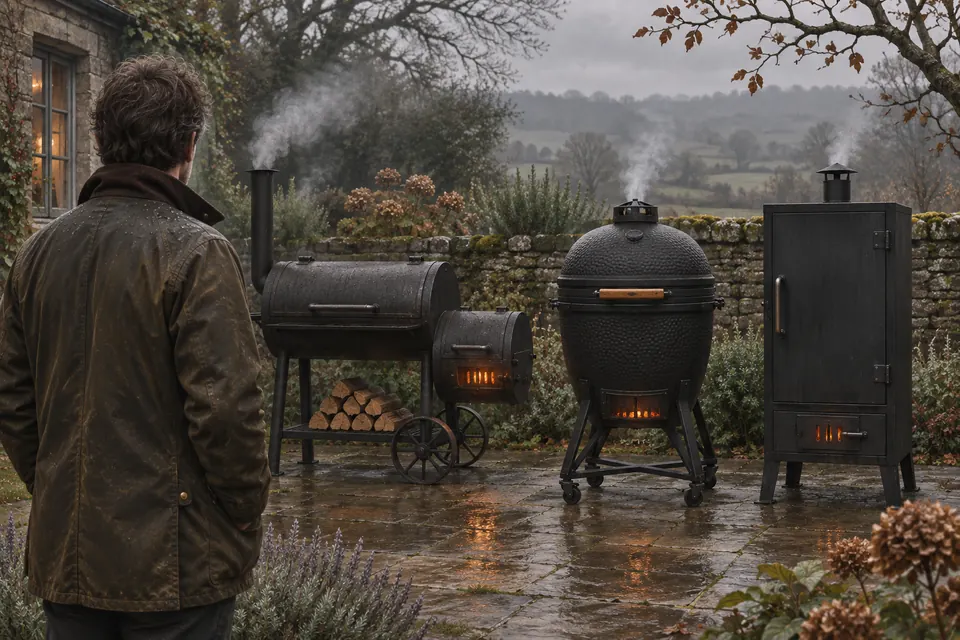 Tool
Which smoker should I buy?
Answer seven questions about power, effort, fuel, space and budget to get a smoker type with the reasons behind it.
Open the tool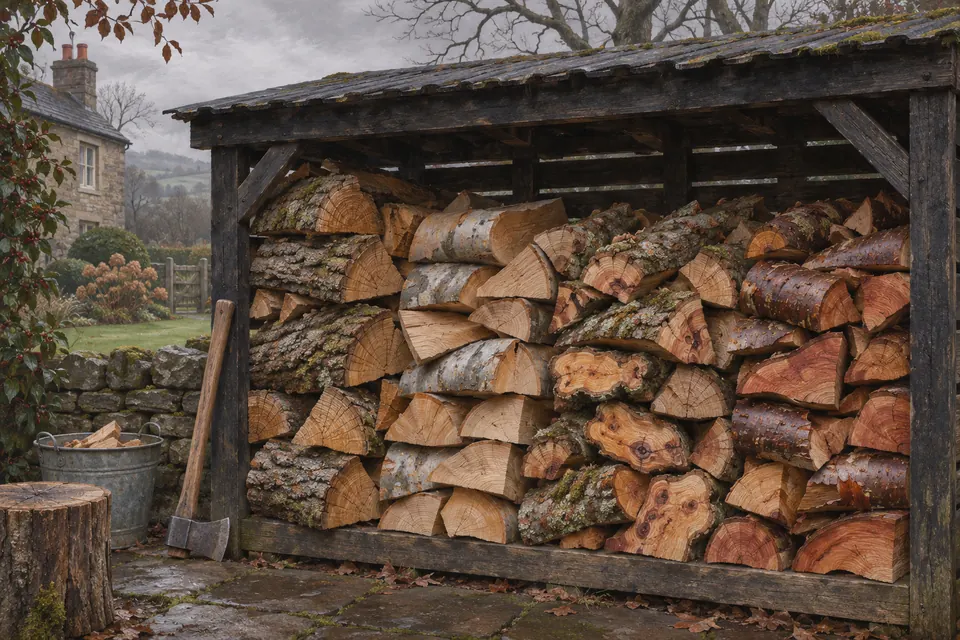 Fuel and woodCornerstone
Smoking wood in the UK
Which British woods suit which meats, chunks vs chips vs splits vs pellets, how dry the wood should be, what never to burn and how to store it.
Read the guide