On this page · 6 sections
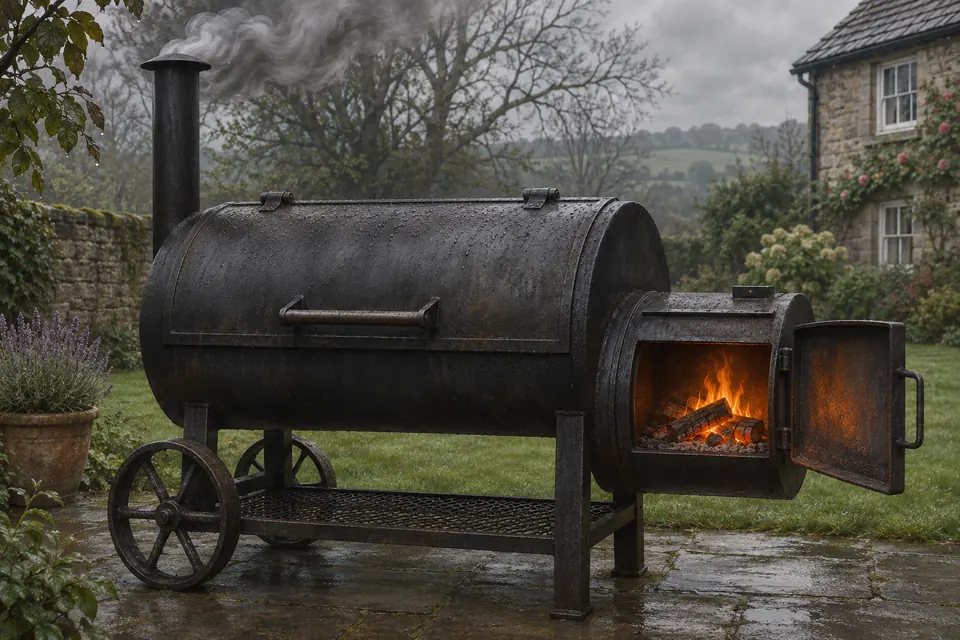
An offset smoker is a steel barrel lying on its side with a smaller box bolted to one end and a chimney sticking up from the other. You light a fire in the box, the heat and smoke drift across the meat in the barrel, and they leave by the chimney. There's nothing more to the machine. Running one well is another matter, and it's why offset owners talk about fire the way other people talk about their cars.
How an offset works
The firebox is where you burn the fuel. It has an intake vent, usually on the side or the door, which lets air in. More air means a hotter fire.
The cooking chamber is the long barrel. The meat sits on grates well away from the flames, so it cooks in hot, smoky air rather than over direct heat.
The chimney draws air through the whole system. Most cooks leave the chimney damper fully open and control the fire with the firebox vent and the size of the fire, because closing the chimney traps stale smoke over the food.
On a standard offset, the end nearest the firebox runs hotter than the far end. Some cooks treat that as a feature: the thick end of a brisket goes nearest the fire and the sausages go at the cool end.
Reverse flow
A reverse-flow offset adds a steel baffle plate under the grates. Heat travels under the plate to the far end, turns round and comes back over the food to a chimney mounted on the firebox end. The result is a more even temperature across the grate, at the cost of a longer warm-up and a bit more weight. Tuning plates, a row of loose steel plates under the grate, do a similar job on a standard offset.
Wood, charcoal or both
Traditional offset cooking burns hardwood splits: logs cut down to roughly forearm size. Oak and beech are the usual UK choices, with fruitwoods for something milder. The wood must be properly seasoned or kiln-dried. Wet or green wood smoulders, makes thick white smoke and turns the food bitter. Our smoking wood guide covers species and where to find it.
Plenty of people start with a bed of charcoal and add a split or two of wood every so often. It's easier to keep steady and a good way to learn. Running purely on charcoal works too, but at that point a different smoker might suit you better. Either way, offsets get through a lot of fuel, especially in the cold; the fuel calculator helps you plan.
The aim is a small, hot, clean fire with thin blue smoke, fed little and often. Most cooks add fuel every half hour to an hour. A big smouldering heap gives you dirty smoke and a temperature that lurches about. Temperature control on an offset is mostly fire size and airflow.
What to look for in the spec
We compare offsets on what makers publish, and a few specs matter far more than others.
| Spec | Why it matters |
|---|---|
| Steel thickness | Thicker steel holds heat, resists warping and steadies the temperature in wind |
| Door and lid seals | Gaps leak heat and smoke and make the fire harder to control |
| Firebox size and insulation | A roomy firebox takes full-size splits; an insulated one copes better with cold |
| Main grate area | How much fits on the main level, not counting warming racks |
| Reverse flow or tuning plates | More even heat across the chamber |
| Thermometer position | A gauge at grate level is more use than one high in the lid |
Steel thickness is the big one
This is where cheap offsets fall down. Thin steel heats up fast, loses heat fast, and swings wildly when the wind picks up, which in a British garden is most days. You end up feeding a fire constantly just to stand still. Some makers quote steel thickness and some don't; if they don't, the weight of the smoker is a rough clue. If you can't find either, assume it's thin.
Seals and fit
Look for doors that close snugly and a lid that sits flat. Gaps around the firebox door are the worst, because uncontrolled air there means an uncontrolled fire. Aftermarket gasket kits can help a leaky smoker, but they're a fix, not a reason to buy one.
Living with one in the UK
Space. An offset is long, and you need room to stand by the firebox and open the lid without leaning over the fire. They're not for balconies or tiny patios; see smokers for small gardens if space is tight.
Smoke and neighbours. A clean fire produces little visible smoke. A badly run one fills the street. Light it well away from fences, sheds and open windows, keep the fire clean, and maybe warn the people next door before a twelve-hour cook. Persistent smoke complaints are something councils can act on, so good fire habits are also good diplomacy.
Weather. Wind is the enemy more than rain. A windbreak on the firebox side (never an enclosure) makes a big difference. Cold costs fuel and patience. Our guide to smoking in winter has more.
Rust. Offsets are bare or painted steel and the UK is damp. Season a new one with a burn-in following the maker's instructions, keep the inside lightly oiled, empty the ash after every cook and use a breathable cover once it's cold.
Stand on the firebox side and watch the chimney, not the thermometer. When the smoke from the chimney is thin and almost invisible, the fire is right.
Who should skip an offset
If you want to start a cook and go out for the afternoon, an offset is the wrong choice; a pellet grill or kamado will suit you far better. If the budget only stretches to a thin-steel offset, buy a good bullet smoker or use your kettle instead. A cheap offset teaches you to dislike smoking, which is a shame.
If an offset still appeals, read the buying checklist and shortlist on steel thickness and seals before anything else.
FAQs
Are cheap offset smokers worth it?
Usually not. Thin steel loses heat and swings in wind, so you spend the cook fighting the fire. A bullet smoker or kettle is a better use of a small budget.
Can I use charcoal in an offset?
Yes. Many people run a charcoal base and add wood splits for smoke, which is easier to control than wood alone.
Should I close the chimney to control the temperature?
Generally no. Leave the chimney open and control the fire with the intake vent and the amount of fuel, so smoke keeps moving over the food.
What wood should I burn in an offset?
Seasoned or kiln-dried hardwood such as oak or beech for most cooks, with apple or cherry for milder smoke. Never use treated, painted or green wood.
Do I need a reverse-flow offset?
Not necessarily. Reverse flow evens out the temperature, but a standard offset with tuning plates, or just good use of its hot and cool ends, cooks perfectly well.
Keep going
 CompareCornerstone
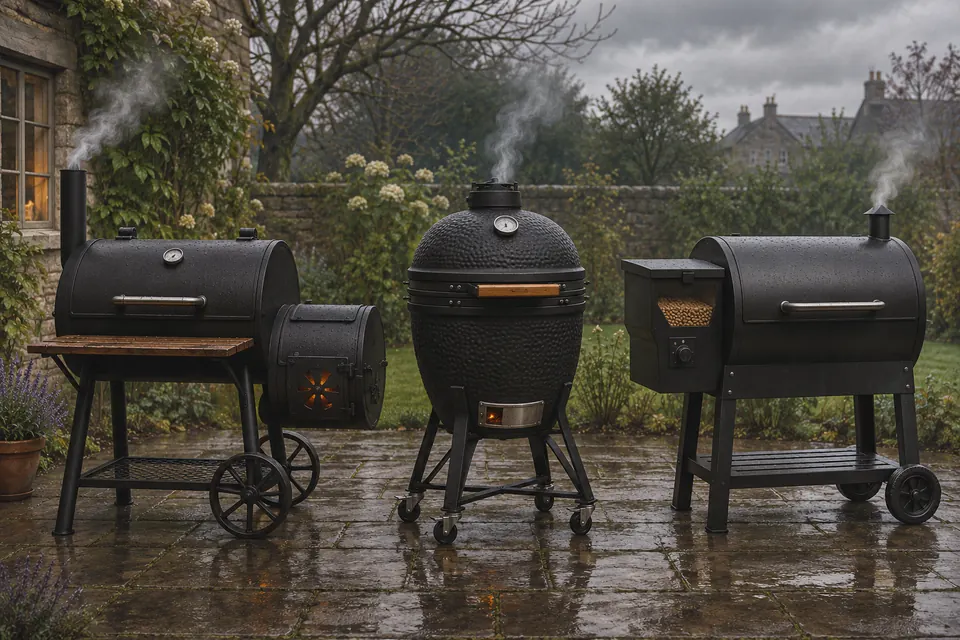
Offset vs kamado vs pellet
The three big smoker types compared on effort, fuel, power needs and how they cope with British weather.
Read the guide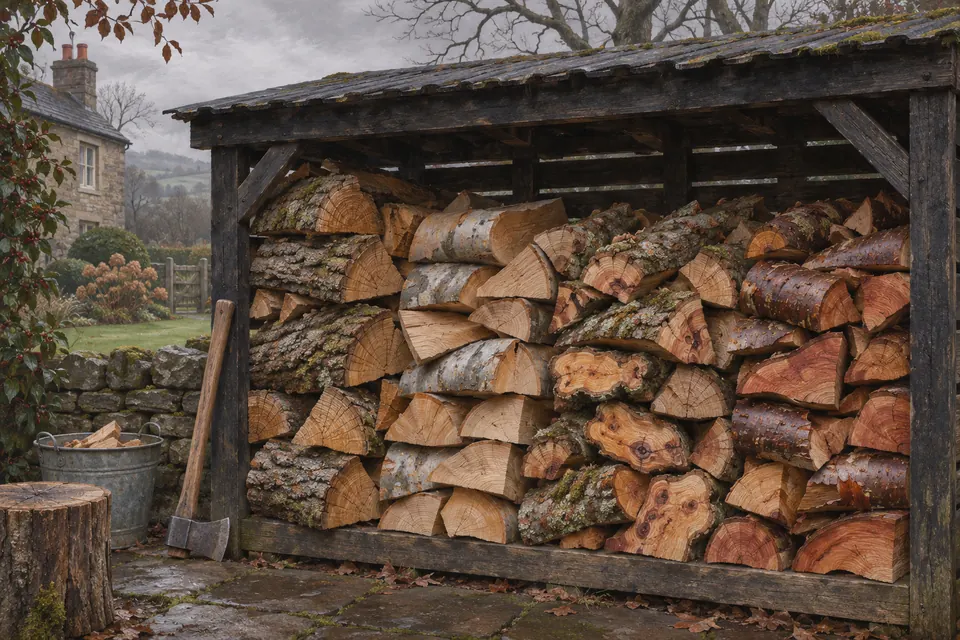 Fuel and woodCornerstone
Smoking wood in the UK
Which British woods suit which meats, chunks vs chips vs splits vs pellets, how dry the wood should be, what never to burn and how to store it.
Read the guide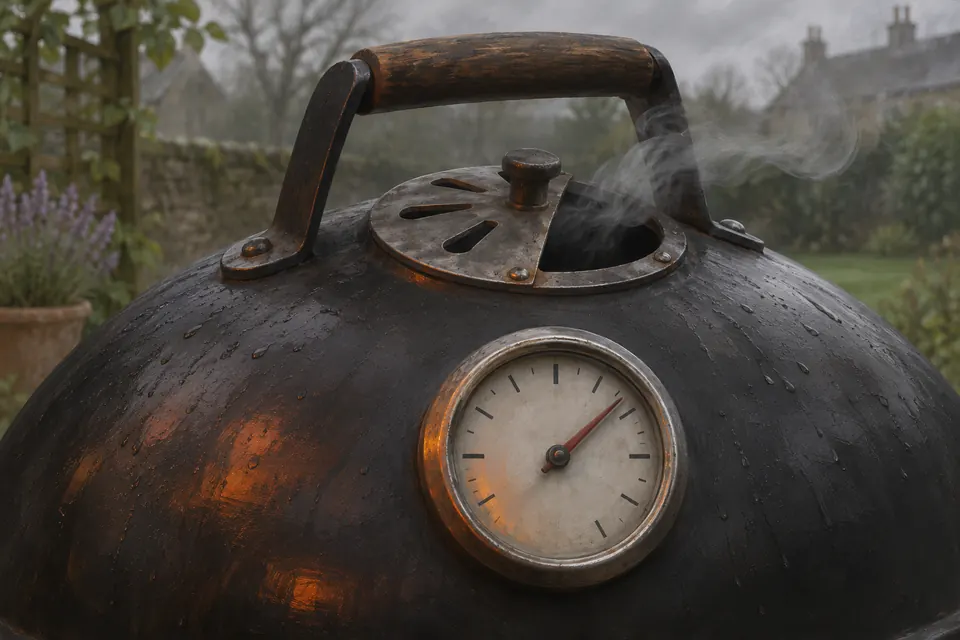 TechniqueCornerstone
Smoker temperature control
How to hold a steady smoker temperature with vents, fuel and placement, why the lid gauge lies, and what to do when the temperature drifts.
Read the guide