On this page · 7 sections
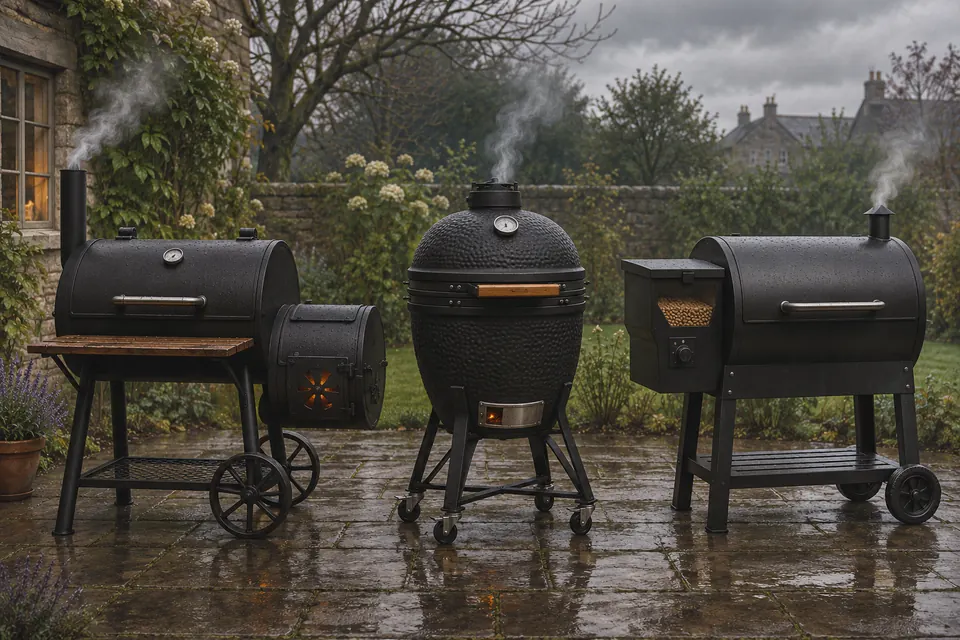
For most people buying their first dedicated smoker in the UK, the kamado is the safest bet, the pellet grill is the easiest, and the offset is the one you buy because you want a hobby rather than a cooker. All three will smoke a brisket well. What separates them is effort, power, fuel and how they cope with a wet October afternoon.
The three at a glance
| Offset | Kamado | Pellet grill | |
|---|---|---|---|
| Effort during a cook | High: feed the fire regularly | Low once settled: occasional vent tweaks | Very low: set the dial |
| Fuel | Wood splits, charcoal or both | Lump charcoal plus wood chunks | Hardwood pellets |
| Mains power | Not needed | Not needed | Essential |
| Wind, cold and rain | Thin steel struggles; thick steel copes | Thick walls shrug off cold | Steady, but keep electronics dry |
| Learning curve | Steep and long | Moderate: learn the vents | Gentle |
| Also grills hot? | Not really | Yes, very well | Some do, most are weaker at searing |
| Footprint | Large | Compact but heavy | Medium |
These are rules of thumb about how each type works, not ratings of particular models.
How each one makes heat and smoke
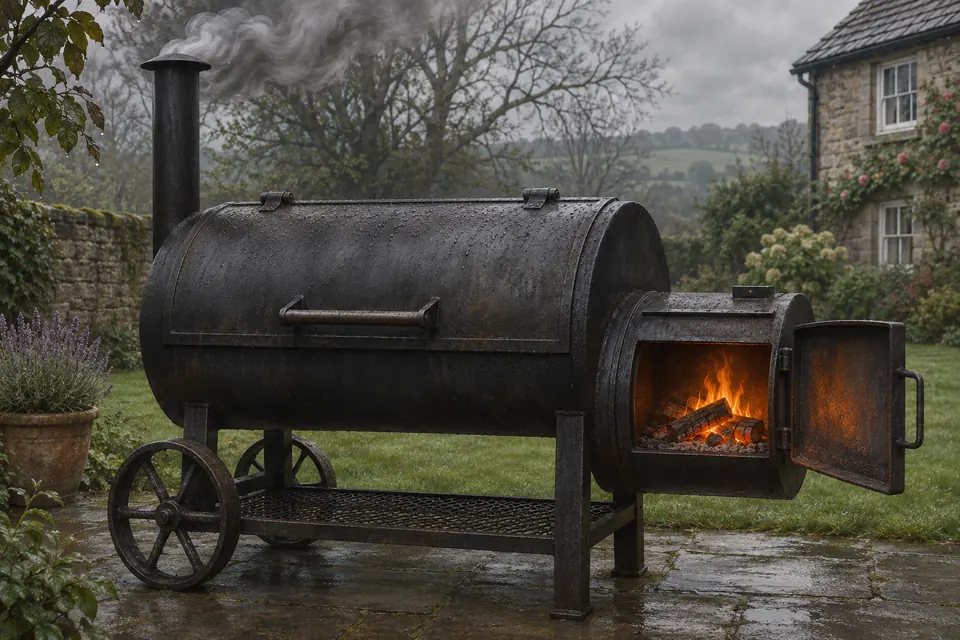
An offset has a firebox bolted to the side of a long cooking chamber. You burn wood or charcoal in the firebox, heat and smoke travel across the meat and out of a chimney at the far end. The smoke comes from the fuel itself, so the flavour is as good as your fire management. More detail in offset smokers explained.
A kamado is an egg-shaped cooker, usually ceramic, with thick walls and a tight lid. A bed of lump charcoal burns slowly at the bottom, a heat deflector sits between the fire and the food for low-and-slow, and a few chunks of wood buried in the charcoal provide the smoke. Two vents, top and bottom, control everything. See kamado smokers explained.
A pellet grill is a steel box with a hopper on the side. An electric auger feeds compressed hardwood pellets into a small firepot, a fan keeps them burning, and a controller adjusts the feed to hold the temperature you set. Smoke comes from the smouldering pellets. It's a wood-burning oven with a thermostat, which is either exactly what you want or missing the point entirely. More in pellet grills explained.
Effort and fire management
The offset asks the most of you. Burning wood splits, most cooks add fuel every half hour to an hour, and the temperature drifts if you wander off. Some people love this. They stand by the firebox with a coffee and call it a good Saturday. If that sounds like a chore, it will feel like one by hour six.
The kamado takes a bit of patience at the start, because its thick walls take a while to come up to temperature and settle. Once it's steady it holds there for hours with the odd small vent change. The main skill is not overshooting, since a hot kamado cools slowly.
The pellet grill asks almost nothing during the cook. You fill the hopper, set the temperature and check it now and then. Your job is mostly keeping the firepot clean and the pellets dry. If you want to run a long overnight cook and actually sleep, this is the type that makes it easy.
Power, fuel and running costs
Without an outdoor socket, the pellet grill is out. It needs mains power for the auger, fan and igniter for the whole cook, and the usual advice for outdoor power applies: an RCD-protected, outdoor-rated socket, and a qualified electrician for anything new. The offset and kamado need nothing but a match.
Fuel availability matters more than it sounds. Charcoal and briquettes are easy to find at UK DIY stores, garden centres and supermarkets in summer, though choice thins out in winter. Hardwood pellets for cooking are less widely stocked in shops, so most owners buy online in bulk and need somewhere dry to keep them; see wood pellets in the UK. Seasoned or kiln-dried hardwood splits for an offset are sold by log merchants, but check they suit cooking and aren't treated.
We don't quote prices, but in broad terms the kamado is efficient with charcoal thanks to its insulation, the pellet grill uses fuel steadily and predictably, and the offset is the hungriest, especially in the cold. The fuel calculator helps you plan quantities once you know your own burn rate.
Cold, wind and rain
This is where British buyers should pay the most attention.
A thin-steel offset loses heat through its walls on a cold day, and wind across the firebox makes the temperature swing. Thick steel and good seals help a lot, which is why cheap offsets have a poor reputation here. The kamado is the opposite: its thick ceramic walls hold heat so well that a frosty morning barely registers. The pellet grill's controller compensates for cold by feeding more pellets, so the temperature holds, but the electronics and the hopper don't like water. An open-sided, well-ventilated shelter during the cook (never a cover on a lit grill unless the maker says it is designed for that) and a dry place for the pellets are part of owning one. Read smoking in the rain before you build anything over a lit smoker.
Who should skip each one
Skip the offset if you want to do anything else on cook day, have a small garden or close neighbours, or are tempted by the cheapest thin-steel one in the shop. That last one is the classic way to decide you hate smoking.
Skip the kamado if you'll need to move it often or carry it up steps. They're heavy, and ceramic can crack if it's knocked over. Also skip it if you regularly cook for big crowds; the grate is round and only so big.
Skip the pellet grill if there's no outdoor socket, if you specifically want the stronger smoke of a charcoal or wood fire, or if a device with a circuit board in the garden all year sounds like trouble. Power cuts mid-cook are a nuisance too.
If none of the three feels right, a bullet smoker or your existing kettle may be the better answer. Run the smoker picker with your own answers, then read the explainer for whichever type comes out on top.
FAQs
Which gives the strongest smoke flavour?
Most cooks find a well-run offset gives the strongest wood-smoke flavour, a kamado comes close, and a pellet grill gives a milder smoke. Plenty of people prefer the milder version.
Can a kamado do everything a pellet grill does?
Mostly, and it grills hotter. What it can't do is hold temperature by itself: you still light it and set the vents, and it won't adjust if the weather changes.
Is a pellet grill cheating?
No. It's a different way of controlling the fire. The meat still needs seasoning, the right temperature, patience and a probe thermometer.
Which is easiest in British winter?
The kamado, because its thick walls hold heat in the cold. A pellet grill also holds temperature well but uses more pellets and needs keeping dry.
Keep going
 Choosing a smoker
Offset smokers explained
How offset smokers work, why steel thickness and seals matter, and whether one suits a British garden.
Read the guide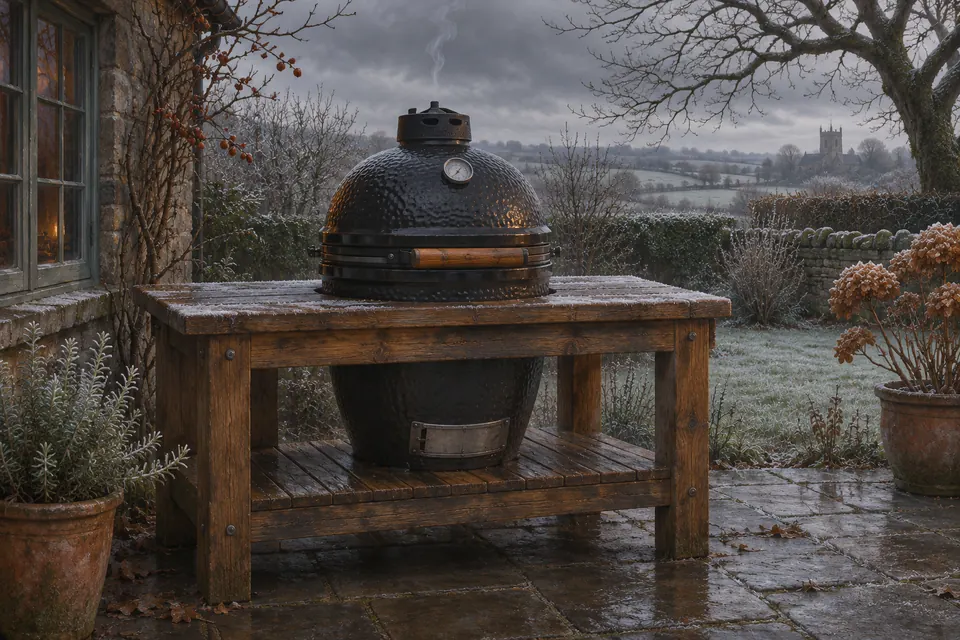 Choosing a smoker
Kamado smokers explained
How a kamado holds steady heat, setting one up for low and slow, what to check in the spec, and living with a heavy ceramic egg in a British garden.
Read the guide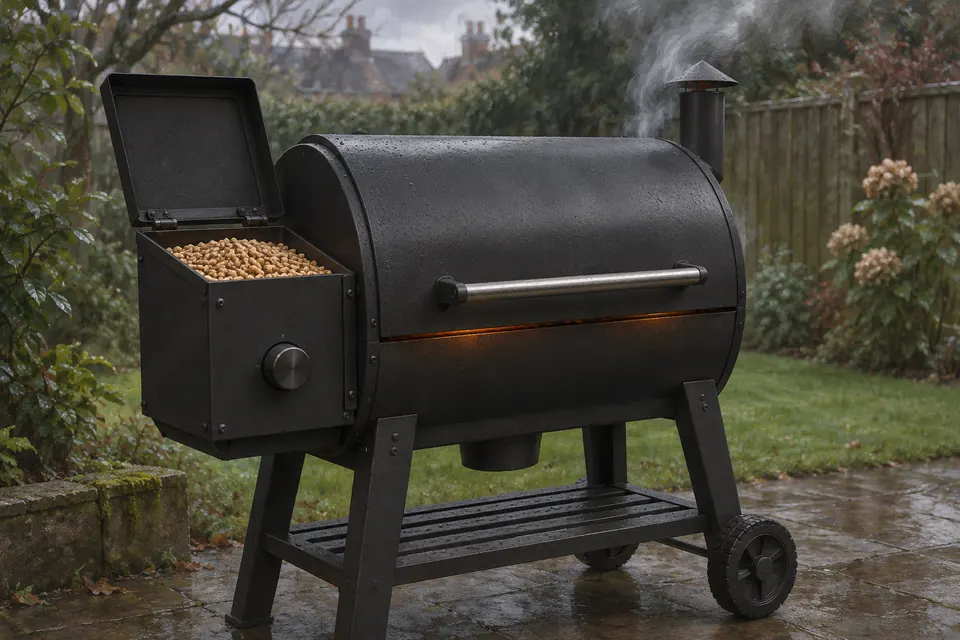 Choosing a smoker
Pellet grills explained
How pellet grills hold temperature, what happens in a power cut, how to shut one down safely and how to keep pellets dry in a damp British shed.
Read the guide