On this page · 7 sections
At a glance
- Ask for
- Chicken wings, jointed into drumettes and flats
- Smoker
- Around 120–135°C, then crisp at 200–230°C
- Time
- Around 45–60 min smoke, 10–20 min crisp
- Wood
- Apple, cherry or beech, one or two chunks
- Done when
- Safe temperature per FSA guidance
- Rest
- A few minutes, then sauce and serve
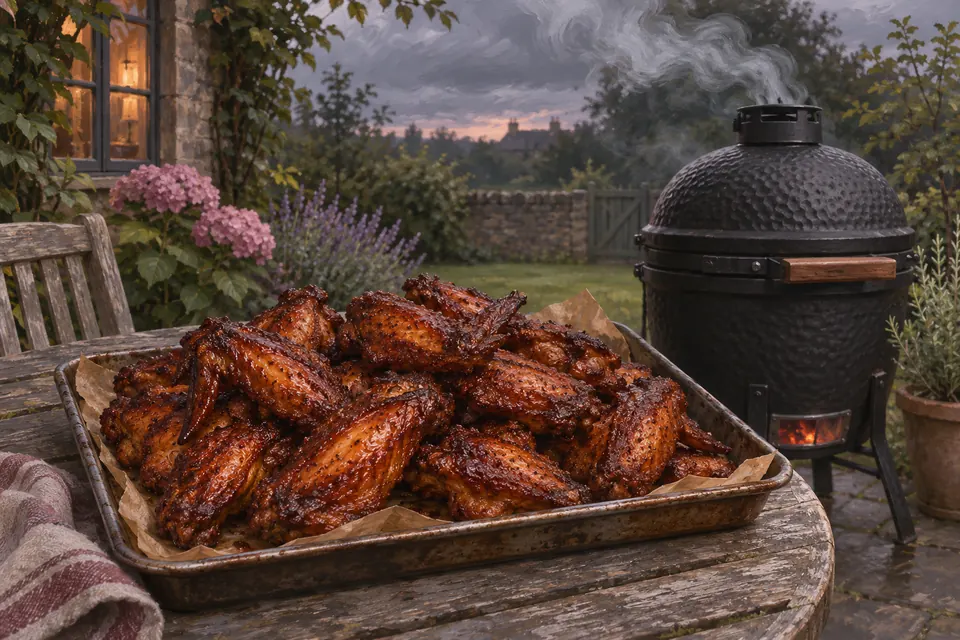
Fact one about smoked chicken wings: smoke is the easy part. Wings are small, they take on flavour in well under an hour, and almost any wood works. Fact two: low-and-slow, the method that makes pork shoulder brilliant, turns wing skin into something chewy and pale that sticks to your teeth. So the trick to good smoked wings is mostly about what you do after the smoke.
Why smoked wing skin goes rubbery
Chicken skin is mostly water and fat held together by connective tissue. To crisp, the water has to leave and the fat has to render out, and both need a decent amount of heat. At typical low-and-slow temperatures, around 110–120°C, the skin dries a little and takes on lovely colour, but it never gets hot enough to properly crisp. The meat underneath is cooked and juicy; the skin is a letdown.
Wings make this worse than a whole bird because they're nearly all skin. A rubbery skin on a whole chicken can be peeled off. On a wing, it's most of the experience.
There are two fixes and you'll want both: dry the skin before it goes near the smoker, and finish the wings hot.
Prepping the wings
Joint them
UK supermarkets and butchers usually sell wings whole. Each has three sections: the drumette (the meaty little drumstick), the flat (two thin bones, often everyone's favourite) and the tip. Cut through the joints with a sharp knife, looking for the gap rather than hacking through bone. Keep the tips for stock or bin them; they're all skin and bone and burn easily.
Jointed wings cook more evenly, crisp better and are much easier to eat at a party. Some butchers sell them ready jointed, which saves a job.
Don't wash the raw chicken. It just spreads bacteria around the sink; the FSA guidance is clear on this. Pat the wings dry with kitchen paper instead.
Dry brine overnight
A dry brine is just salt rubbed onto the meat and left in the fridge. The salt seasons the meat and pulls moisture from the skin, which then evaporates if the wings are left uncovered.
Weigh the wings, sprinkle over salt at around 1% of their weight, toss well and lay them on a rack over a tray, skin side up. Leave them uncovered on a low shelf of the fridge overnight, away from anything ready to eat. The brine calculator works out the salt in grams from the weight if you don't fancy doing the sums.
Many cooks add a little baking powder to the salt, a teaspoon or so per kilo of wings. It helps the skin blister and crisp. Make sure it's baking powder, not bicarbonate of soda, which gives a soapy, metallic taste.
Season with the rest of your rub just before smoking, not overnight. Sugar in a rub left on wet skin overnight goes sticky, and sticky skin won't crisp.
Smoke, then crisp
Smoke at a moderate temperature
Set the smoker to around 120–135°C, a little higher than you'd run for pork. Put one or two chunks of apple, cherry or beech on the coals; oak works too but can be a bit strong for something this small. Lay the wings out in a single layer with space between them so smoke and air can move.
Smoke for around 45 minutes to an hour. The skin should take on a golden colour and the meat should be partly cooked. You don't need more smoke than this: wings pick up flavour quickly, and longer at low temperature just means more rubber.
Crisp them hot
Now raise the heat to somewhere around 200–230°C and cook for roughly 10 to 20 minutes, turning once, until the skin is crisp and blistered. How you get there depends on the kit:
| Kit | How to crisp |
|---|---|
| Kettle or bullet | Open the vents fully, add a few lit coals and move wings over direct heat for the last few minutes, watching closely |
| Kamado | Open up the vents and let it climb; it gets hot fast |
| Pellet grill | Turn the dial up to its high setting |
| Any smoker with a slow climb | Finish the wings in a hot oven on a rack over a tray |
The oven finish is no cheat. It's the most predictable option, especially when you have a lot of wings and a smoker that takes a while to heat up. If you're using a gas BBQ to smoke, you're already halfway there: just light the other burners for the finish.
Check they're cooked
Wings are small, so it's tempting to guess. Don't. Check several of the biggest drumettes with a probe thermometer near the bone without touching it, and make sure they reach a safe temperature as set out in the FSA guidance linked above. Juices should run clear and there should be no pink meat at the bone. Smoked chicken can keep a pink tinge just under the skin from the smoke; that's normal and isn't the same as undercooked meat at the bone. Our guide to smoked whole chicken covers probe placement on poultry in more detail.
Sauce and serve
Rest the wings for a few minutes, then toss them in sauce at the very end. Sauce on too early softens the skin you've just worked so hard to crisp. A classic is melted butter mixed with hot sauce. A sticky glaze of honey, soy and garlic works too, as does a dry finish of extra rub with a squeeze of lime.
If you're serving a crowd, keep some plain and put sauces on the side. It suits more people, and plain wings stay crisp longer on the table.
How many wings for a party
Wings are deceptive. They look generous on the tray and vanish fast, mostly because they're bone and skin with not much meat.
Plan by weight rather than wing count, because wing sizes vary a lot. As a rough rule of thumb, around 250–350 g of raw wings per person works as a starter or as part of a spread, and more if wings are the main event or the crowd is hungry. Children and lighter eaters will eat less; teenagers and anyone who's been playing football all afternoon, rather more. The BBQ meat calculator takes the guesswork out: put in the number of guests and adjust the portion size.
For a big batch, smoke in a single layer across two racks or two cooks, then crisp them in batches. Crowded wings steam rather than crisp.
Your next step
Buy a kilo of whole wings, joint them tonight, weigh them and work out the salt with the brine calculator. Into the fridge uncovered, and tomorrow they'll be ready for the smoker. Do a small batch before the party so you know how your setup crisps them, and how long the finish actually takes.
FAQs
Why are my smoked chicken wings rubbery?
The skin hasn't got hot enough to render and crisp. Dry brine them uncovered overnight, smoke at a moderate temperature, then finish them hot over direct heat or in a hot oven.
What temperature should chicken wings reach?
They need to reach a safe internal temperature for poultry. Check the FSA guidance for the figure and method, and probe several of the biggest pieces near the bone.
Which wood is good for smoking wings?
Apple, cherry and beech give a light, sweet smoke that suits chicken. One or two chunks is plenty, as wings take on smoke quickly.
Can I smoke wings the day before a party?
You can smoke them, cool them quickly and keep them in the fridge, then reheat them hot until they're piping hot right through and the skin crisps. Follow the FSA guidance on cooling and reheating cooked chicken.
Should I sauce wings before or after smoking?
After. Sauce on raw or half-cooked wings softens the skin and sugary sauces burn during the hot finish. Toss them in sauce just before serving.
Keep going
 Cooks
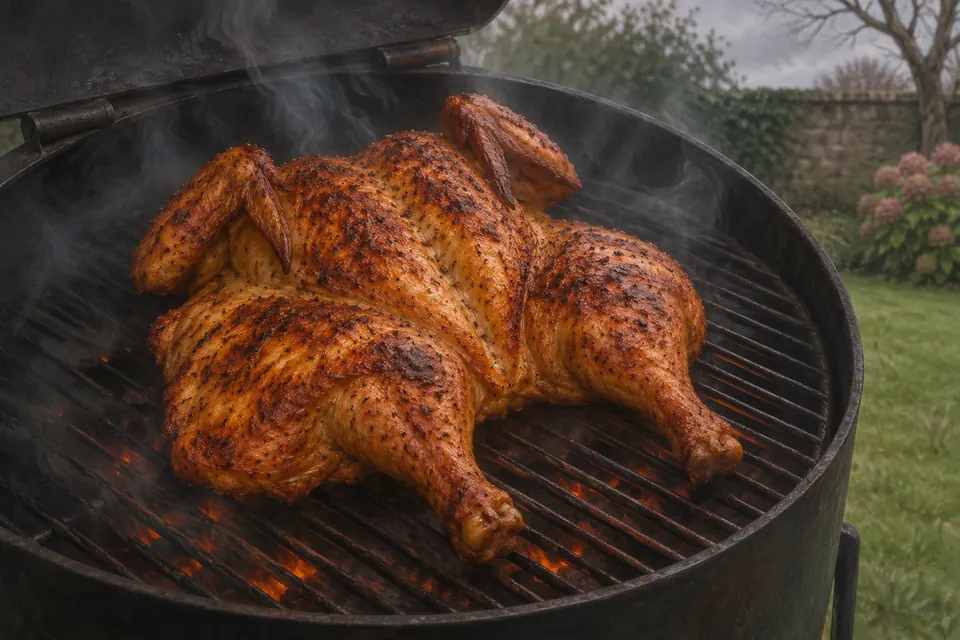
Smoked whole chicken
How to smoke a whole chicken in the UK: spatchcocking, dry brining, the higher temperature that stops rubbery skin, and checking it's safely cooked.
Read the guide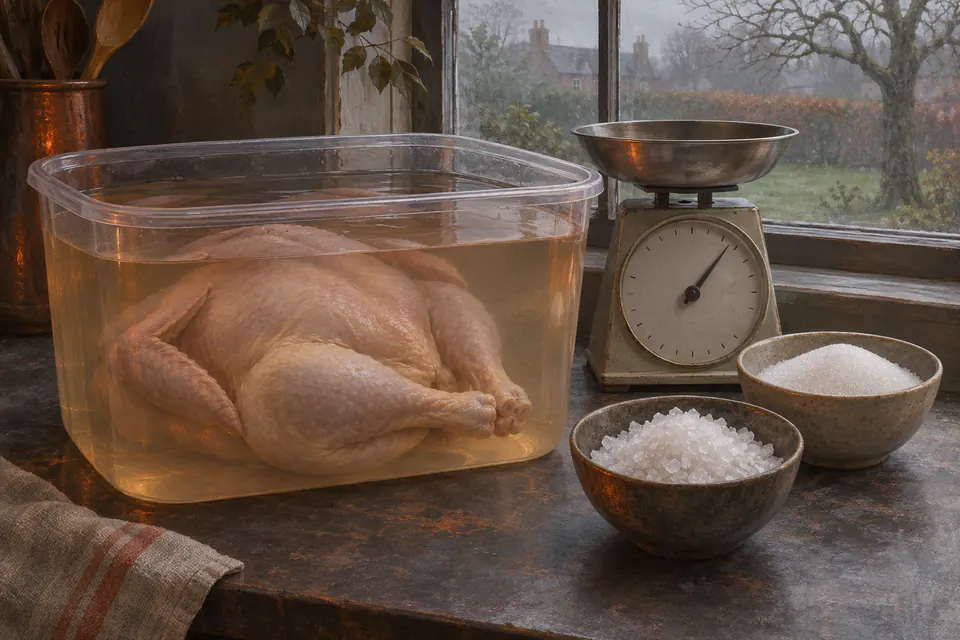 Tool
Brine calculator
Grams of salt and sugar for a wet, equilibrium or dry brine, from the weight of your meat and the strength your recipe asks for.
Open the tool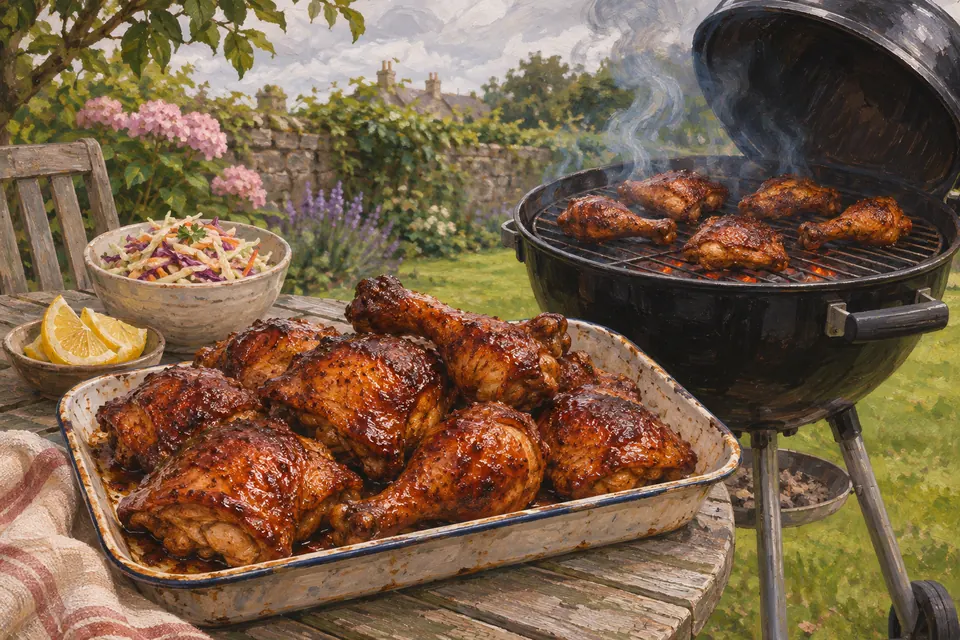 Cooks
Chicken thighs and drumsticks
How to smoke chicken thighs and drumsticks with crisp skin: why they're the most forgiving cook for beginners, dry brining, the right smoker temperature, timings and when they're done.
Read the guide