On this page · 8 sections
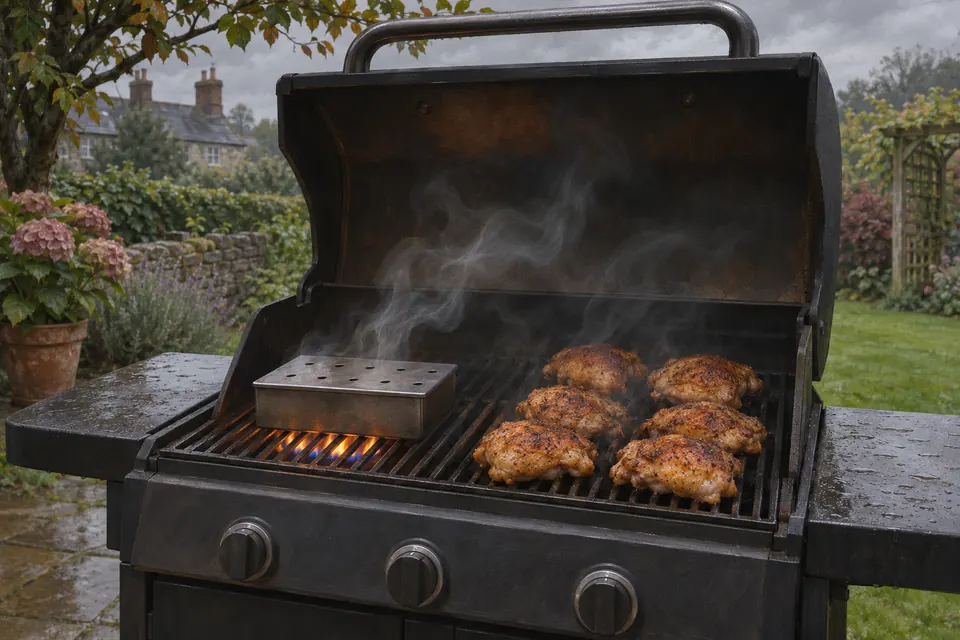
"I've only got a gas barbecue. Can I smoke on it, or am I wasting my time?" It's a common question, usually from someone eyeing up a smoker they're not sure they'll use. The short version: yes, you can, and for shorter cooks it's genuinely good. What a gas BBQ can't do is run a whole day at a low, steady temperature with heavy smoke. Know that going in and you'll be pleased with what it does well.
How smoking on gas works
A gas BBQ makes heat but no smoke, so you add the smoke separately by putting wood chips somewhere hot enough to smoulder. Then you cook the food away from the flame, with the lid closed, so smoky hot air moves around it. This is called indirect cooking, and it's the same idea as smoking on a kettle BBQ, with burners standing in for a pile of charcoal on one side.
You need three things: wood chips, something to hold them, and a BBQ with at least two burners. A single-burner model can't really cook indirectly, because there's no unlit side for the food.
Smoke box or foil pouch
A smoke box
A smoke box is a small metal tin with holes or slots in the lid. You fill it with dry chips and put it directly over a burner, usually under the cooking grate on top of the flavouriser bars, or on the grate itself if the maker allows that. Cast iron and thick steel boxes hold heat well and keep smouldering longer. Some gas BBQs have a built-in smoker drawer; if yours does, use that and follow the manual.
A foil pouch
A foil pouch does the same job for almost nothing. Put a couple of handfuls of chips on a double layer of thick foil, fold it into a flat parcel and poke a few holes in the top with a skewer. Put it over the lit burner. It won't last as long as a box and it's a bit fiddly to replace mid-cook, but it's an easy way to find out whether you like the results before buying anything.
Setting up the BBQ
- Light one burner, or one side. On a three or four-burner BBQ, you might light the two on one side. On a two-burner model, light one.
- Put the chips over the lit side and close the lid. Wait until you see smoke drifting out, usually within ten or fifteen minutes.
- Turn the lit burner down until the lid thermometer settles. Most gas BBQs won't go as low as a dedicated smoker; settling somewhere around 130–160°C on one burner is common, and that's fine for poultry and fish.
- Put the food on the unlit side, as far from the flame as it will go, and close the lid.
- Add more chips when the smoke fades. A box of chips typically smoulders for somewhere around 20 to 40 minutes. You don't need smoke for the whole cook; meat takes on most of its smoke flavour early on.
Use a probe thermometer in the food, and ideally a second probe at grate level on the cool side. The lid gauge sits at the top of the hood and often reads differently from where the food is. Our guide to BBQ meat thermometers explains what to look for.
Which wood to use
Chips, not chunks. Chunks need a bed of hot coals to get going; chips smoulder quickly over a burner. Apple and cherry give a mild, slightly sweet smoke that suits chicken, pork and fish. Oak and beech are stronger and good with sausages and beef. Never use treated, painted or unknown timber, including offcuts from fencing or decking. The smoking wood guide covers which British woods suit which food.
You don't need to soak chips. Wet chips steam first and smoke later, which mostly delays things. If they flare up rather than smoulder, partly close the box or turn the burner down a touch.
What to expect
Be realistic and you won't be disappointed.
- Lighter smoke. Gas BBQs vent a lot of air through the hood, so the smoke moves through quickly. Food tastes clearly smoky, but not as deep as from a charcoal smoker.
- Little or no smoke ring. That pink layer is mostly a charcoal and wood effect. Its absence doesn't change the flavour much.
- Temperature struggles in wind. British wind blows straight through the gaps in a gas BBQ hood and across the burners. On a breezy day you'll see the temperature swing and the burner may even blow out. Turn the BBQ so the wind hits the back, not the front, and use a windbreak if you can without blocking any vents. Smoking in the rain has more on weather.
- Long cooks are hard work. Twelve hours of pork shoulder on gas is possible in theory and miserable in practice: lots of chip refills and a lot of gas.
| Food | How well it works on gas |
|---|---|
| Chicken pieces, wings | Very well; the higher heat helps the skin |
| Whole chicken, spatchcocked | Well |
| Salmon fillets | Well, with a mild wood |
| Sausages | Very well |
| Pork belly, ribs | Possible, but it's a long afternoon |
| Brisket, pork shoulder | Not really worth it |
Gas safety basics
Smoking means running the BBQ for longer than a quick grill, so the usual gas safety habits matter more.
- Follow the maker's manual. It tells you where a smoke box can safely sit, which burners to use and whether low-heat cooking is fine for that model. Some makers don't want anything placed directly on burners or flavouriser bars.
- Never block vents. Don't wrap the hood in foil, cover the back gaps or pack the firebox to trap smoke. Gas BBQs need airflow to burn properly and to stop heat building up where it shouldn't, including near the bottle.
- Look after the gas bottle. Check the hose and regulator for cracks or perishing before the season starts. A quick leak check with soapy water on the connections is the usual advice: bubbles mean a leak, so turn it off and don't use it. Keep the bottle upright and away from the heat of the cook. Store spares outdoors, upright and away from drains and ignition sources.
- Outdoors only. Never use a gas BBQ indoors, in a garage, shed, tent or under a closed gazebo. Gas appliances can produce carbon monoxide, and a leak in an enclosed space is dangerous.
- Turn off at the bottle when you finish, then at the controls.
Do a dry run on a Saturday before the barbecue that matters. Twenty minutes with a smoke box and a probe on the cool side tells you where your BBQ settles and how fast it chews through chips.
When to upgrade
If you're only smoking chicken, sausages and fish a few times a summer, a gas BBQ and a smoke box are perfectly good and nothing else needs buying. Upgrade when you notice yourself wanting the things gas can't give: long, low cooks of pork shoulder and brisket, deeper smoke and bark, or a cooker that holds its temperature in a breeze without constant attention.
The cheapest step up is a charcoal kettle, which smokes very well with the right setup. Beyond that, a bullet, kamado or pellet grill each suit different people. The smoker picker asks seven questions and suggests a type, which is a good place to start once your next few gas cooks tell you what you're missing.
FAQs
Can I smoke a brisket on a gas BBQ?
You can, but it's hard work: long hours, lots of chip refills and lighter smoke than a charcoal smoker gives. Most cooks get better results smoking chicken, sausages and fish on gas and saving brisket for charcoal.
Do I need a smoke box, or will foil do?
Foil works. A thick double-layer pouch with a few holes is a cheap way to try smoking on gas. A smoke box lasts longer between refills and is easier to handle.
Where should the smoke box go?
Over a lit burner, usually under the grate or on it, depending on your BBQ. Check the maker's manual first, as some models don't want anything placed directly on the burners.
Why won't my gas BBQ go low enough?
Many gas BBQs are built for grilling and run hot even on one burner at its lowest setting. Settle for a slightly higher temperature and cook foods that suit it, like chicken and sausages, rather than fighting the BBQ.
Is it safe to leave a gas BBQ running for hours?
Only outdoors, with all vents clear, in line with the maker's manual, and with someone keeping an eye on it. Check the hose and connections before the season and never cover the BBQ while it's lit.
Keep going
 Technique
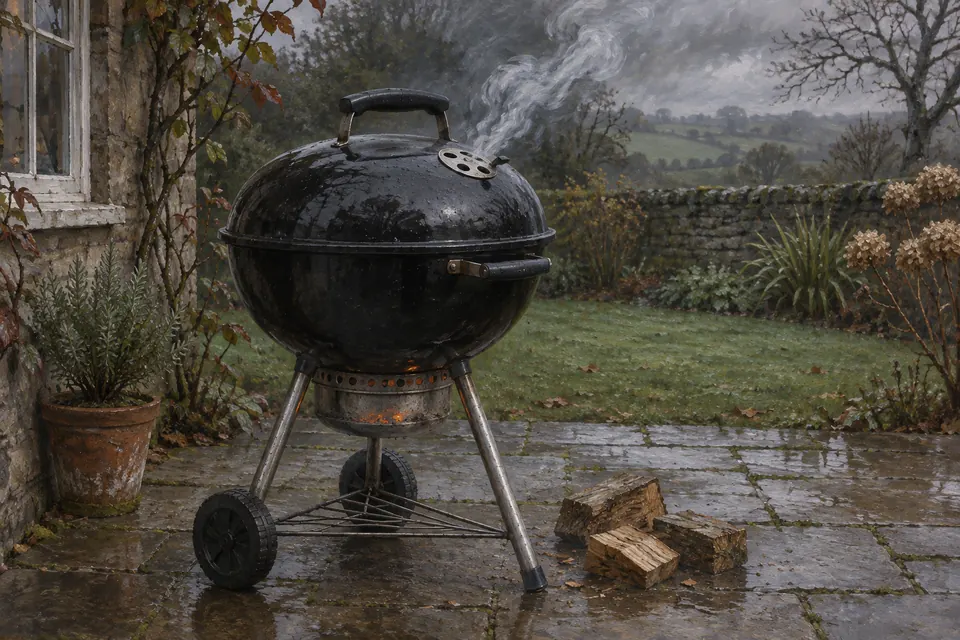
Smoking on a kettle BBQ
Turn the kettle BBQ you already own into a smoker with a two-zone or snake setup, water pan and wood chunks, and know when it's time to upgrade.
Read the guide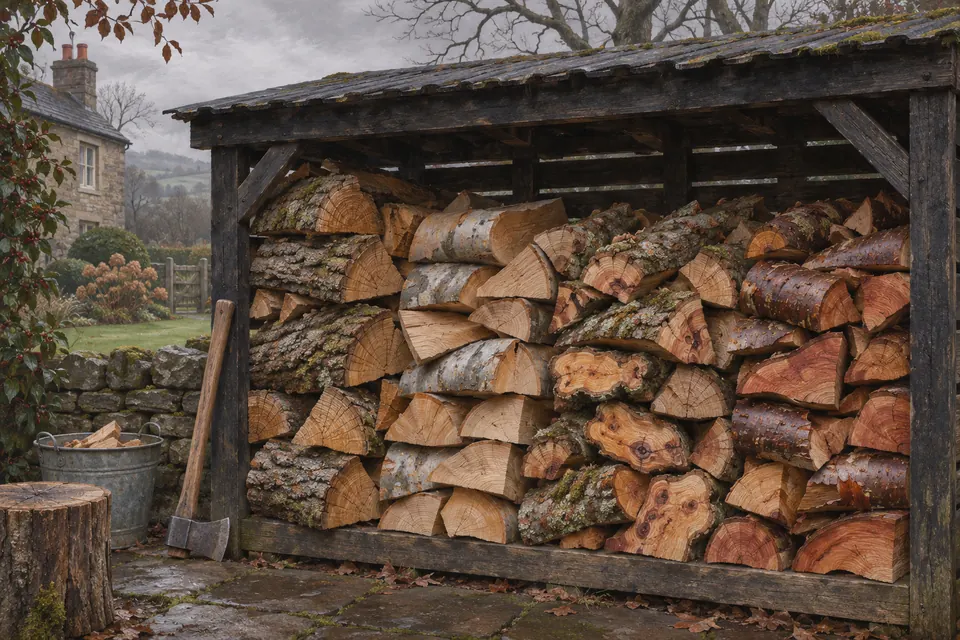 Fuel and woodCornerstone
Smoking wood in the UK
Which British woods suit which meats, chunks vs chips vs splits vs pellets, how dry the wood should be, what never to burn and how to store it.
Read the guide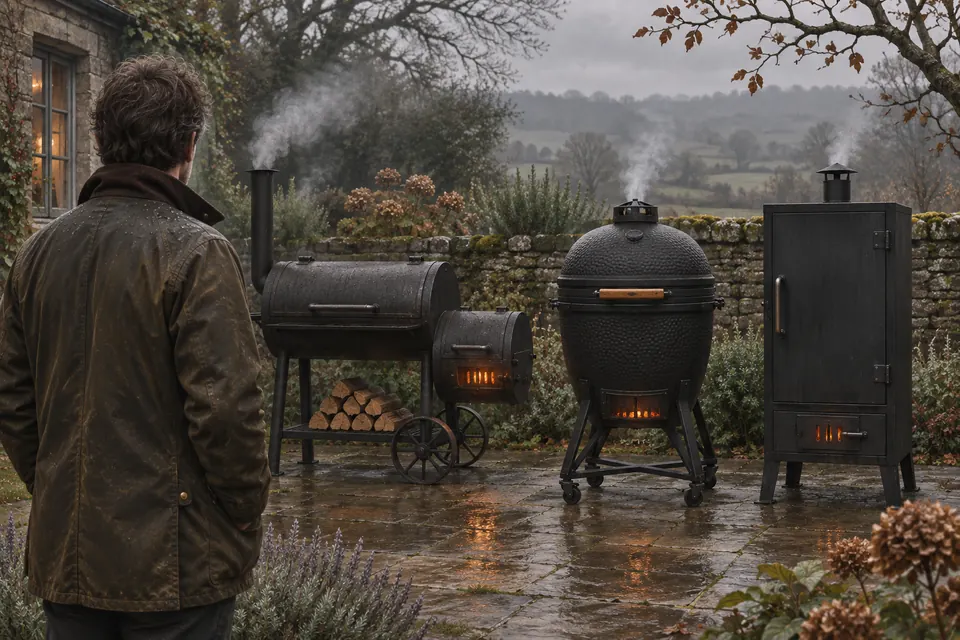 Tool
Which smoker should I buy?
Answer seven questions about power, effort, fuel, space and budget to get a smoker type with the reasons behind it.
Open the tool