On this page · 9 sections
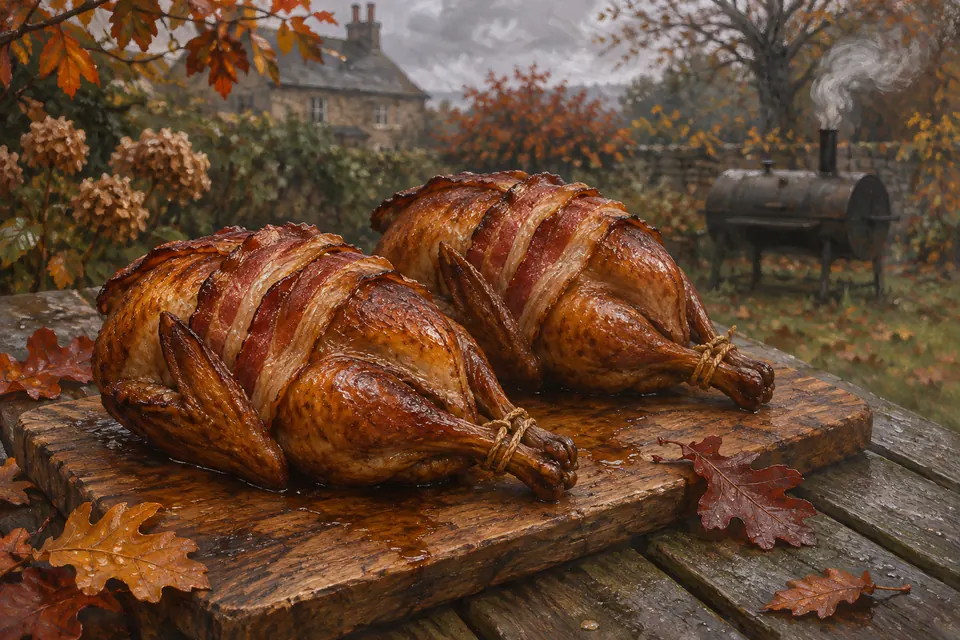
At a glance
- Ask for
- Oven-ready pheasant or partridge; pigeon breasts
- Smoker
- Around 120–135°C
- Time
- Pheasant 1–1.5 h; partridge 45–60 min
- Wood
- Apple, cherry or a little oak
- Done when
- Cooked through, checked with a probe (FSA)
- Rest
- 10 minutes, loosely covered
From October to the end of January, game dealers and many butchers sell oven-ready pheasant for not much more than the price of a supermarket chicken, often as a brace of two. It's one of the best-value meats in the country and one of the least cooked, mostly because people roast it once, find the breast dry and the legs tough, and give up.
A smoker is a good fix. It cooks gently, the smoke suits game, and with a little preparation you get juicy breast meat with a proper smoky flavour. Here's how it works for the three game birds you're most likely to find.
Pheasant, partridge and pigeon compared
| Pheasant | Partridge | Wood pigeon | |
|---|---|---|---|
| Season | Roughly October to the end of January | Roughly September to the end of January | Available all year |
| Typical size | One bird feeds two | One bird per person | Two breasts per person as a starter |
| Flavour | Mild, a bit like a tasty chicken | Mild and delicate | Rich and dark, like liver-tinged beef |
| How to smoke | Whole, brined and barded | Whole, brined and barded | Breasts only, quick, served pink |
| Done | Cooked through (FSA) | Cooked through (FSA) | Pink in the middle |
Season dates are for Great Britain and can differ in Northern Ireland. A good game dealer will know what's available and what's come in fresh this week.
Step 1: brine the birds
Pheasant and partridge are very lean, and a brine is the single biggest thing you can do to keep them juicy. A wet brine of roughly 5–6% salt suits small birds. Submerge them in the fridge for around two to four hours for pheasant and an hour or two for partridge. Any longer and they can turn hammy.
Rinse the birds, pat them very dry with kitchen paper and leave them uncovered in the fridge for an hour if you have time. Drier skin takes smoke better and browns better.
Step 2: bard the breasts with bacon
Barding means covering the breast with fat to protect it. Lay rashers of streaky bacon over the breast of each bird, slightly overlapping. Tuck a few sprigs of thyme and a slice of onion or apple inside the cavity. Pheasant legs cook more slowly than the breast, so some cooks tie the legs loosely together to keep the shape compact.
If you'd rather not use bacon, rub the birds generously with softened butter instead. It does a similar job but runs off more quickly.
Step 3: smoke at a moderate heat
Run the smoker at around 120–135°C, slightly hotter than you'd use for pork shoulder. That's warm enough to cook the birds through in a sensible time without blasting the lean breast. Use a small amount of mild wood: apple and cherry are lovely with game birds, and a little oak works if that's what you have. Our smoking wood guide covers British woods in more detail.
Put the birds breast side up on the grate with a probe in the thickest part of one thigh, not touching bone.
| Bird | Rough smoking time at around 120–135°C |
|---|---|
| Pheasant | About 1–1.5 hours |
| Partridge | About 45–60 minutes |
These are starting points only. Size, the starting temperature of the birds and the weather all change the time. The cook planner can work backwards from when you want to eat.
Step 4: crisp, check, rest
For the last 10–15 minutes, take the bacon off (it's a cook's perk) so the breast skin can colour. If the skin still looks pale, finish the birds in a hot oven at around 200°C for a few minutes.
Pheasant and partridge need cooking through, like chicken. Check the thickest part of the thigh with a probe thermometer and follow the FSA guidance in the safety box at the top of this page. Then rest the birds for about 10 minutes, loosely covered.
Wood pigeon: a quick cook
Pigeon is a different proposition. The breasts are small, dark and rich, and most cooks serve them pink, like a small steak. The legs are tiny and tough, so most butchers sell pigeon breasts on their own.
Season the breasts with salt and pepper, smoke them at around 110–120°C for roughly 20–30 minutes until they've taken on some colour and smoke, then sear them hard in a hot pan for a minute a side. Rest for a few minutes and slice. Smoked pigeon breast on a salad of bitter leaves with blackberries or beetroot makes a very good starter.
Don't waste the legs
Pheasant legs are full of flavour but threaded with tough, needle-like tendons. If yours are chewy after smoking, pick the meat off the bone, pull out the tendons and use the meat in a pie, a risotto or a hash with potatoes and a fried egg. The carcasses make an excellent smoky stock for gravy or soup.
Shot, feathers and handling
Wild game birds can contain small pieces of shot. Warn people at the table, check the meat as you carve, and take out anything you find. The FSA advises people who eat a lot of lead-shot game, and pregnant women and young children in particular, to cut down. If you're buying birds in the feather from a shoot, plucking and drawing them is a job in its own right. Many game dealers will do it for a small charge, and for a first cook that's money well spent.
Your first step is to find a local game dealer or butcher and ask what they have in this week. A brace of pheasants, a jug of brine and a pack of streaky bacon is a cheap and very good way to spend a winter Saturday afternoon.
FAQs
Can I smoke pheasant breasts on their own?
Yes, and it's quicker. Brine them for an hour, wrap each in streaky bacon and smoke at around 120–135°C until cooked through, often 30–45 minutes. Check with a probe, as they're thin and easy to overcook.
Why is my smoked pheasant dry?
Usually the birds weren't brined, the breast had no fat on it, or they were cooked too long. Brine, bard with bacon or butter and take them off as soon as they're cooked through.
What does smoked pheasant taste like?
Like a richer, slightly gamier chicken with a lovely smoky edge. Young birds are mild. Older birds, or ones that have been hung longer, taste stronger.
Can I smoke grouse or woodcock the same way?
They're rarer and more expensive, and most cooks treat them more like pigeon: a short cook and served pink. Check the FSA guidance and ask your game dealer how they'd cook them.
What should I serve with smoked game birds?
Bread sauce, game chips, braised red cabbage, roast parsnips or a bowl of creamy mash with the smoky stock made into gravy. The same sides that suit a smoked turkey work here too.
Keep going
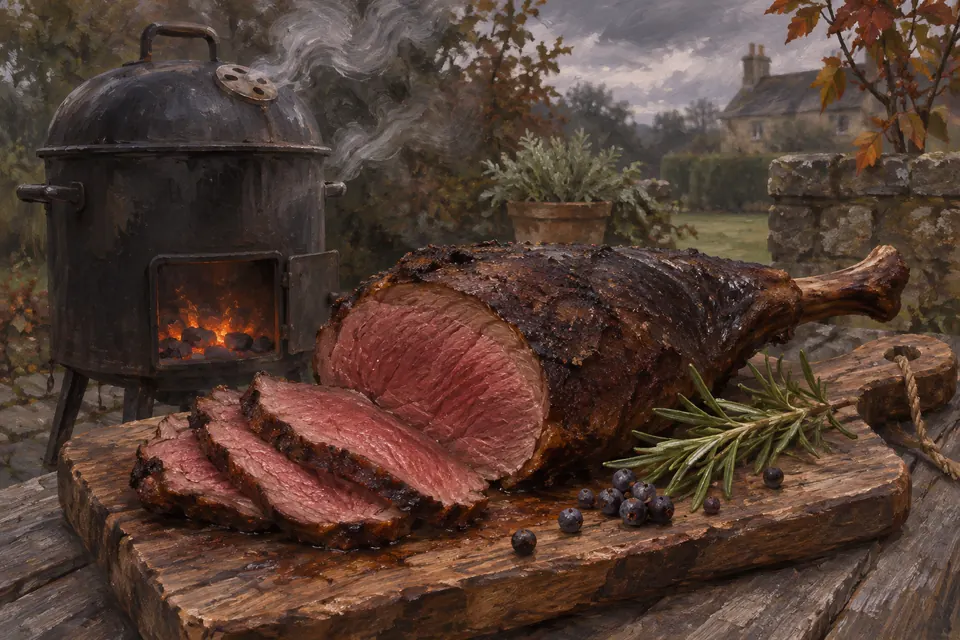 Cooks
Smoked venison
How to smoke venison without drying it out: which cut to buy, a short smoke for haunch and loin, a long braise-and-smoke for shoulder, and which wood suits game.
Read the guide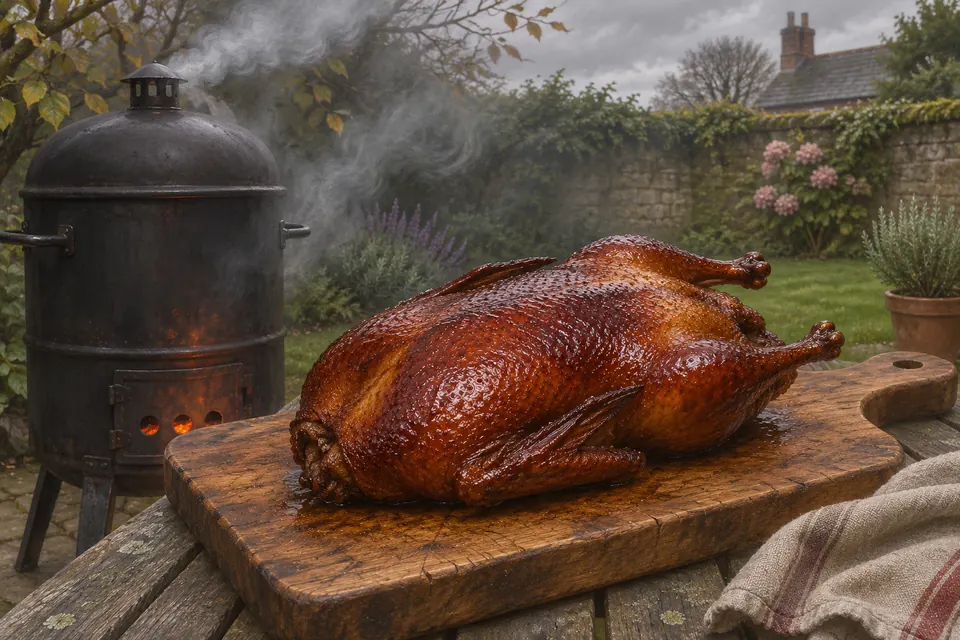 Cooks
Smoked duck
How to smoke a whole duck or duck legs: dry brining, rendering the fat, getting the skin crisp, and what to do with all that duck fat.
Read the guide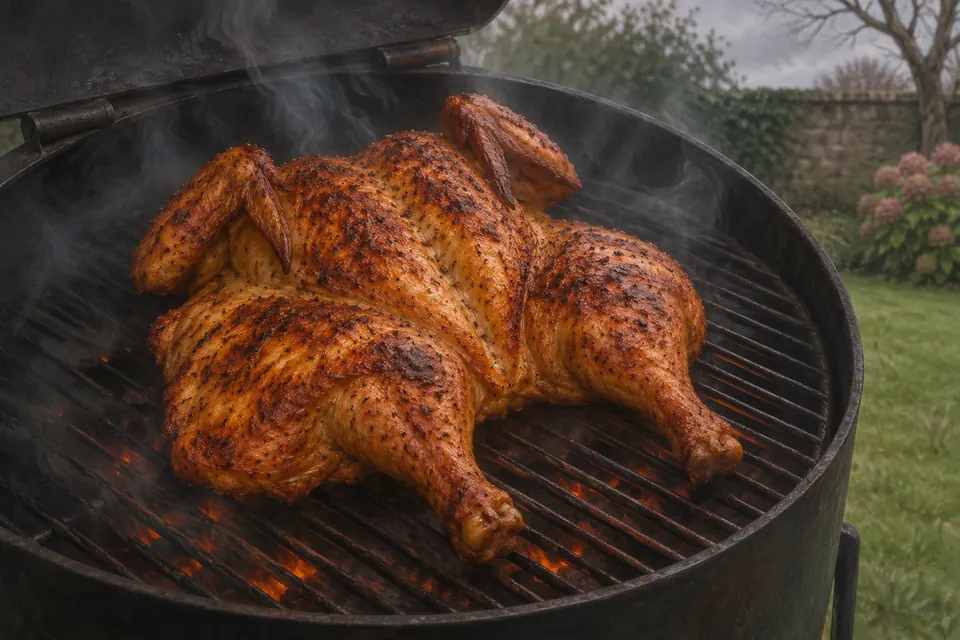 Cooks
Smoked whole chicken
How to smoke a whole chicken in the UK: spatchcocking, dry brining, the higher temperature that stops rubbery skin, and checking it's safely cooked.
Read the guide