On this page · 7 sections
At a glance
- Ask for
- Haunch joint or loin (slice pink); shoulder or neck (pull)
- Smoker
- Around 105–120°C; shoulder up to 135°C once wrapped
- Time
- Haunch 1.5–2.5 h; loin 30–60 min; shoulder 6–8 h
- Wood
- Oak, beech or cherry, used lightly
- Done when
- Haunch and loin pink; shoulder until it pulls. Mince and sausages cooked through (FSA)
- Rest
- Haunch 15–20 min loosely tented; shoulder 30 min wrapped
Venison and smoke belong together. It's what game larders did long before anyone owned an offset smoker, and a slice of rosy, smoky haunch with a dark crust is as good as anything you will cook this year. The catch is fat, or the lack of it. A beef brisket survives eight hours because it's laced with fat and collagen. A venison haunch has almost none, so the same treatment turns it into something closer to a boot.
The trick is to stop thinking of "venison" as one thing. Sort it into two groups, cook each the way it wants, and it's straightforward.
Two kinds of venison cut
| Tender cuts | Working cuts | |
|---|---|---|
| Which | Haunch joints (from the leg), loin or backstrap, fillet | Shoulder, neck, shin |
| Fat and collagen | Very little of either | Very little fat, lots of connective tissue |
| How to cook | Short smoke, pull while pink, slice thinly | Smoke, then wrap or braise until it falls apart |
| Treat it like | A reverse-seared steak | A lamb shoulder |
| Good for | A Sunday centrepiece, cold cuts, sandwiches | Pulled venison, ragu, pies, tacos |
The cut you should never smoke low and slow to "well done" is the haunch. It doesn't have the collagen to break down, so it just tightens and dries.
Where to buy venison in the UK
Farmed venison, usually red deer, is in many supermarkets all year, mostly as steaks, diced meat and the occasional haunch joint around Christmas. A good butcher or game dealer will have far more: boned and rolled haunch, whole loins, shoulders and, in season, wild roe, fallow or muntjac. Wild deer seasons differ by species and between bucks and does, so what's on offer changes through the year. Late autumn and winter are when most butchers have the widest choice.
If you're buying wild venison, ask the butcher two things. First, how long it has been hung, which affects both tenderness and how "gamey" it tastes. Second, where it was shot, because a shoulder can carry shot damage and a good butcher will trim that out.
Wild game shot with lead can contain small fragments of lead. The FSA advises people who eat a lot of lead-shot game, and pregnant women and young children in particular, to cut down. Check the FSA's current advice if this applies to your household.
Haunch and loin: a short, gentle smoke
Prep
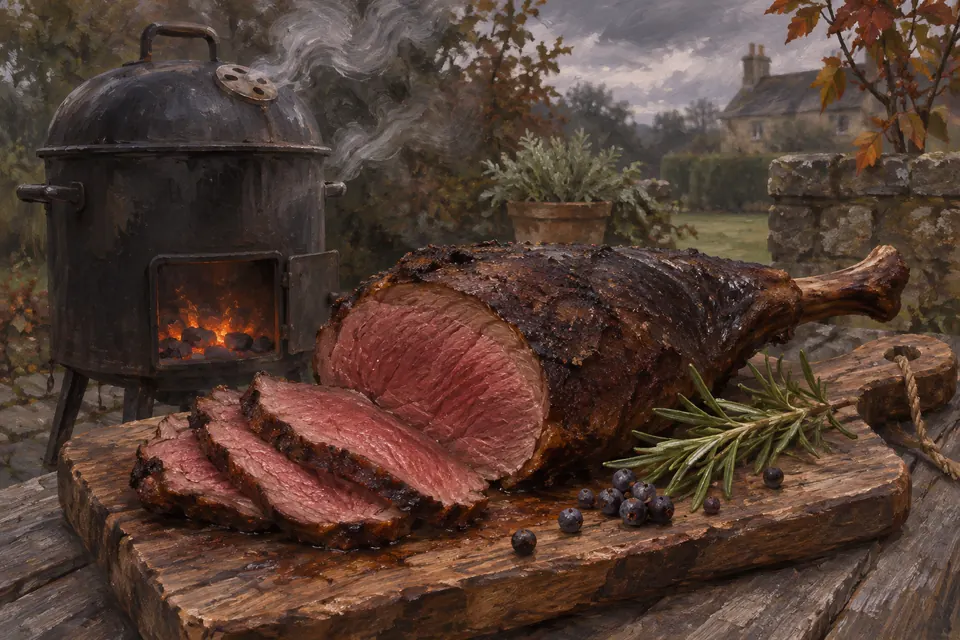
Take the joint out of the fridge about an hour before it goes on. If it's a rolled haunch, leave the string on so it holds its shape. Trim any silverskin (the tough, shiny membrane) from a loin with a thin knife. Season simply. Salt and black pepper are enough, and crushed juniper berries are the classic game partner. Some cooks rub the outside with a little oil or wrap the joint in streaky bacon to protect it. That's optional on a short cook.
Smoke
Run the smoker at around 105–120°C. A lower temperature means a wider band of evenly pink meat and less of a grey ring under the crust. Use a small amount of mild wood: one or two chunks of oak, beech or cherry. Venison takes smoke quickly, and heavy smoke from hickory or too much mesquite can bury the flavour you paid for. The smoking wood guide covers the British options.
Put a leave-in probe into the centre of the thickest part. As a rough guide, a 1–1.5 kg haunch joint takes around 1.5–2.5 hours at that temperature, and a whole loin around 30–60 minutes. Cook to temperature, not time: joints vary in shape, and a long thin loin is done far sooner than a fat rolled haunch.
Sear and rest
Lean meat benefits from a hard sear at the end for flavour and colour. A few minutes in a smoking-hot pan with butter, or straight over hot coals with the lid open, is enough. On a kamado or pellet grill you can turn the heat right up instead. Rest the joint for 15–20 minutes, loosely tented with foil, then slice it thinly across the grain.
Whole cuts of venison can be served pink in the middle as long as the outside is cooked. The safety box at the top of this page links to the FSA guidance. That doesn't apply to minced venison, burgers or sausages, which must be cooked all the way through.
Shoulder and neck: smoke, then braise
Venison shoulder is a different animal, so to speak. It's full of connective tissue that needs hours of moist heat to melt, and it has none of the fat that keeps a pork shoulder juicy while that happens. The answer is a two-stage cook.
- Smoke it naked for about two hours at around 110–120°C, with a little oak or beech. This is where the flavour and colour come from.
- Wrap or braise it. Put the shoulder in a deep foil tray with a splash of liquid (stock, red wine or a dark ale all work), cover it tightly with foil and return it to the smoker. You can raise the temperature to around 135°C at this point.
- Cook until it pulls. A probe should slide in with almost no resistance. A whole shoulder often takes 6–8 hours in total, but it's ready when it's ready.
- Rest it wrapped for half an hour, then pull it apart in its juices.
Because the meat is so lean, pull it into the cooking liquid rather than onto a dry board. A little melted butter or some of the strained braising juices stirred back through keeps it moist. Pulled smoked venison is very good in a ragu, in a pie under a suet crust, or in a soft roll with sharp pickled red cabbage.
Getting the flavour right
Wood: oak and beech are the safest choices and the most British. Cherry adds colour and a slightly sweet edge that suits game. Apple works but is subtle. Go easy on anything strong.
Seasoning: juniper, black pepper, thyme, rosemary and a little garlic. A light dusting of ground coffee or cocoa in a rub sounds odd and works surprisingly well with a dark crust. The rub ratios guide has a base mix you can adapt.
Sauce: forget sticky barbecue sauce. Redcurrant or rowan jelly, a port and blackberry reduction, or horseradish cream all suit smoked venison better.
Common venison mistakes
- Cooking a haunch like a brisket. Hours at low heat with no collagen to render just dries it out. Short smoke, pink centre.
- Too much smoke. Lean meat has no fat to soften harsh smoke. Use a small amount of mild wood and keep the fire clean. Our thin blue smoke guide explains how.
- Slicing thick. Venison can be dense. Thin slices across the grain eat far more tenderly.
- Skipping the rest. Resting matters even more with lean meat, which loses juice fast if cut straight away.
Your first step is to ask your butcher what venison they have this week and whether they'll bone and roll a haunch for you. Then plan it like a Sunday roast, with the smoker doing the oven's job.
FAQs
Is smoked venison safe to eat pink?
Whole cuts such as haunch and loin can be served pink in the middle if the outside is properly cooked, in the same way as beef or lamb. Minced venison, burgers and sausages must be cooked all the way through. Check the FSA guidance in the safety box for the current advice.
Does farmed venison taste different from wild?
Usually it's milder and more consistent. Wild venison varies with species, age, diet and how long it was hung, and it can taste noticeably more gamey. Both smoke well. Roe and fallow tend to be milder than red deer.
Should I wrap venison in bacon?
It's a traditional way to add fat to a lean joint, and it helps on longer cooks. On a short smoke to a pink centre it isn't necessary, and the bacon can hide the smoke. Try it both ways and see which you prefer.
Can I cold smoke venison?
Cold-smoked and cured venison is a classic, but curing meat to eat without cooking needs careful salting and safe handling. It's a separate process from anything on this page. Read our cold smoking guide before trying it.
Which venison cut should I try first?
A boned and rolled haunch joint of around 1–1.5 kg. It's a manageable size, it cooks in a couple of hours, and you can see clearly when it's done with a probe.
Keep going
 Cooks
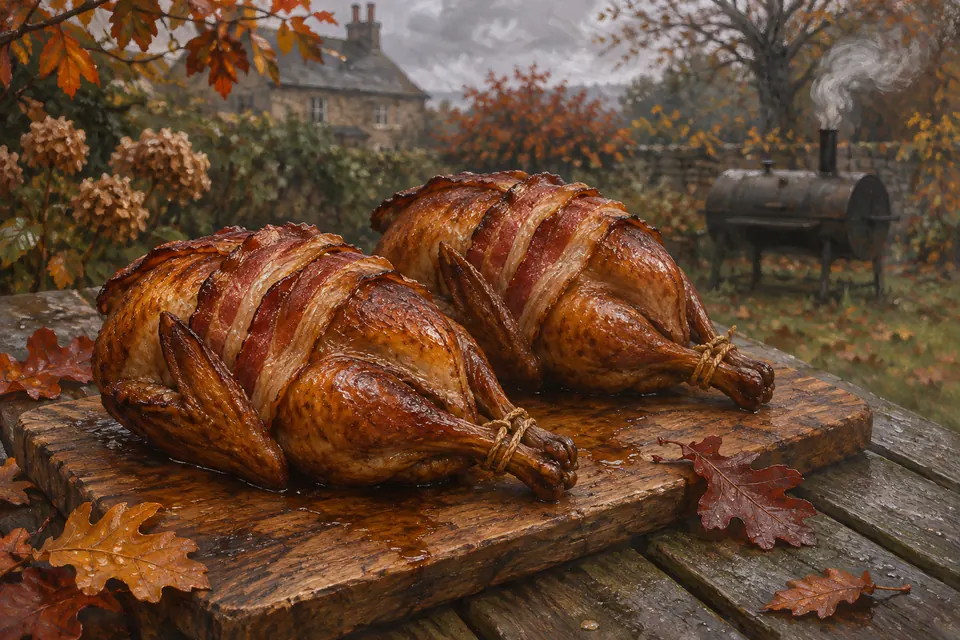
Smoked pheasant
How to smoke pheasant, partridge and wood pigeon: brining, barding with bacon, the right temperature for lean birds, and what to do with the tough legs.
Read the guide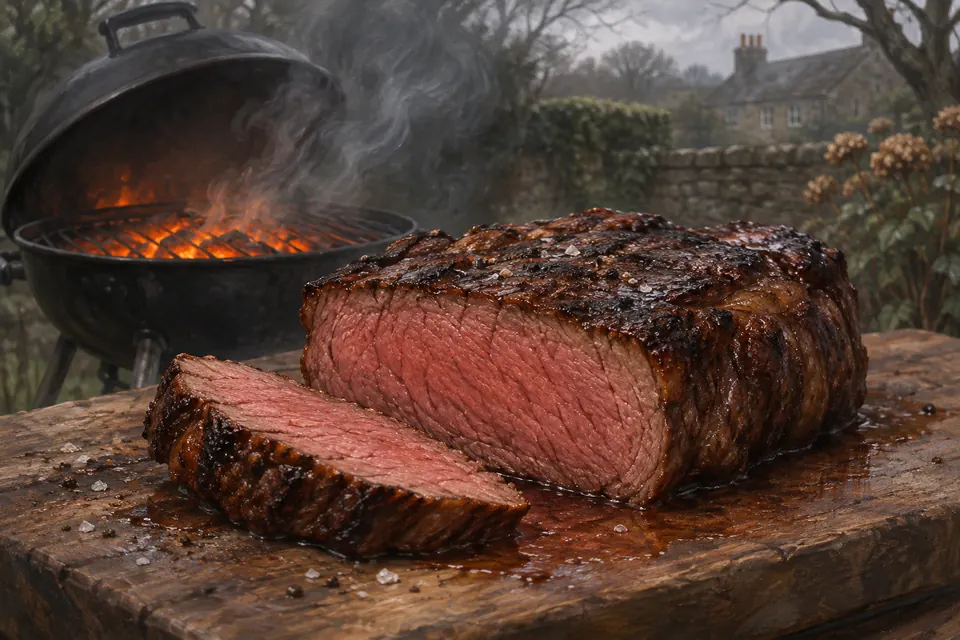 Technique
Reverse sear steak
How to reverse sear a thick steak or rump cap: smoke it low, sear it hot, cook to doneness by probe, plus kettle and kamado set-ups.
Read the guide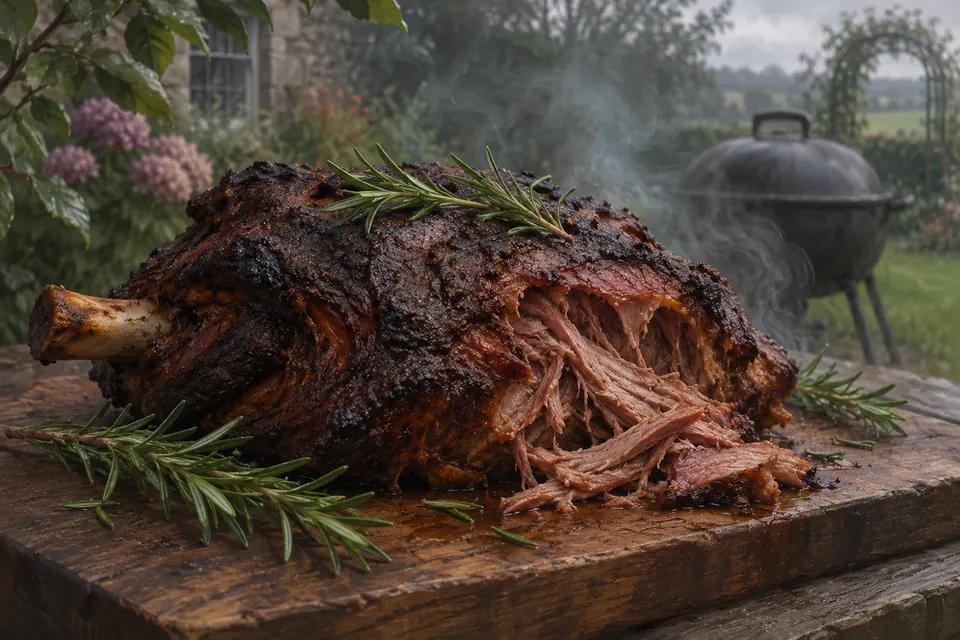 Cooks
Smoked lamb shoulder
How to smoke a lamb shoulder for pulled lamb: choosing British lamb or hogget, seasoning, the woods that suit it, temperatures and when it's ready.
Read the guide