On this page · 8 sections
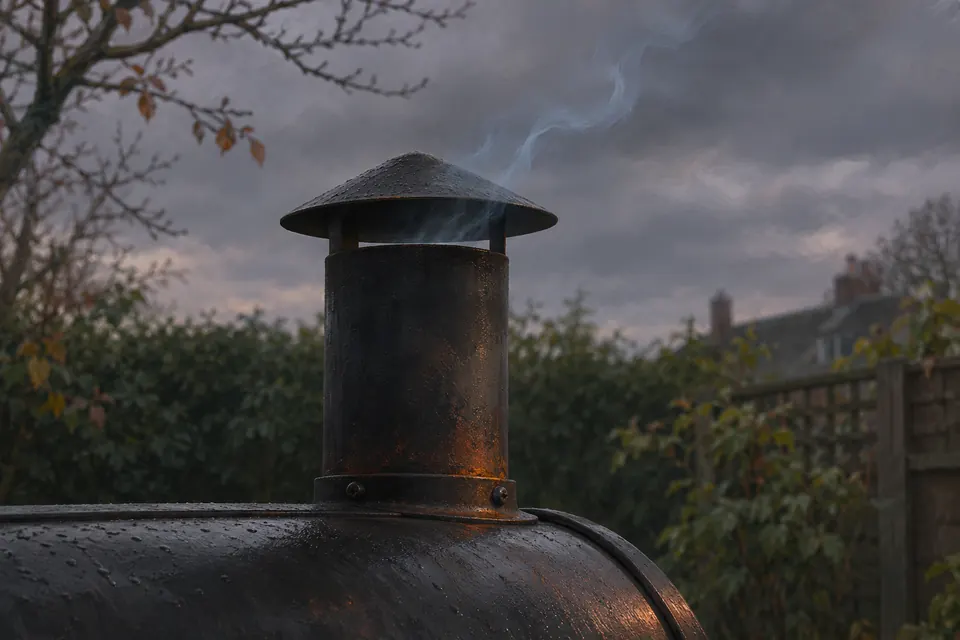
Wood smoke tastes best when you can barely see it. The billowing white clouds that look so good in photos are a sign of a fire that's struggling, and food cooked in them comes out tasting like the inside of a chimney. What you want is a faint blue-grey haze that wavers above the exhaust, smells sweet rather than sharp, and makes the neighbours wonder whether you've actually lit anything. Getting that haze is the whole craft of fire management.
Clean fire versus smouldering fire
Every fire in a smoker sits somewhere between two states.
A clean fire has enough oxygen and enough heat to burn the wood gases completely. The flame, or the glow in the coals, is lively. The smoke is thin, pale blue or nearly clear, and it smells pleasant.
A smouldering fire is short of air or short of heat. Wood breaks down without fully burning, and the leftovers come out as thick white or yellowish-grey smoke loaded with creosote and soot. It gives the bitter, tongue-numbing flavour people blame on "too much smoke", when really it's the wrong kind.
| What you see | What it means | What to do |
|---|---|---|
| Faint blue or nearly clear | Clean burn | Leave it alone |
| Light grey, wispy | Fine, a little heavy | Usually nothing; check vents aren't creeping shut |
| Thick white, billowing | Starved fire or damp wood | Open the intake, check the exhaust is fully open, wait for it to clear |
| Grey-yellow, acrid smell | Smouldering badly | Open up, add a few lit coals or a small hot split |
| Black | Burning grease or something that shouldn't be in there | Find it and deal with it |
Judge colour against a dark background, such as a hedge rather than a grey sky.
Airflow does most of the work
A smoker has an intake (low down, near the fire) and an exhaust (higher up, usually on the lid or a chimney). Air comes in at the bottom, feeds the fire, picks up heat and smoke, passes over the food and leaves through the top.
The usual advice, and it's good advice, is to keep the exhaust fully or nearly fully open for the whole cook and control temperature with the intake. Closing the exhaust traps stale smoke in the chamber, so the food sits in it longer and the fire chokes on its own fumes. Throttling the intake instead slows the fire while letting the smoke move through.
There are exceptions. A kamado is so well sealed that some cooks trim the top vent a little to fine-tune, and pellet grills and electric smokers run their own fans and elements. But on kettles, bullets and offsets, a wide-open chimney is the default. Our temperature control guide covers vent settings smoker by smoker.
Start the fire right
Most bad smoke happens in the first half hour, so this is where to concentrate.
- Light charcoal in a chimney starter and let it get going before it goes into the smoker. Instant-light bags and lighter fluid add their own flavour, and it isn't a nice one. Our charcoal guide explains why lumpwood and briquettes behave differently.
- Let the smoker come up to temperature with the lid shut and wait for the first rush of white smoke to clear. Fresh charcoal and cold metal both produce some early murk. It usually settles in somewhere between 10 and 30 minutes.
- Only put food on once the smoke has thinned and the temperature has held steady for a while. Food that goes on during the white-smoke phase is soaking up the worst of the cook.
On a kettle or bullet, the snake method helps a lot here. Unlit coals catch slowly from lit ones, so there's never a big pile of cold fuel smothering the fire.
When and how to add wood
Wood should go onto a fire that's already hot. Drop a cold, damp chunk onto weak embers and it will smoulder for twenty minutes before it catches, which is exactly the white-smoke stage you're trying to avoid.
On charcoal smokers, two or three fist-sized chunks of oak, beech, apple or cherry, tucked into the lit coals just before the food goes on, is plenty for most cooks. Some people add another chunk or two in the first couple of hours. Meat takes on most of its smoke flavour early, while the surface is cool and damp, so wood added late in a long cook mostly adds fuel bills.
On offsets, wood is the fuel, so fire management is constant. The trick is a small, hot fire on a bed of coals, fed little and often. A fresh split laid on top of the firebox coals (warmed first on the firebox lid if you can) usually catches within a minute or two. Typical rhythm is a split every 30 to 60 minutes, depending on the wood, the size of the cooker and the weather. Big logs crammed into a firebox with the door half shut is the classic way to make an offset produce dirty smoke. Our offset guide goes further into running one.
Wood quality matters as much as timing. It needs to be properly seasoned, bark mostly intact or removed (opinions vary), and never treated, painted or from an unknown pallet. The UK smoking wood guide lists which British species suit which meats. Soaking chunks doesn't help: wet wood steams and smoulders before it smokes.
If the smoke goes white the moment you add wood, the fire wasn't hot enough to take it. Next time add smaller pieces, or let the coals build up first.
Reading the smoke through a long cook
Smoke changes over a cook, and so should your reaction to it.
In the first hour, expect some grey as wood catches. If it hasn't thinned within 15 minutes or so, open the intake a little. During the middle hours, it should be faint and steady. A sudden thick plume usually means something has changed: the wind has dropped and the fire is starved, a vent has been knocked, or fat is dripping onto coals. Late in the cook, smoke often fades almost to nothing. That's fine. The meat has taken on what it's going to take.
Smell is a useful second opinion. Clean smoke smells like a good bonfire from across a field. Dirty smoke catches the back of your throat. If standing next to the chimney makes you cough, the food is getting the same treatment.
UK weather and the fire
British weather changes fire behaviour more than most American guides admit. Wind blows into an intake and acts like a bellows, so a gusty afternoon can push temperatures up and burn through fuel. Still, damp, heavy days can make smoke hang and drift rather than rise, which looks worse than it is. Cold weather means the fire works harder and you'll use more fuel to hold the same temperature.
Before a long cook, check the forecast with our smoking weather check, which flags wind, rain and cold so you can plan fuel and shelter. Turning the smoker so the intake faces away from the wind is often enough to steady things.
What thin blue smoke won't fix
Clean smoke is the foundation, not the whole house. It won't make up for a cut that's undercooked, a rub with no salt in it or a brisket sliced with the grain. It also has little to do with the pink smoke ring, which is a chemical reaction and says more about the fuel than the flavour; see bark and smoke ring if that's bothering you.
For the next cook, pick a simple joint, light the fire an hour earlier than you think you need to, and spend that hour watching the chimney. Once you've seen the moment white smoke turns to blue, you'll spot it every time after.
FAQs
Why does my food taste bitter even though I used good wood?
Usually because the fire smouldered at some point, most often at the start or after wood was added to weak coals. Give the smoker more air through the intake, keep the exhaust open and don't put food on until the early white smoke has cleared.
Is thin blue smoke actually blue?
Sometimes faintly, especially against a dark background, but often it's closer to a pale haze or nearly invisible shimmer. If you can see a thick column from the other end of the garden, it isn't thin blue smoke.
Should I close the exhaust to keep more smoke in?
No. Trapped smoke goes stale and the fire struggles, which leads to the bitter flavours you're trying to avoid. Keep the exhaust open and control heat with the intake.
How much wood do I need on a charcoal smoker?
Less than you'd think. Two or three fist-sized chunks is enough for most cooks, with perhaps one or two more in the first couple of hours on a big joint.
Does a pellet grill make thin blue smoke?
Pellet grills burn small amounts of dry fuel with a fan, so they tend to produce clean, light smoke by design. The trade-off is a milder smoke flavour than a charcoal or wood fire.
Keep going
 TechniqueCornerstone
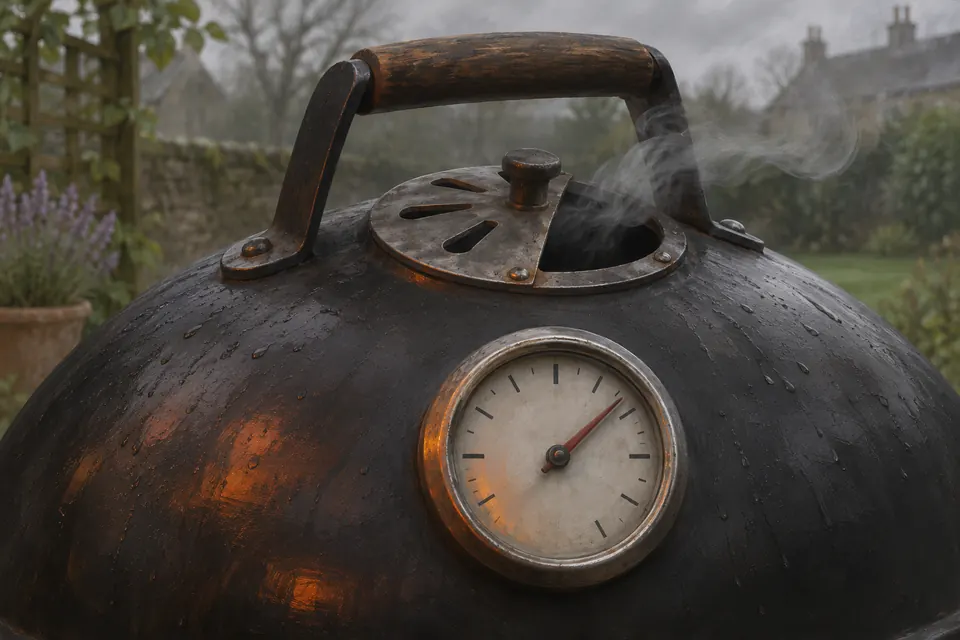
Smoker temperature control
How to hold a steady smoker temperature with vents, fuel and placement, why the lid gauge lies, and what to do when the temperature drifts.
Read the guide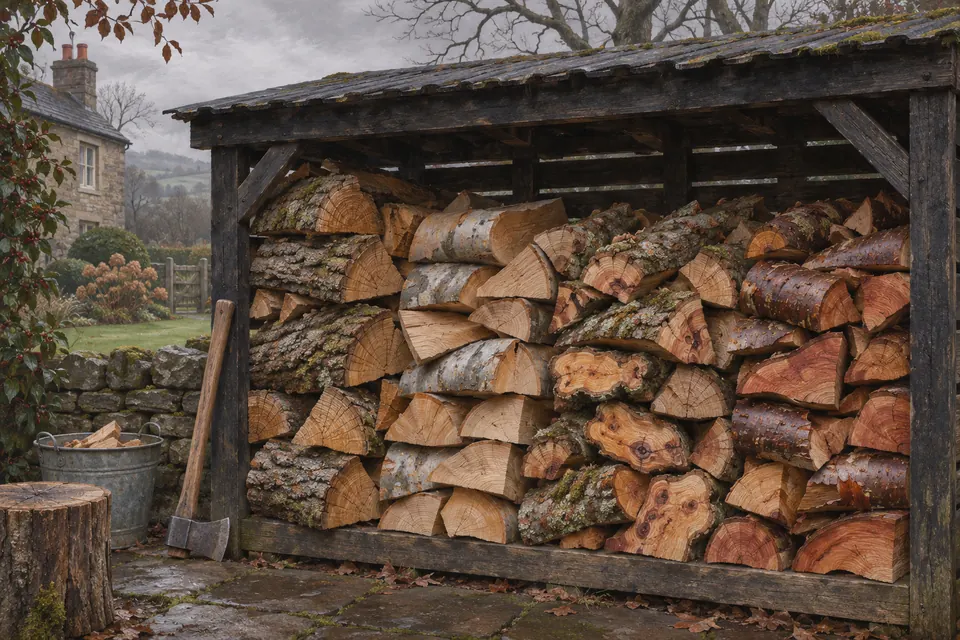 Fuel and woodCornerstone
Smoking wood in the UK
Which British woods suit which meats, chunks vs chips vs splits vs pellets, how dry the wood should be, what never to burn and how to store it.
Read the guide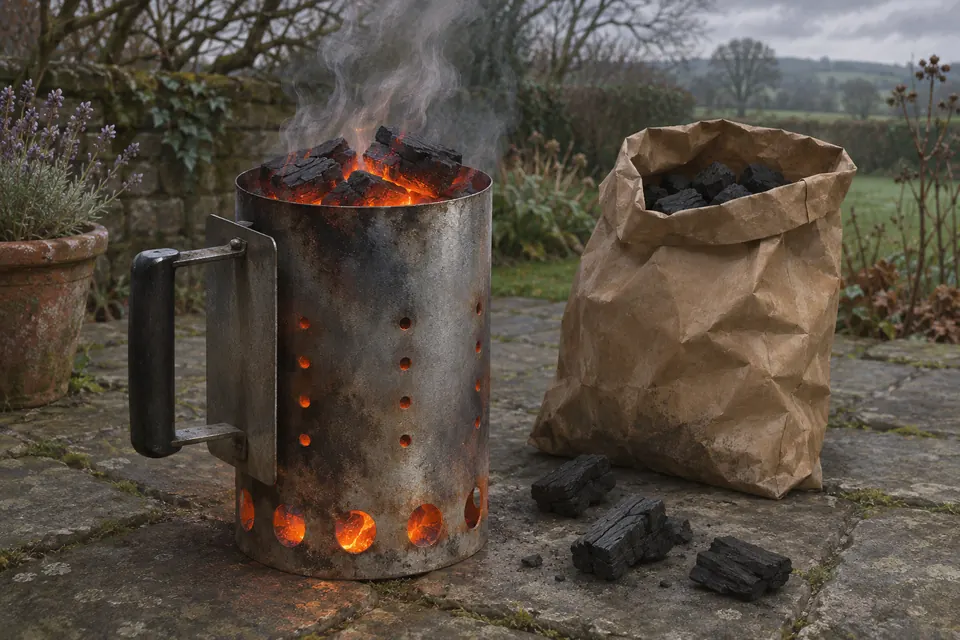 Fuel and wood
Charcoal for smoking
Lumpwood or briquettes for low-and-slow, what British-made charcoal offers, how to light it with a chimney starter, and why lighter fluid has no place in a smoker.
Read the guide