On this page · 9 sections
At a glance
- Ask for
- Rolled, tied brisket joint (often 1–2 kg)
- Smoker
- Around 120–135°C
- Time
- Around 5–7 h for 1.5 kg (smoke, then braise)
- Wood
- Oak or beech
- Done when
- Probe slides in easily
- Rest
- 30 minutes in the covered tray
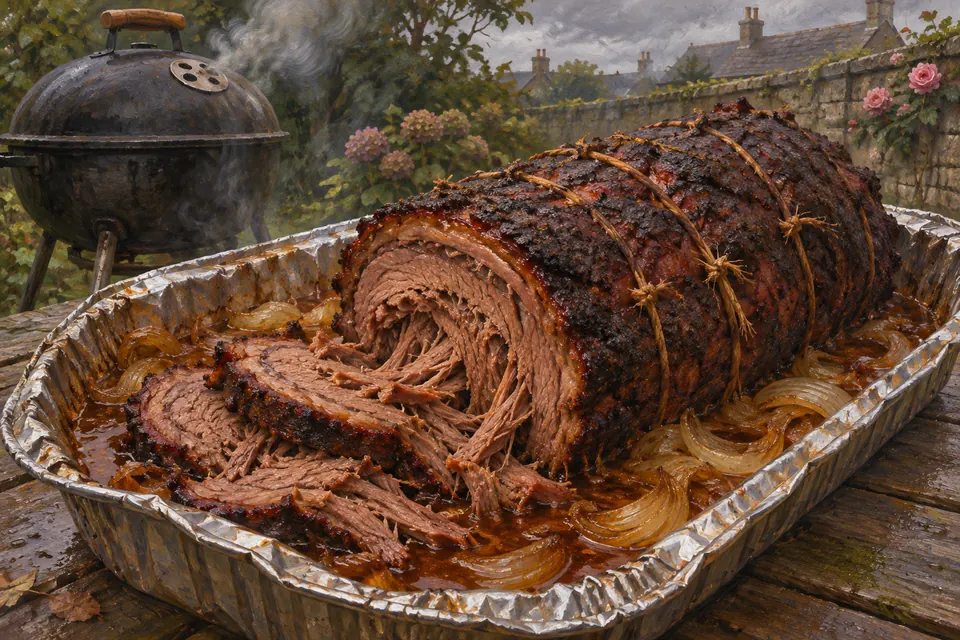
Walk into most British supermarkets looking for brisket and you'll find a neat cylinder of beef, tied with string or wrapped in elastic netting, weighing a kilo or two. It's sold for pot roasting, and it's a very different thing from the whole, untrimmed "packer" brisket in American recipes. Most of the fat has been trimmed off, the meat has been rolled up on itself, and the string holds it in a tight shape.
You can't turn that into Texas brisket, and you shouldn't try. Cook it the classic way, low and slow and unwrapped for twelve hours, and the lean outside dries out long before the middle is tender. But a smoker and a lidded tray turn it into one of the best Sunday joints going: smoky, dark on the outside, and soft enough to cut with a spoon. If you want proper barbecue brisket, our brisket smoking time guide covers ordering a whole one from a butcher.
Why a rolled joint needs a different method
| Whole brisket (packer) | Rolled supermarket joint | |
|---|---|---|
| Typical size | Around 5–7 kg | Around 1–2 kg |
| Fat cap | Thick, left on | Mostly trimmed off |
| Shape | Flat slab, two muscles | Tight cylinder, tied |
| Bark | Lots of surface for bark | Little surface; the inside of the roll gets no smoke |
| Best method | Long smoke, wrap optional | Smoke, then braise covered |
The two problems are fat and shape. With so little fat, the outside dries quickly. And because it's rolled, the meat inside the spiral never sees any smoke. The fix is to smoke it for a few hours while it can still take on flavour, then cover it with liquid so it braises gently to tenderness.
Before you start: string or no string?
You have two choices.
Leave it tied. The simplest option. The joint keeps its shape, cooks evenly and slices into neat rounds. You'll get smoke on the outside only.
Untie it, season inside and re-tie. Snip the string, unroll the joint as far as it will go and season the inside with your rub. If you have kitchen string, roll it back up and tie it every few centimetres. It's a bit fiddly, but every slice gets seasoning through the middle, not just at the edge. If the joint came in elastic netting, cut it off and tie it with string instead: netting can stick to the crust and tear it when you take it off.
A few supermarket joints are two pieces held together by the string. If yours falls apart when untied, smoke the pieces separately: they'll cook a little faster.
Step 1: season
Pat the joint dry. A simple rub of coarse salt and black pepper in roughly equal parts by volume is the Texas approach and suits beef well. Add garlic powder or a little smoked paprika if you like. The rub ratios guide has more options. If you have time, salt it the night before and leave it uncovered in the fridge, which seasons further in and dries the surface for a better crust.
Step 2: smoke it naked
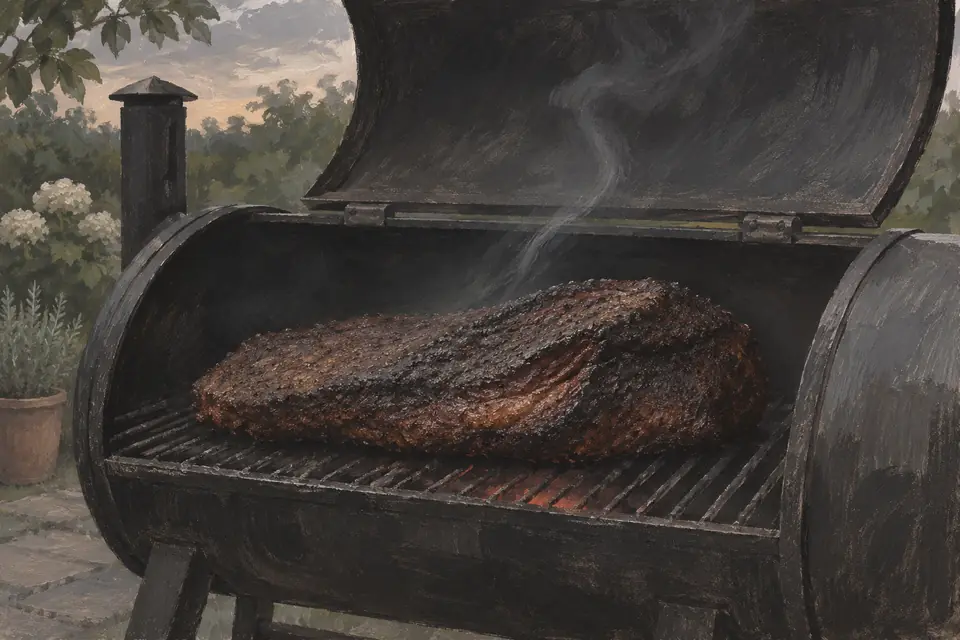
Get the smoker steady at around 120–135°C. Add a couple of chunks of oak or beech. Beef can handle stronger smoke than chicken or fish, but this is a small joint, so don't overdo it. Put the joint on the grate with a leave-in probe in the centre.
Smoke it uncovered for two to three hours. You're looking for a dark, firm crust and an internal temperature somewhere in the 60s °C. That's around where it would start to stall, and it's the point where more naked smoking does more drying than flavouring.
Step 3: braise it in the smoker
Put the joint in a deep foil tray or a heavy ovenproof dish that fits your smoker. Add:
- A sliced onion or two underneath, to lift it slightly and flavour the juices
- Around 250–400 ml of liquid: beef stock, a dark ale, or a mix of stock and a splash of red wine
- A bay leaf and a few peppercorns, if you like
The liquid should come part of the way up the joint, not cover it. Seal the tray tightly with a double layer of foil and put it back in the smoker. You can let the temperature drift up to around 135–150°C at this stage. The foil does the work now, and the fire is just an oven.
Step 4: cook to tender, not to a number
Start checking after a couple of hours in the tray. Push a probe or skewer into the thickest part. When it slides in with almost no resistance, it's done. Internal temperature will usually be somewhere in the 90s °C by then, but feel is what matters. For a joint of around 1.5 kg, the whole cook, smoke plus braise, often takes about 5–7 hours.
Our inside the meat graphic on the temperature chart shows what's happening at each stage of the climb.
Step 5: rest, then slice or pull
Leave the joint in the covered tray, out of the smoker, for 30 minutes. Then lift it out, snip off the string and decide how to serve it.
Sliced thick. Cut across the grain into slices about a centimetre thick. It will be soft, so use a sharp knife and a gentle sawing motion. Spoon the juices over.
Pulled. If it's very tender, it will pull apart into shreds, much like pulled beef. Mix the strands back through the juices.
Don't waste the tray. Skim off the fat, strain the juices into a pan and reduce them for a few minutes for a smoky gravy, or thicken with a little cornflour.
What to serve with it
Roast potatoes and Yorkshire puddings, if you're treating it as a Sunday roast with the oven freed up. Or pile it into soft rolls with horseradish and pickled onions. Leftovers make a superb cottage pie or hash. Our leftovers guide covers reheating without drying it out.
Your first step is to check the weight on the label and work out when you want to eat. A 1.5 kg joint going on at around ten in the morning is usually ready by teatime.
FAQs
Should I take the string off before smoking?
You can leave it on. The joint holds its shape better and cooks more evenly. Take it off after resting, just before slicing. If it's elastic netting rather than string, swap it for string first, as netting can stick to the crust.
Can I smoke a rolled brisket without braising it?
You can, but on a small, lean joint it tends to dry out before it's tender. Wrapping it tightly in foil with a splash of stock after a few hours is a halfway house that works on smaller smokers where a tray won't fit.
How long does a 1 kg rolled brisket take to smoke?
As a rough guide, around 4–6 hours in total with the smoke-then-braise method at around 120–135°C. Smaller joints are done sooner, but cook to feel rather than time.
Why is my rolled brisket tough?
Usually it hasn't cooked long enough. Brisket gets tougher before it gets tender, as the connective tissue tightens and then slowly melts. If a probe still meets resistance, cover it back up and give it longer.
Can I do this on a kettle barbecue?
Yes. Set it up for indirect cooking with the snake method and the joint on the cool side. The tray stage can go on the same grate, or you can finish it in the kitchen oven at a similar temperature if you'd rather not keep the fire going.
Keep going
 CooksCornerstone
Brisket smoking time
How long brisket takes on a smoker, per kg, with the stall, wrapping and resting built in, so you can work back from dinner time.
Read the guide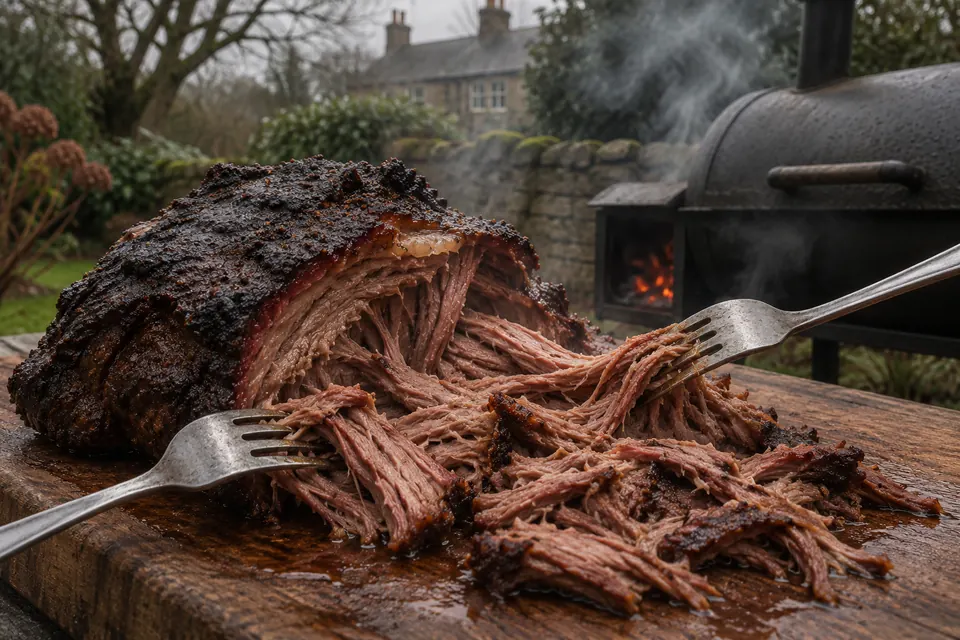 Cooks
Smoked pulled beef
How to smoke pulled beef in the UK: chuck, feather blade or brisket, what to ask the butcher for, smoker temperature, the stall and when it's ready to pull.
Read the guide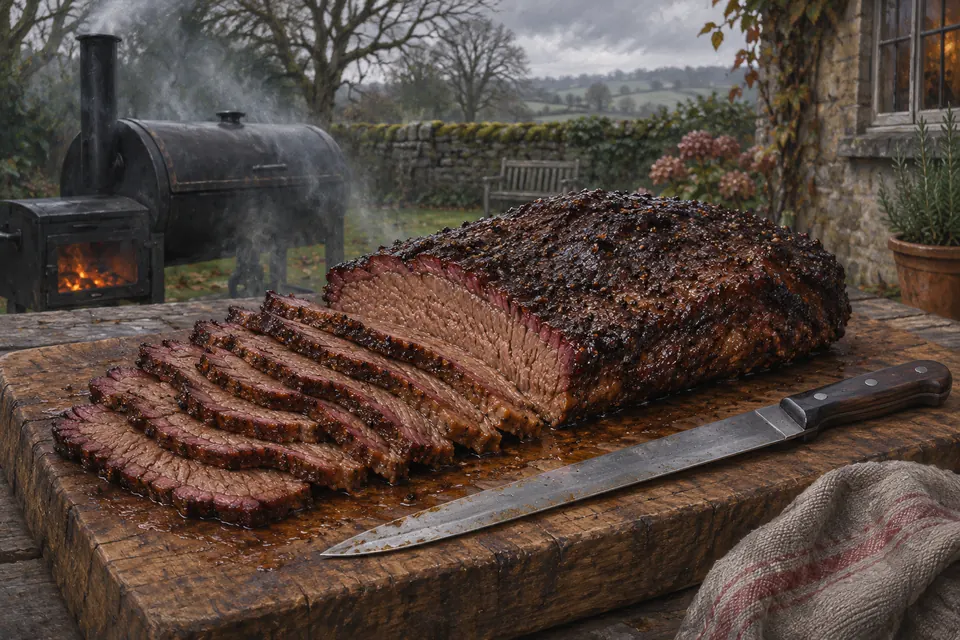 Technique
Trimming and slicing brisket
How to trim a brisket before smoking, separate the point from the flat, find the grain and slice it so every piece is tender rather than stringy.
Read the guide