On this page · 7 sections
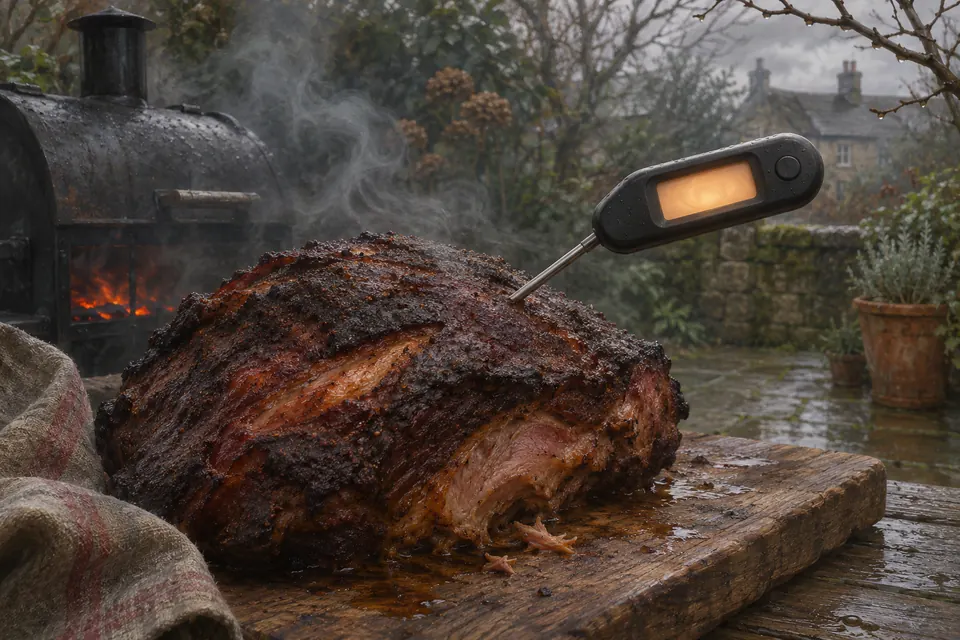
A brisket is safe to eat hours before it's worth eating. That one fact explains most of the confusion around BBQ temperatures, and why the numbers on this page look odd next to a food safety chart. Safety temperatures tell you when meat is safe. The higher numbers for tough cuts tell you when it's tender. You need both, and they're rarely the same thing.
Keep this page open at the smoker. The first table covers how hot to run the smoker; the second covers each cut. Every figure is a range from mainstream recipe guidance, not a law of physics. Your joint, your smoker and the weather will all shift things a bit.
Smoker temperatures by style
This is pit temperature: the air at grate level, where the food sits. Not the lid gauge, which reads the top of the dome and can be some way off. A leave-in probe clipped to the grate is the reading to trust.
| Style | Smoker temperature | What it's for |
|---|---|---|
| Cold smoking | Kept cold, below around 25–30°C (77–86°F) | Cheese, cured salmon, butter, salt. Flavour only, no cooking |
| Low and slow | Around 110–135°C (230–275°F) | Brisket, pork shoulder, ribs, lamb shoulder, short ribs |
| Hot and fast | Around 135–175°C (275–350°F) | Quicker brisket and shoulder cooks, pork belly, duck |
| Roasting heat | Around 175–220°C (350–430°F) | Chicken with crisp skin, turkey crown, finishing burnt ends |
Cold smoking is its own discipline with its own food safety risks, because nothing gets cooked. Read cold smoking at home before trying it, and save it for the colder months: a British July afternoon can push a cold smoker past the safe range with no help from the fire.
Temperatures by cut
The "done" column is the point to start checking, not a finish line. For tough, collagen-rich cuts, the real test is feel: a probe should slide in with almost no resistance, all over the joint. For poultry, sausages, fish and anything not cooked far beyond safe, the rule is the FSA guidance, checked in the thickest part.
| Cut | Typical smoker temp | What "done" means | Guide |
|---|---|---|---|
| Brisket | Around 110–135°C | Probe tender, around 90–96°C | Brisket smoking time |
| Pork shoulder | Around 110–135°C | Probe tender and pulls easily, around 90–95°C | Pulled pork |
| Ribs (spare or loin) | Around 110–135°C | Bends and cracks when lifted; probe tender between the bones, often around 90–95°C | Smoked ribs |
| Whole chicken | Around 150–180°C | Safe temperature per FSA guidance, checked in the thickest part | Smoked whole chicken |
| Chicken thighs | Around 150–180°C | Safe temperature per FSA guidance, checked in the thickest part | Smoked whole chicken |
| Turkey crown | Around 150–165°C | Safe temperature per FSA guidance, checked in the thickest part | Smoked turkey |
| Lamb shoulder | Around 120–135°C | Probe tender, around 88–95°C for pulling | Smoked lamb shoulder |
| Beef short ribs | Around 120–135°C | Probe tender, around 93–98°C | Smoked short ribs |
| Pork belly | Around 120–135°C | Probe tender, around 88–95°C | Pork belly burnt ends |
| Salmon, hot-smoked | Around 80–110°C | Safe temperature per FSA guidance, checked in the thickest part | Hot-smoked salmon |
| Sausages | Around 110–135°C | Safe temperature per FSA guidance, checked in the thickest part | Smoked sausages |
| Duck | Around 135–160°C | Safe temperature per FSA guidance, checked in the thickest part | Smoked duck |
If you want the time as well as the temperature, put the weight and a cook-rate range into the smoking time planner. Then add an hour.
Why tender cuts finish so far above safe
Brisket, shoulder, short ribs and lamb shoulder are working muscles, full of connective tissue. At ordinary roasting doneness that tissue is still tight and rubbery, which is why a brisket pulled at a "safe" number eats like a car tyre. Hold the meat hot for long enough and the collagen slowly melts into gelatine and the fat renders, and that's what makes it soft, juicy and easy to pull.
That breakdown happens mostly at the top end of cooking temperatures, over hours. So the meat passes any safety threshold long before it's tender, and the big numbers in the table are about texture, not safety. It's also why these cuts go through the stall, a long flat patch in the 60s or 70s °C where nothing seems to happen.
Lean, tender cuts are the opposite. Chicken breast, salmon and sausages have little collagen to melt, so cooking far past safe just dries them out. For those, the FSA guidance is the target and there's no prize for overshooting.
Drag the probe below to see what's going on inside a big joint at each stage of the climb.
Drag the probe, or use the arrow keys.
At the smoker
Read more →- 0–39°C · Fresh on the smoker The surface is cold and damp, which is when smoke sticks best. Most of the smoky flavour goes on in the first few hours, so keep the fire clean now.
- 40–59°C · Firming up Muscle proteins set and tighten, and the meat starts to push out juice. Lean, tender cuts such as steak or venison loin are often taken off around the top of this band or a little above, depending on how you like them.
- 60–74°C · The stall zone Big, fatty cuts often go flat somewhere in the 60s or low 70s °C. Moisture evaporating from the surface cools the meat about as fast as the smoker heats it. Collagen is starting to break down. How to deal with the stall.
- 75–87°C · Rendering Fat melts and connective tissue keeps turning to gelatine. A brisket or pork shoulder is cooked through here but still tough. It would slice, but it would not pull.
- 88–96°C · Probe-tender Most recipes finish pork shoulder and brisket somewhere around here. The real test is feel: the probe should slide in with almost no resistance, like going into soft butter. How to rest smoked meat.
- 97–100°C · Going too far Juice is running out faster than gelatine can hold it. Pulled meat turns dry and stringy, and slices crumble.
Carryover cooking
Meat keeps cooking after it leaves the smoker. Heat stored in the outer layers carries on moving inwards, so a big joint can climb a few degrees while it rests. The bigger the cut and the hotter the cook, the more it rises.
For brisket and shoulder this barely matters; they're resting at the top of their range anyway. It matters more for hotter, faster cooks like a turkey crown or whole chicken. Don't pull poultry early on the hope that carryover will finish the job; check the final reading meets the FSA guidance. Our guide to resting smoked meat covers how long to rest and how to keep it hot.
How to probe meat
- Go for the thickest part. It's the last bit to cook. On a whole bird, that usually means the thickest part of the thigh and the breast; check both.
- Avoid bone and fat pockets. Bone conducts heat and reads high; a pocket of fat can read oddly too. Push the tip into solid meat.
- Check more than one spot. Brisket in particular cooks unevenly between the point and the flat. Probe both.
- Use a leave-in probe for the cook and an instant-read for the finish. The leave-in tracks progress without lifting the lid. The instant-read lets you check several places quickly at the end.
- Feel matters on tough cuts. On brisket and shoulder, note how the probe goes in, not just the number. Butter-soft all over beats any reading.
More on choosing a thermometer in our guide to BBQ meat thermometers.
Check your thermometer in iced water
A probe that reads a few degrees out will quietly ruin every cook, and you won't know it. The iced-water check takes two minutes and needs no kit beyond a glass.
- Fill a tall glass to the top with crushed ice or small ice cubes.
- Top it up with cold tap water and stir. Leave it a minute or two.
- Push the probe into the middle of the glass, not touching the sides or bottom, and stir gently.
- Wait for the reading to settle. It should read 0°C (32°F).
If it's a degree or so off, many thermometers let you recalibrate; check the manual. If it can't be adjusted, write the difference on a bit of tape on the case and correct for it. If it's well out, or jumps about, replace the probe. Boiling water is a less reliable check, because the boiling point shifts with altitude and air pressure.
Do the iced-water check at the start of the season and whenever a probe has been dropped, crushed in a lid or left out in the rain.
Next step: check your probe tonight, then pick a cut from the chart and plan the cook with the smoking time planner.
FAQs
What temperature should my smoker be?
For most low-and-slow cooks, around 110–135°C at grate level. Poultry and anything where you want crisp skin goes hotter. The style table above covers each range.
Is brisket safe to eat before 90°C?
Safety and tenderness are different questions. Brisket passes safe temperatures long before it's tender; the higher figure is about texture. For the safety side, check the FSA guidance.
Why is my lid thermometer different from my probe?
The lid gauge reads the air at the top of the dome, while a grate probe reads where the food sits. Trust the grate probe, and check it in iced water now and then.
Keep going
 Weather and kit
BBQ meat thermometers
Instant-read, leave-in and wireless probes compared: how each works, which published specs matter, and how to check and care for one.
Read the guide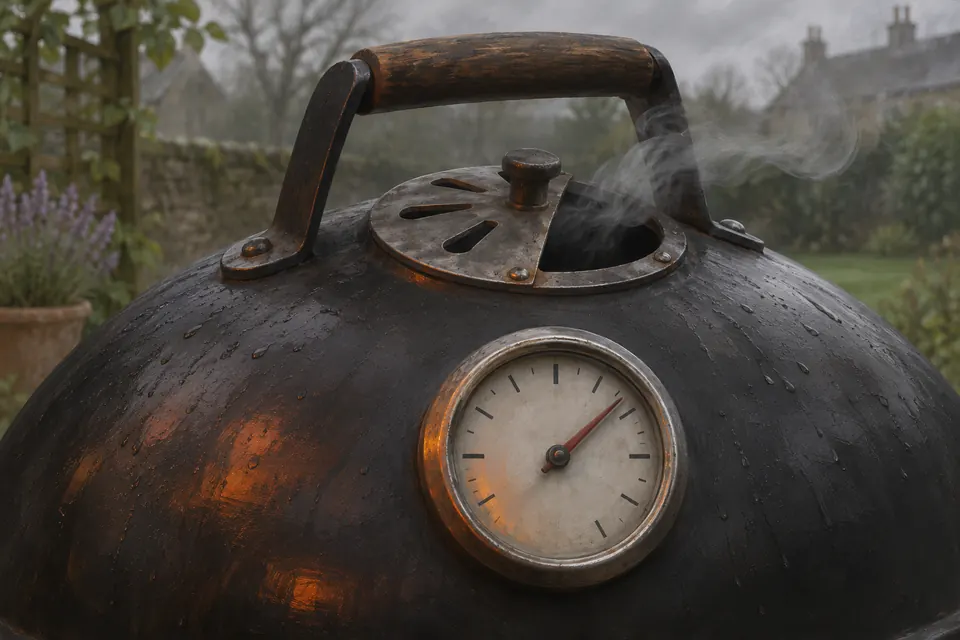 TechniqueCornerstone
Smoker temperature control
How to hold a steady smoker temperature with vents, fuel and placement, why the lid gauge lies, and what to do when the temperature drifts.
Read the guide TechniqueCornerstone
The stall explained
Why big cuts stop rising in temperature for hours mid-cook, the simple science behind it, and when to wait, wrap or turn the heat up.
Read the guide