On this page · 7 sections
At a glance
- Ask for
- Thick, coarse pork sausages, natural casings
- Smoker
- Around 110–120°C
- Time
- Fresh bangers around 1–1.5 h, then a sear
- Wood
- Apple, cherry or beech, one or two chunks
- Done when
- Safe temperature per FSA guidance
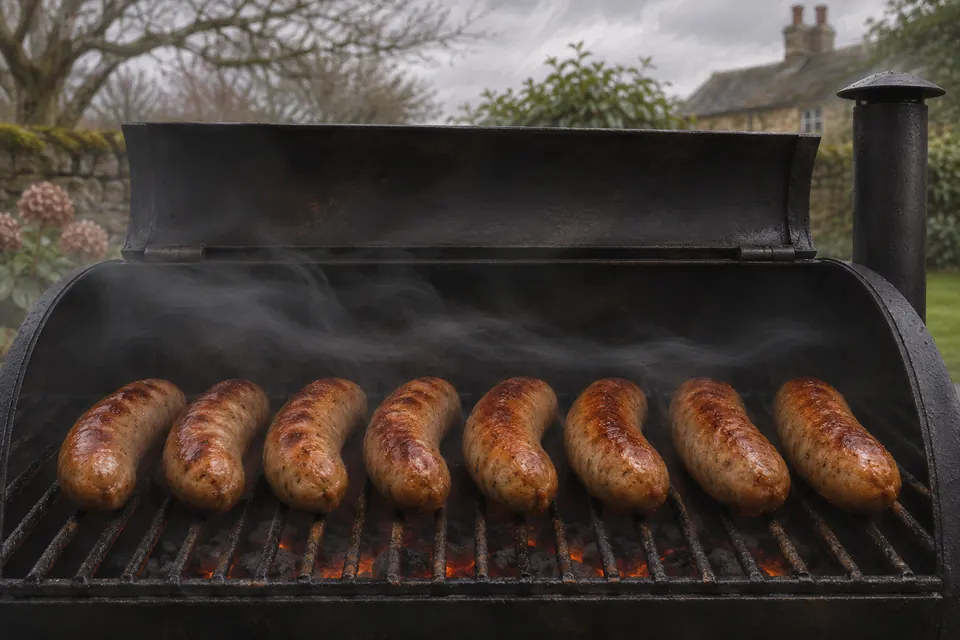
The classic sausage disaster goes like this: someone lays a pack of good butcher's bangers on a hot grill, turns round to open a beer, and turns back to find them split down the side like overstuffed sofa cushions, fat pouring into the coals and flames licking up. The smoker solves that problem neatly. Sausages cooked low and slow, then finished hot for a minute or two, come out juicy, evenly cooked and properly smoky, with skins that snap rather than burst.
British bangers vs cured sausages
Before anything goes on, work out which kind of sausage you've got, because they need very different treatment.
| Type | Examples | Raw or ready to eat? | What smoking does |
|---|---|---|---|
| Fresh British sausages | Cumberland, Lincolnshire, pork and leek, Toulouse-style | Raw | Cooks them through and adds smoke |
| Cooking chorizo, fresh merguez | Soft, sold in the chilled aisle | Raw | Cooks them through |
| Smoked or cured ready-to-eat | Frankfurters, kielbasa-style, dry-cured chorizo | Ready to eat | Warms them and adds a little more smoke |
The pack will tell you. If it says "cook thoroughly" or gives cooking instructions, treat it as raw. If it says "ready to eat", you're only warming it up, and you can keep the cook short.
Fresh British sausages are also a bit different from many continental and American ones. Most contain rusk and some water as well as meat and fat. That's partly why they're so good with smoke: the filling soaks up flavour. It's also part of why they split. Heat them fast and that water turns to steam inside a tight casing, and something has to give.
Why sausages split
Three things usually cause it:
- Too much heat, too quickly. The filling expands faster than the casing can stretch. This is the main culprit.
- Natural casings. They taste and snap better, but they're thinner and less forgiving than collagen casings. Most butchers' sausages use natural casings, so they need the gentlest treatment.
- Cold straight from the fridge onto fierce heat. The outside cooks hard while the middle is still cold and tight.
Pricking doesn't help. It lets the fat and juices run out, so you get a dry sausage and a fat fire instead of a split one. Leave the forks in the drawer.
Smoke them low
Get the smoker steady somewhere around 110–120°C. That's on the cooler side of normal low-and-slow, which suits sausages: you want the inside to come up gently.
Use a light hand with the wood. Sausages are small and take on smoke quickly. One or two chunks of apple, cherry or beech on charcoal is enough, and oak is fine if you like a stronger flavour. Thick, white smoke will make them bitter in no time. Our smoking wood guide has more on pairing.
Lay the sausages on the grate away from direct heat, with a little gap between each so the smoke reaches all round. If you've got a coil like a Cumberland ring, run a couple of skewers through it crossways so it holds its shape and can be lifted in one piece.
Close the lid and leave them. Fresh bangers usually take around an hour to an hour and a half, depending on thickness and how often the lid gets opened. Ready-to-eat sausages need around 30–45 minutes to warm through and pick up some smoke.
Check they're cooked
Fresh sausages need to be cooked all the way through. A leave-in probe in one of the thickest sausages takes the guesswork out, or check a couple with an instant-read meat thermometer towards the end. There should be no pink in the middle and the juices should run clear. For the safe internal temperature, check the FSA guidance in the safety box at the top of this page rather than relying on colour alone.
Finish over direct heat
Smoked sausages taste great but can look a bit pale and leathery straight out of the smoker. A quick sear fixes that. Move them over hot coals, a hot grill or a griddle for around three to five minutes, turning often, until the skins are browned and crisp.
Because they're already cooked, this is only about colour and texture. Keep it short and keep turning, or you'll get the split you've worked so hard to avoid.
On a kettle, set up two zones: coals on one side, sausages on the other, then slide them over at the end. Our guide to smoking on a kettle BBQ shows the layout. On a pellet grill, turn it right up for the last ten minutes, or finish them in a hot pan.
Sausages make good company for a longer cook. Slide a few onto the cooler part of the grate while a pork shoulder is in the middle of the stall, and you've got lunch sorted for the cook and anyone hovering.
Timing for a crowd
Sausages are quick compared with most smoker cooks, so they're easy to fit around everything else. If you're feeding a crowd with sausages alongside something bigger, put the big cut into the smoking time planner first and work the sausages in near the end. For a first smoker cook that doesn't take all day, sausages are a very good place to start, and our guide on how to use a smoker covers the basics.
Next time you're at the butcher, pick up a pack of thick, coarse pork sausages in natural casings and do a trial run on a weekday evening before you cook them for guests.
FAQs
Should I parboil sausages before smoking them?
There's no need. Parboiling washes out flavour and doesn't stop splitting any better than low smoker heat does. Smoke them straight from raw.
Can I smoke sausages from frozen?
It's far better to thaw them in the fridge first. From frozen, the outside overcooks long before the middle is done, and splitting is more likely.
Why do my smoked sausages have tough skins?
Low heat can leave natural casings a bit chewy. A short, hot sear at the end usually sorts it. Collagen-cased sausages tend to stay softer.
Can I smoke sausages with a brisket or pork shoulder?
Yes, and it's a good use of the space. Keep them on a separate part of the grate and keep a close eye on them, since they'll be done hours before the main event.
Keep going
 TechniqueCornerstone
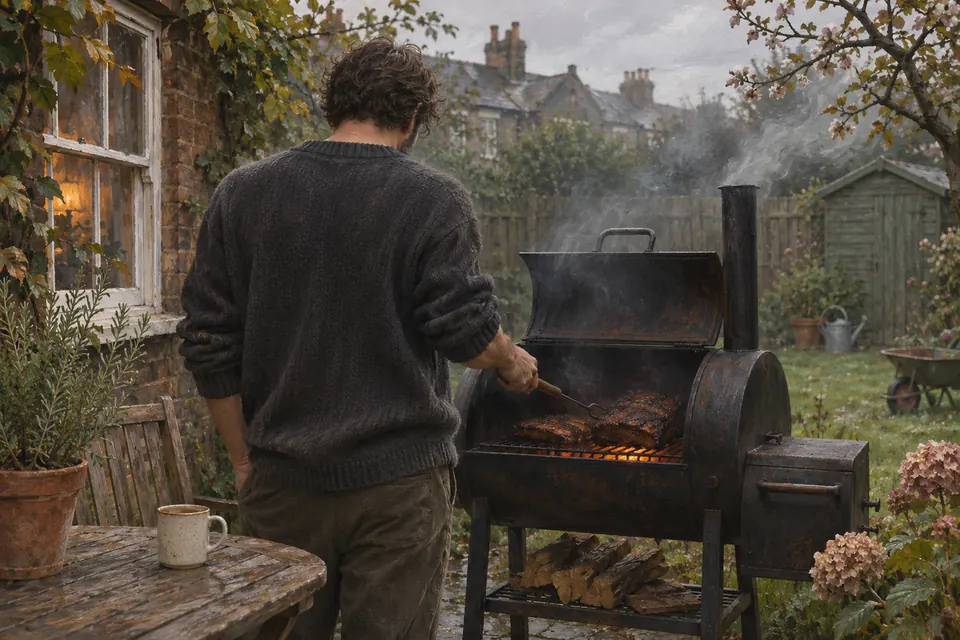
How to use a smoker
Everything that happens in a first smoke, in order: lighting, holding temperature, adding wood, the stall, wrapping, resting and knowing when it's done.
Read the guide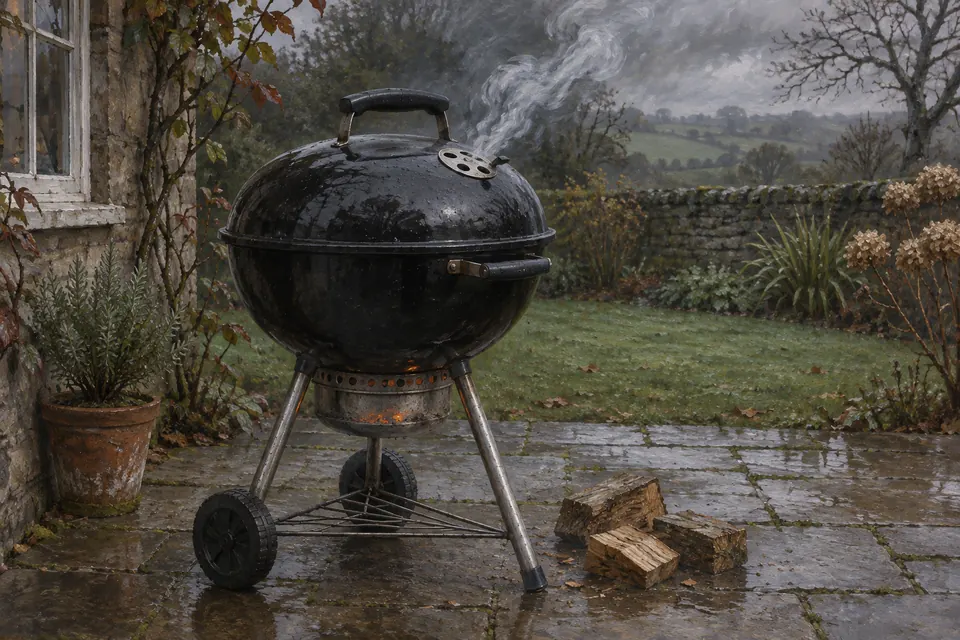 Technique
Smoking on a kettle BBQ
Turn the kettle BBQ you already own into a smoker with a two-zone or snake setup, water pan and wood chunks, and know when it's time to upgrade.
Read the guide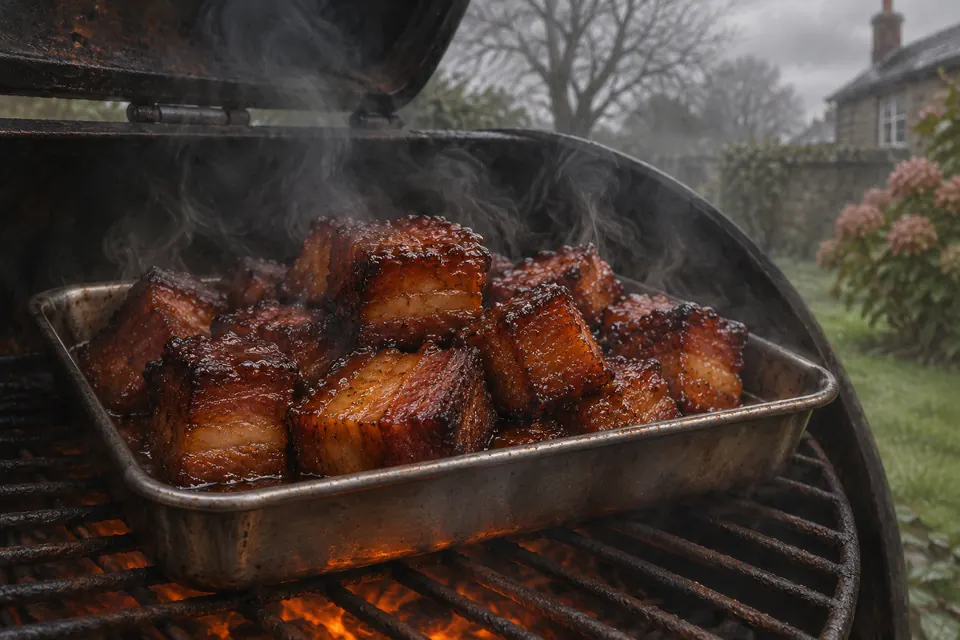 Cooks
Pork belly burnt ends
How to smoke pork belly burnt ends: what to ask the butcher for, rind on or off, cube size, smoke, braise and glaze, with rough timings.
Read the guide