On this page · 7 sections
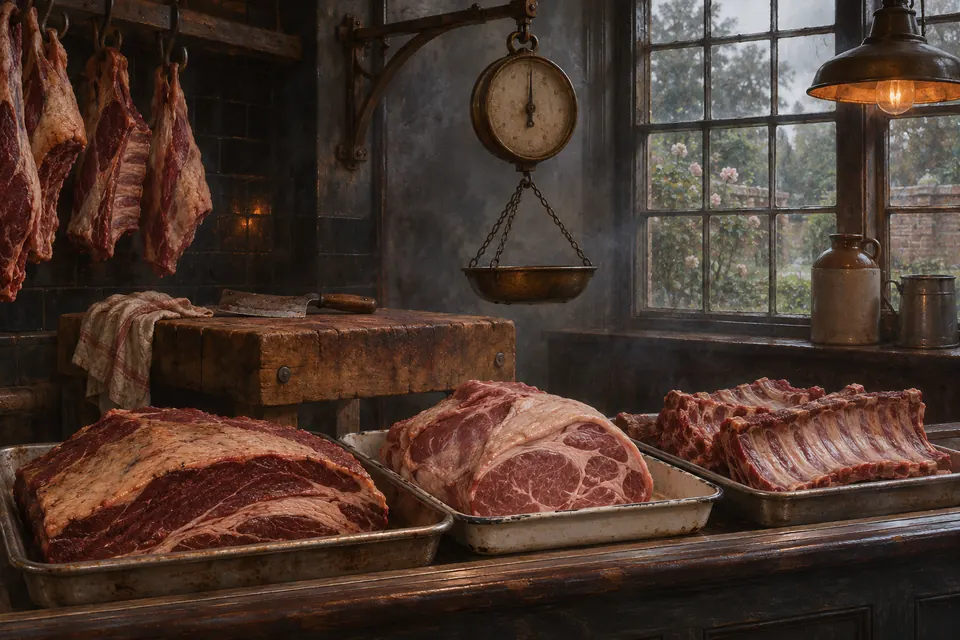
Walk into a British butcher and ask for "a packer brisket and a rack of baby backs", and you'll get one of two reactions: a knowing nod, or a polite look that suggests you've wandered in from the wrong country. Neither means they can't help. It usually means the names are different, and sometimes it means the animal has been divided a little differently, so the cut you want is sitting inside a joint with a different name.
Why the names don't match
American and British butchers carve up beef and pork along slightly different lines. The meat is the same; the boundaries move. A cut that's a standard item in the US might be split between two British cuts, rolled up inside a roasting joint or simply sent off for mince. And Britain has a long tradition of selling joints for roasting and braising, which is why brisket so often arrives rolled and tied, and pork shoulder usually comes with the skin on for crackling.
None of that is a problem for smoking. It just means you need to ask for the right thing.
All cuts as a table
| Animal | Ask a UK butcher for | US recipe name | Smoke it as |
|---|---|---|---|
| Beef | Neck and clod | Chuck (neck) | Pulled beef, or mince |
| Beef | Chuck and blade | Chuck | Pulled beef and chuck short ribs |
| Beef | Brisket (point and flat) | Brisket, whole 'packer' | The big low-and-slow cook, and burnt ends |
| Beef | Fore rib | Rib (prime rib, back ribs) | Rib roast; beef back ribs |
| Beef | Thin rib, Jacob's ladder | Short plate (plate short ribs) | Big beef short ribs |
| Beef | Sirloin | Short loin and sirloin | Steaks; rarely a long smoke |
| Beef | Flank | Flank | Quick cooks, not low and slow |
| Beef | Rump (and rump cap) | Sirloin, top sirloin cap | Rump cap: a quick, hot smoke |
| Beef | Topside and silverside | Round | Lean: better roasted or sliced cold |
| Beef | Shin | Shank | Smoke, then braise until soft |
| Pork | Shoulder (hand and spring, blade) | Boston butt and picnic shoulder | Pulled pork, the friendliest first cook |
| Pork | Loin | Loin, baby back ribs | Loin ribs and chops |
| Pork | Belly and spare ribs | Belly, spare ribs, St. Louis cut | Spare ribs and belly burnt ends |
| Pork | Leg (gammon when cured) | Ham | Glazed smoked gammon |
| Pork | Hock, knuckle | Ham hock | Smoked hocks for stock and beans |
UK to US cut table
These are the common equivalents for the cuts that appear in barbecue recipes. Butchers vary by region and by shop, so treat these as a starting point for a conversation.
| What the US recipe says | What to ask a UK butcher for | Notes |
|---|---|---|
| Packer brisket | Whole brisket, untrimmed and unrolled | Both muscles, fat cap on. Order ahead |
| Brisket flat | Brisket flat, thin end | Leaner, slices neatly |
| Brisket point | Brisket point, thick end | Fattier, more forgiving, burnt ends |
| Boston butt / pork butt | Pork shoulder, collar end, or pork collar | Ask for skin off |
| Picnic shoulder | Hand of pork, or hand and spring | Lower shoulder, bonier |
| Whole pork shoulder | Whole shoulder | Often sold skin on |
| Spare ribs | Pork spare ribs, a full rack | Not "spare rib chops" (see below) |
| St Louis cut ribs | Spare ribs, trimmed square | Ask for the rib tips off |
| Baby back ribs | Pork loin ribs, or back ribs | Shorter, leaner, quicker |
| Beef short ribs (plate) | Jacob's ladder, thick rib, or short ribs | Ask for whole racks, not cut between bones |
| Chuck roll | Chuck and blade, or chuck | Good for smoked "poor man's brisket" |
| Tri-tip | Rump tail, or bottom sirloin tip | Rare in the UK; worth asking a good butcher |
| Picanha | Rump cap | Fat cap on |
| Pork belly | Pork belly, skin off | Same cut both sides of the Atlantic |
| Ground beef | Beef mince | Ask for the fat content if it matters |
One trap catches a lot of people. In the UK, a "spare rib joint" or "spare rib chop" is usually cut from the shoulder, not from the ribs. It's a nice bit of pork, but it isn't the rack of bones a US ribs recipe means. Ask for "a full rack of pork spare ribs" to avoid the mix-up.
Beef
Brisket is the big one. Many British butchers sell it trimmed, rolled and tied for pot roasting, which works against everything barbecue brisket needs. Ask for a whole brisket, unrolled, with the fat on, or for the flat or point on its own if you don't need the full thing. A whole one is a big, heavy piece of meat and most shops need notice to get one in. Our brisket smoking time guide explains how long each option takes.
Short ribs in American barbecue usually means the big plate ribs, three bones wide, often called "dino ribs". In Britain, ask for Jacob's ladder or thick rib, and say you want it as a whole slab rather than cut into individual pieces. There's more in our guide to smoked beef short ribs.
Chuck is a cheaper alternative to brisket that smokes well. British butchers usually sell it as chuck and blade, or chuck steak. Ask for a whole piece rather than diced stewing beef.
Pork
Shoulder is the cut for pulled pork. The US "Boston butt" is the upper part, nearer the neck; the British collar is close to it. A bone-in half or whole shoulder does the same job, with a bit more bone and a bit more sinew. Ask for the skin off, because skin on a low-and-slow cook turns leathery rather than crisp. See pulled pork smoking time for timings.
Ribs come in two main kinds. Spare ribs, from the belly side, are bigger, fattier and meatier. Loin or back ribs, the American "baby backs", are shorter, leaner and cook quicker. Both smoke well. Our guide to smoked ribs covers both.
Belly is the same cut everywhere. Skin off for burnt ends or bacon-style cooks; skin on if you want to finish it hot for crackling.
Following an American recipe? Paste a line in and it comes back with UK cut names, Celsius and kilograms:
How to talk to your butcher
An independent butcher who cuts their own meat is your best bet for barbecue cuts, but plenty of supermarket counters will order things in if you ask. A few habits make it easier:
- Order ahead. Whole briskets, full racks of short ribs and large shoulders often need a few days' notice.
- Describe the cook. "I'm smoking it for eight hours, so I want the fat left on" is more useful than any American cut name.
- Ask for it untrimmed and unrolled. You can trim it yourself. You can't put fat back on.
- Say what weight you need. Work it out first with the BBQ meat calculator, which allows for the weight lost during a long cook, and then give the butcher a target weight.
- Ask for the trimmings. Brisket fat renders down into excellent cooking fat, and a good butcher may be glad to see it go to use.
Ask what they'd recommend for a long, slow cook. Butchers know which cuts in their shop have the fat and connective tissue that smoking loves, and some of the cheaper options are the better ones.
When the cut doesn't exist here
Some American cuts are rare in Britain. If a recipe calls for something your butcher can't get, look for a cut from the same part of the animal with a similar balance of fat and connective tissue, and cook to feel rather than to the recipe's time. Lamb shoulder, which American barbecue mostly ignores, is one of the most rewarding things you can put in a smoker; there's a guide to smoked lamb shoulder if you want a very British alternative.
Before your next cook, pick the recipe, work out the weight with the meat calculator, and ring the butcher a few days ahead with the cut name from the table above.
FAQs
What is a packer brisket in the UK?
It's a whole, untrimmed brisket with both the flat and the point attached and the fat cap left on. Ask a British butcher for a whole brisket, unrolled and untrimmed.
Is Boston butt the same as pork shoulder?
It's part of it. Boston butt is the upper section of the shoulder, close to what British butchers call the collar. A bone-in pork shoulder works just as well for pulled pork.
What are baby back ribs called in the UK?
Usually pork loin ribs or back ribs. They're shorter and leaner than spare ribs and cook a little faster.
Why is my brisket always rolled?
British butchers have traditionally sold brisket as a rolled joint for pot roasting. For smoking, ask for it unrolled and untrimmed, ideally a few days ahead.
Keep going
 CooksCornerstone
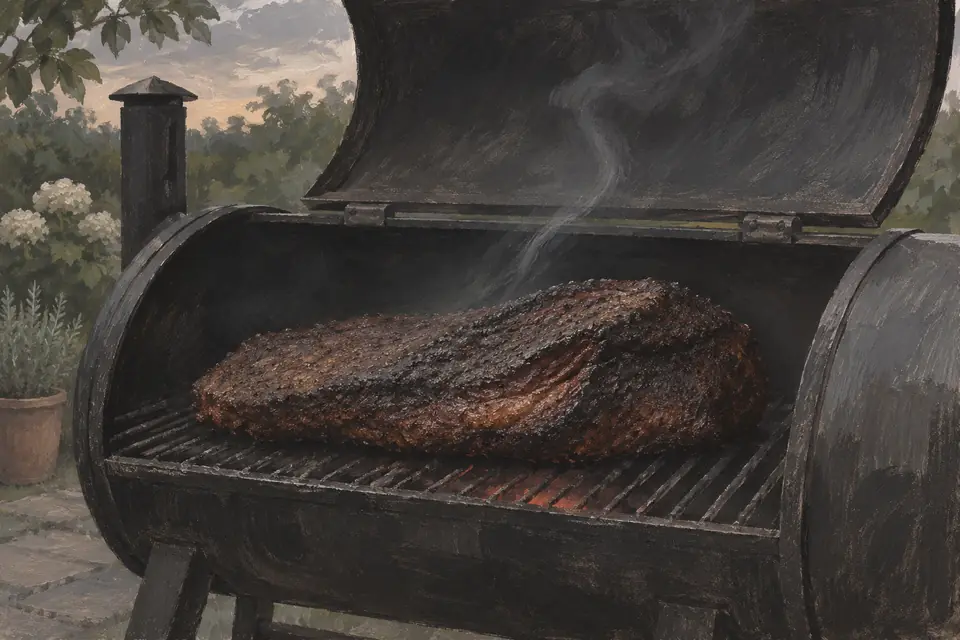
Brisket smoking time
How long brisket takes on a smoker, per kg, with the stall, wrapping and resting built in, so you can work back from dinner time.
Read the guide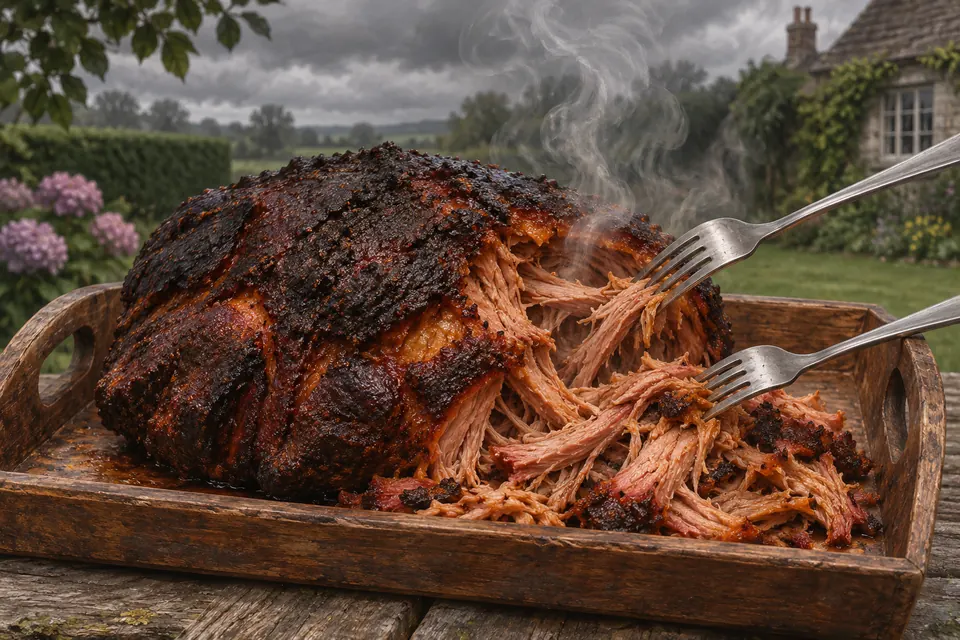 CooksCornerstone
Pulled pork smoking time
How long a UK pork shoulder takes on a smoker, per kg, with the stall, pulling temperature, holding and a plan that works back from dinner.
Read the guide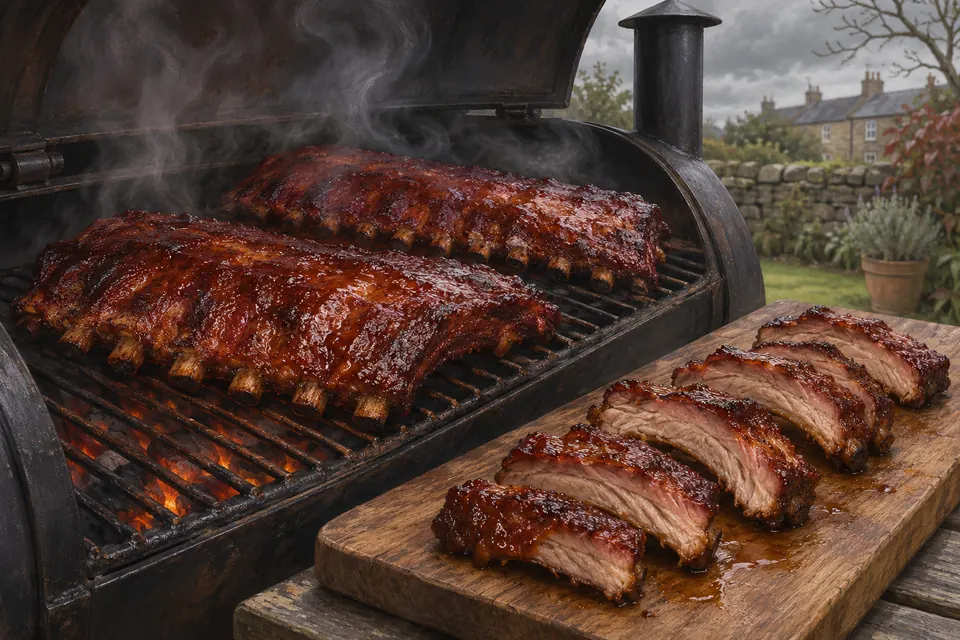 CooksCornerstone
Smoked ribs, UK style
Spare ribs or loin ribs, what to ask a UK butcher for, how to use 3-2-1 as a loose guide, and the bend test that tells you ribs are ready.
Read the guide